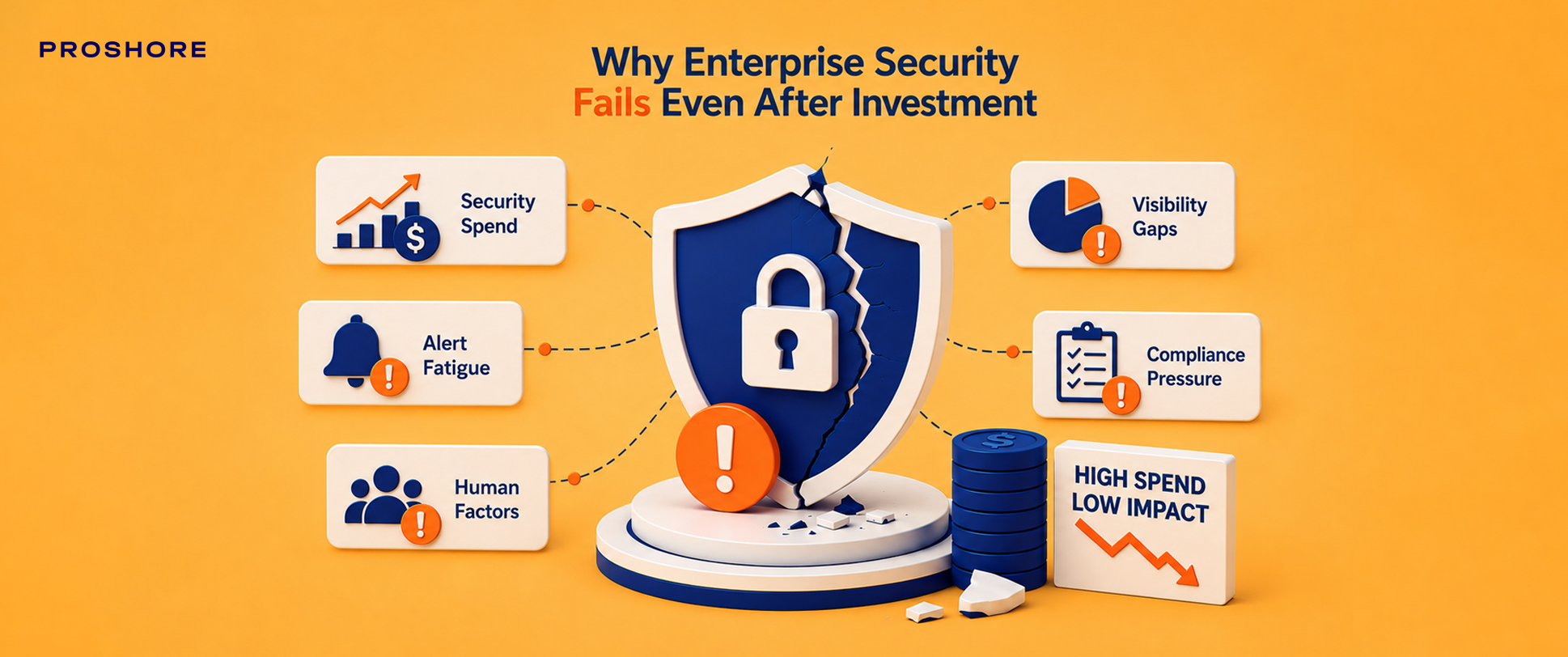
Security Maturity Does Not Translate to Real-World Protection
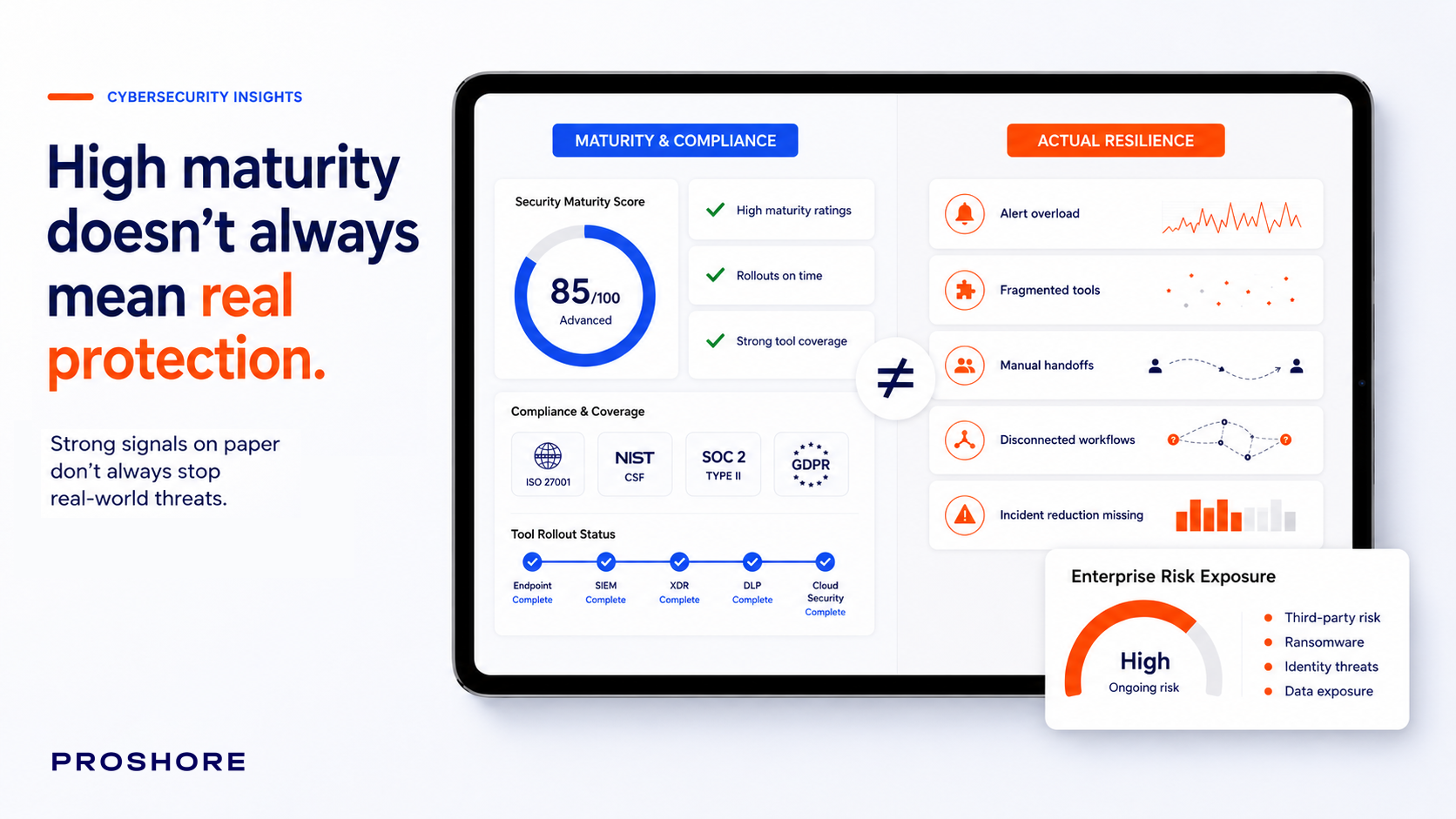
Security initiatives regularly achieve strong maturity ratings and complete major rollouts within planned timelines, but the expected drops in incident rates, faster response times, and lower financial exposure seldom appear across the enterprise.
In practice, layering on new tools creates coverage without the fundamental redesign required to weave security into daily operations.
Controls activate in the environment, but they inherit the same fragmentation, overwhelming alerts, and manual handoffs that predated the latest investment cycle.
Lasting resilience appears only when security capabilities support redesigned workflows, continuous threat intelligence, automated remediation, and tight coordination between teams.
This demands mature risk ownership, shifts in organizational behavior, and an architecture that treats security as a business enabler instead of a standalone compliance checkbox.
Advanced security platforms and automation accelerate initial setup, yet they cannot fix tool proliferation, missing cross-system linkages, or the absence of ongoing risk-tuning processes.
The real barrier lies not in the availability of technology but in the lack of a bridge between control deployment and measurable reductions in enterprise risk.
Structural Issues Behind Enterprise Security Failures
Shortfalls like these arise from recurring organizational patterns rather than isolated technological shortcomings.
Security efforts often advance independently of business strategy groups, while architecture, operations, and compliance teams step in only after key choices are finalized.
Outdated assumptions linger, and complex multi-vendor or hybrid setups quickly generate concealed complexity.
Rising geopolitical demands and data-sovereignty rules now trigger expensive last-minute adjustments that should have guided early design decisions.
Effective protection at scale remains out of reach when security is treated as a specialized compliance task rather than a foundational element of enterprise performance.
In 2026, as AI agents expand their attack surfaces and third-party risks double, enterprises that rely on checklist-driven programs rather than integrated risk strategies keep falling short.
Four patterns surface consistently:
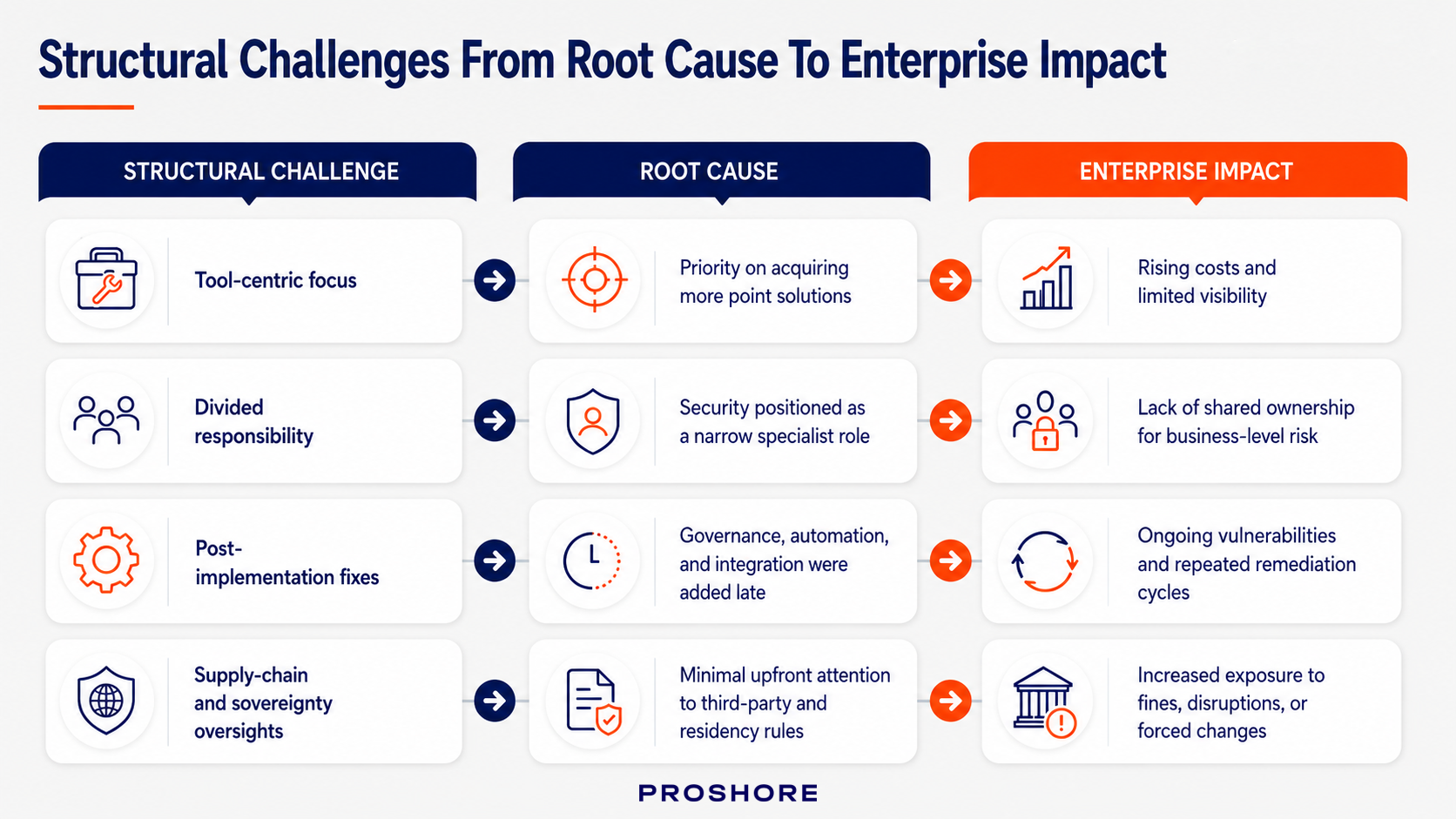
(Based on patterns in IBM Cost of a Data Breach Report 2025 and Gartner cybersecurity trends for 2026)
Security Spend Without Risk Reduction and Its Impact
When programs wrap up without a built-in risk framework, inefficiencies spread throughout the organization. Tool selection and integration work get repeated across departments.
Live environments accumulate alert fatigue, and expanding AI threats magnify noise and overlook signals.
Executive belief weakens as expected gains in resilience, regulatory standing, and cost protection deliver only partial results.
These pressures appear in several consistent ways:
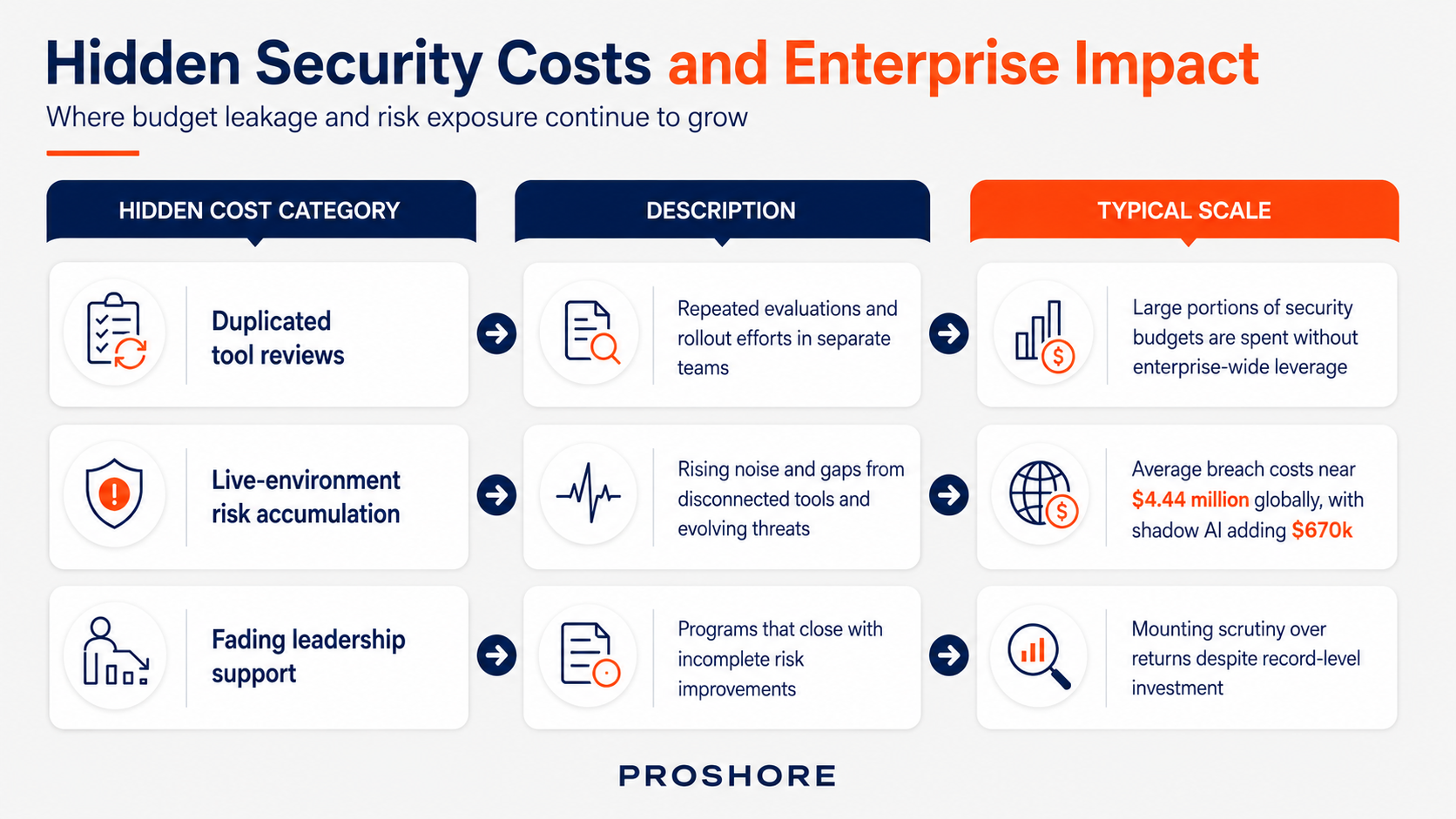
(Source: IBM Cost of a Data Breach Report 2025)
A More Effective Path to Security-Driven Resilience
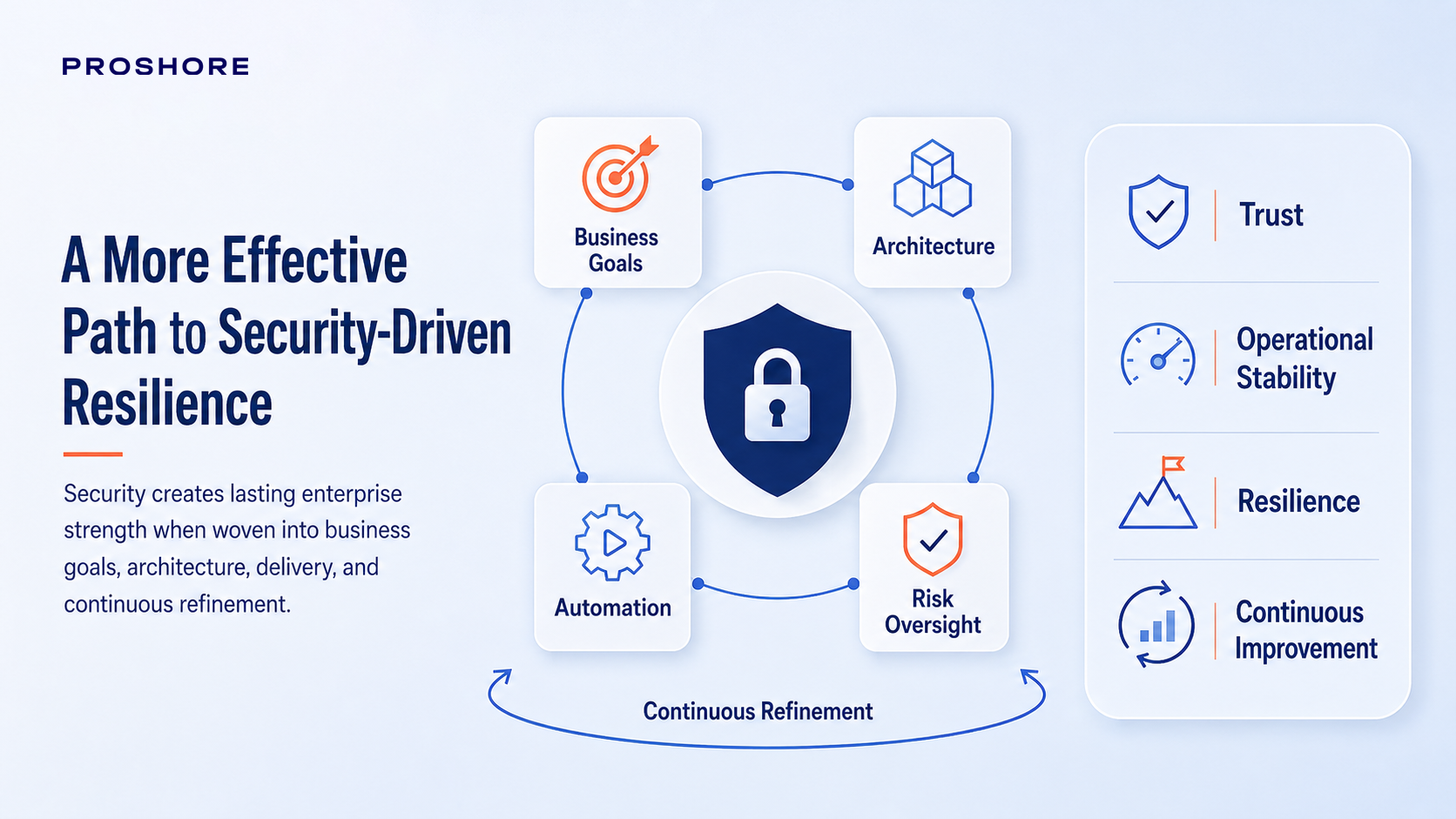
Security creates lasting enterprise strength when it operates as a core layer woven into wider digital and operational change programs.
The operating model ties security work directly to business goals, updates controls alongside infrastructure and application changes, and builds risk oversight, automation, and refinement into the foundation instead of adding them later.
Design choices, delivery flows, and performance habits support each other from the start.
This approach shifts security from a periodic compliance exercise into a continuous source of trust and operational stability.
Key Elements That Shape Security Success
Enterprise security efforts are judged by strategic fit, implementation strength, and ongoing results, not simply by tool rollout progress.
The pivotal question shifts from whether protections are in place to whether the organization has the frameworks needed to sustain meaningful risk reduction at scale.
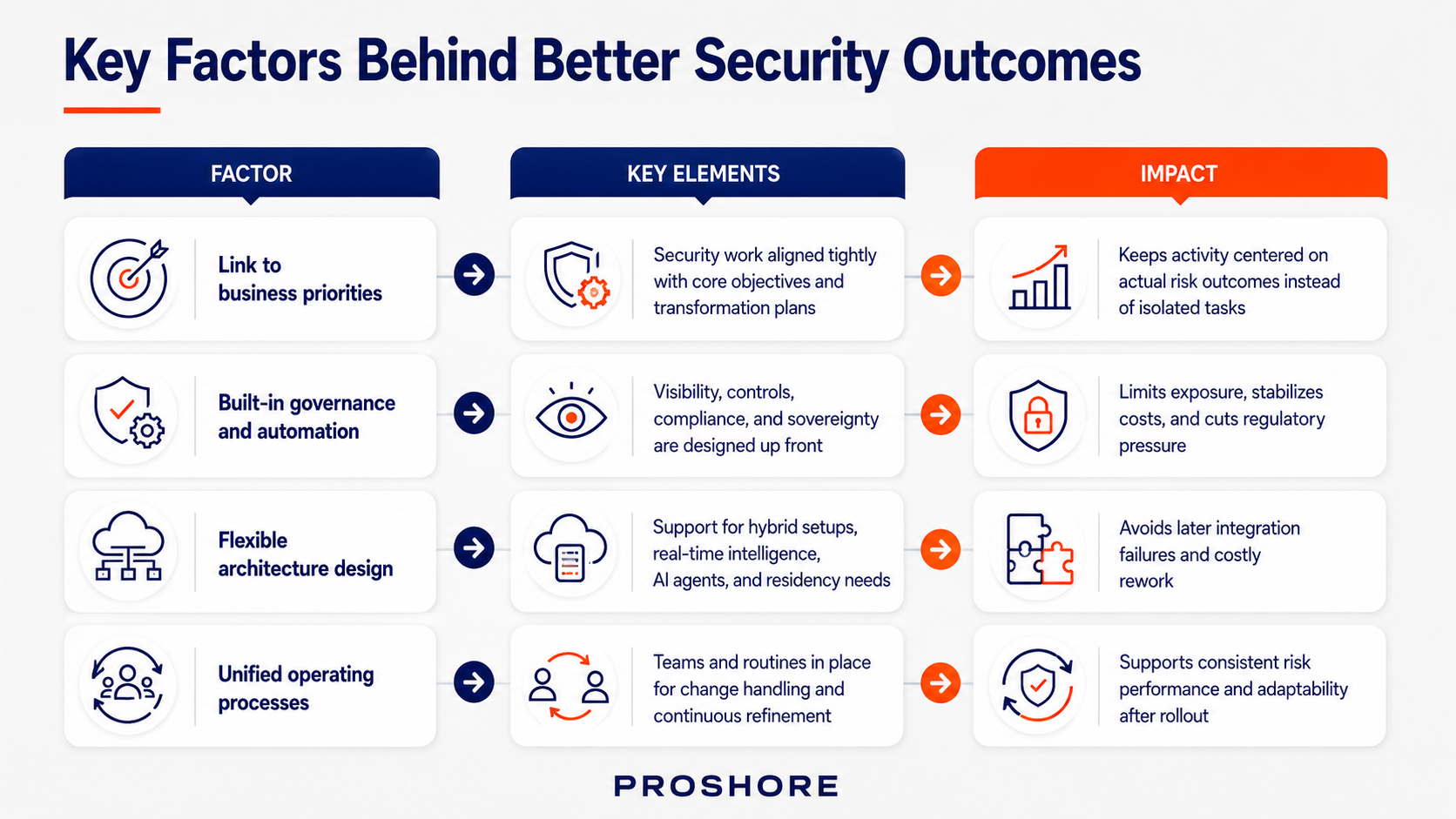
Proshore Enterprise Security Approach and Outcomes
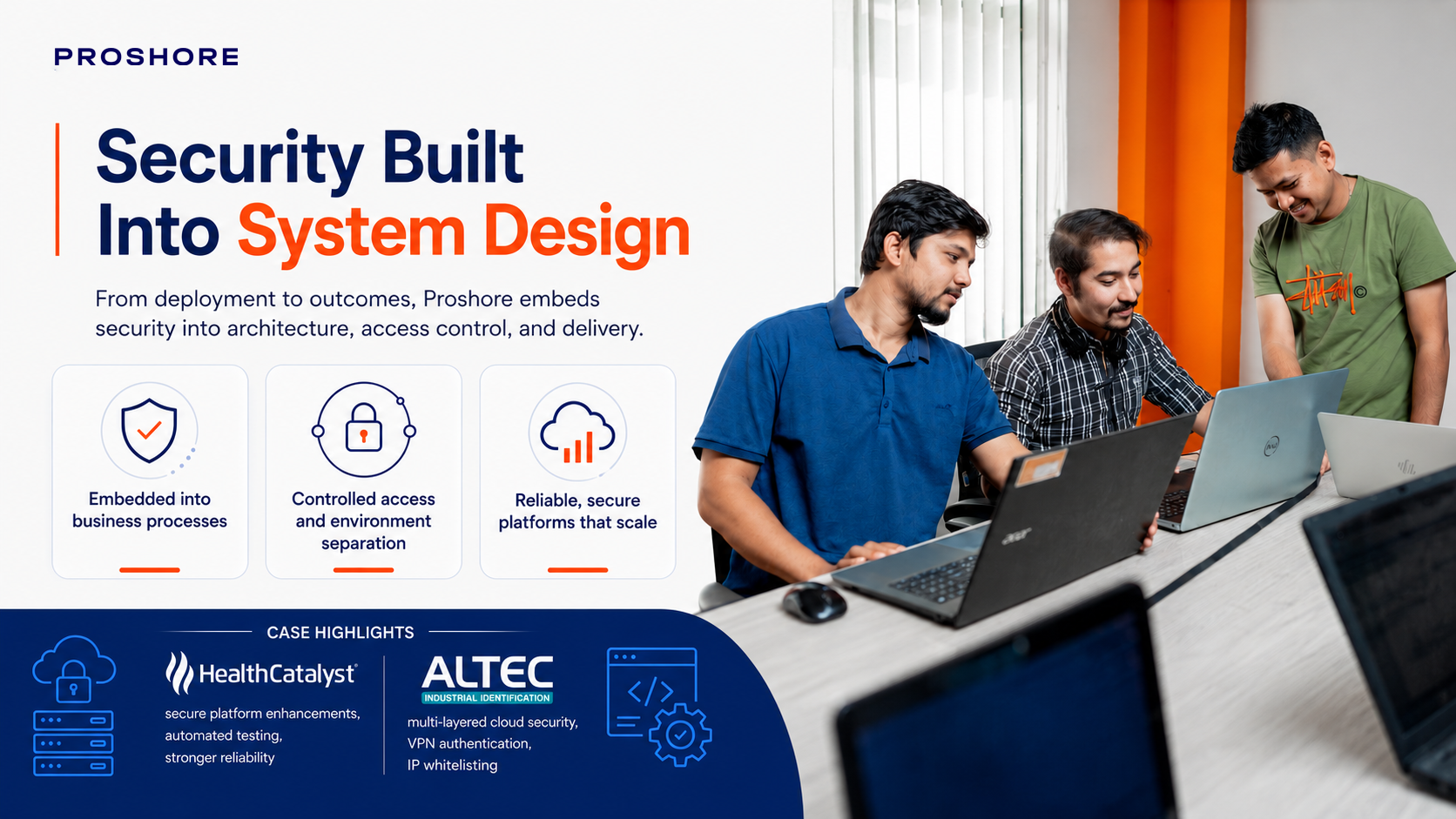
Proshore addresses the structural issues that prevent security investments from delivering sustained risk reduction.
Security is embedded into business processes and system design rather than added after deployment.
At Altec, Proshore implemented a multi-layered cloud security architecture across network, application, and subnet levels. Secure access was enforced through VPN authentication and IP whitelisting. Test and production environments were clearly separated.
This reduced risk and improved reliability, and created a secure foundation for scaling operations.
With Health Catalyst (Upfront Healthcare), Proshore delivered security-focused platform enhancements aligned with enterprise standards. Automated testing and DevOps practices strengthened platform stability and improved reliability. The platform performs consistently in a secure environment.
Across these engagements, security is built into system design and delivery rather than added after deployment. The result is stronger protection and controlled access. Platforms scale without introducing additional risk.
Improving Enterprise Security Outcomes and Risk Reduction
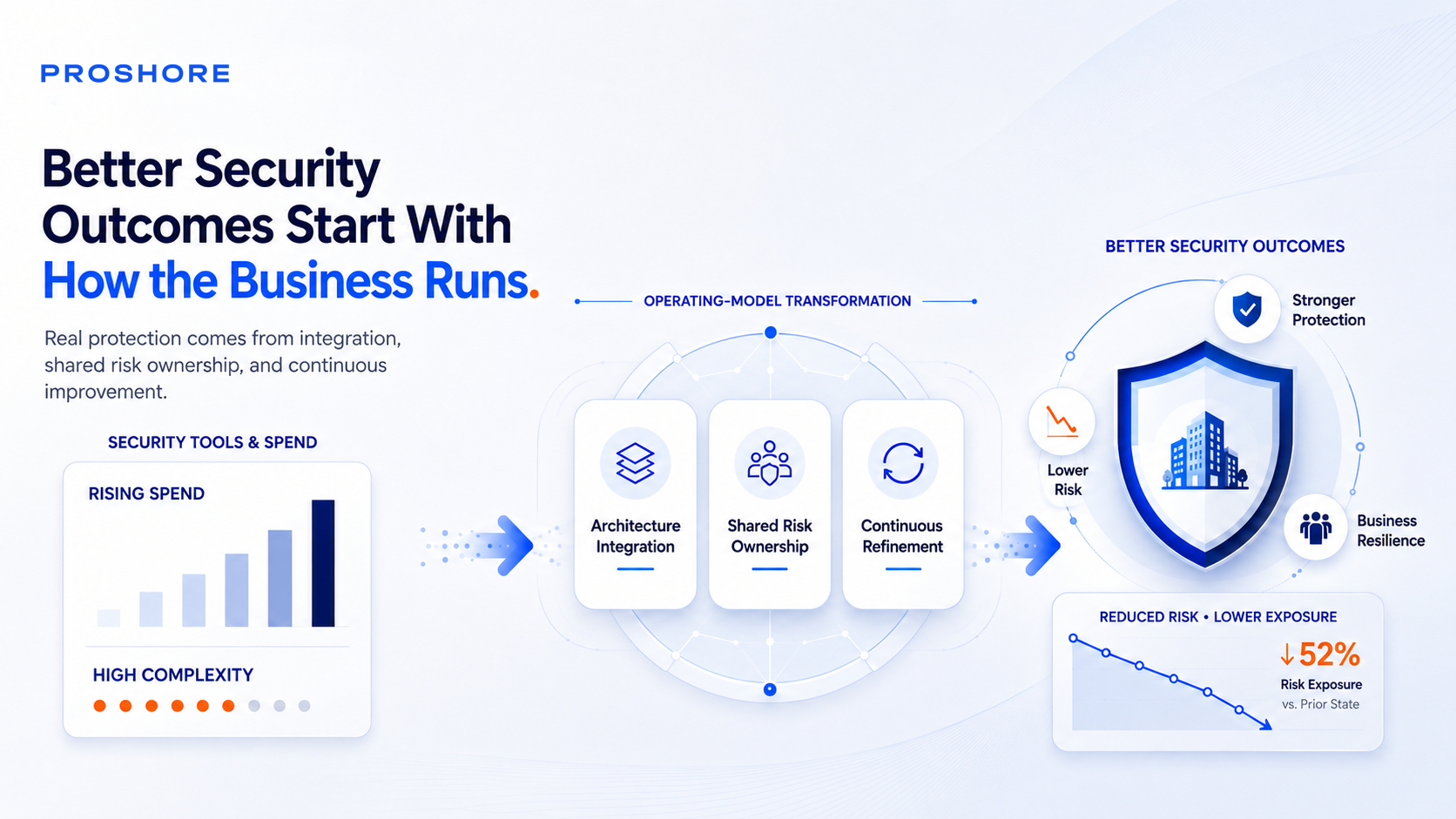
Security capabilities deliver genuine enterprise protection only when spending leads to full operating-model transformation.
Enterprises that look past deployment numbers and treat security as a strategic business discipline, focusing on architecture integration, shared risk ownership, and continuous refinement, achieve noticeably better protection.
By folding security thinking into broader modernization programs, creating habits of ongoing improvement, and building resilience by design, organizations can escape the cycle of heavy outlays paired with stubborn exposure.
The tools are available. What matters is how they become part of the way the business actually runs.


In today’s digital-first world, software isn’t just supporting the business—it is the business. From internal tools to customer-facing platforms, companies are under constant pressure to ship faster, scale reliably, and still maintain quality. So how do modern software teams pull it off?
Let’s break it down.

1. Clear Problems Before Clever Solutions
High-performing software teams don’t start with technology—they start with problems.
Instead of asking “Which framework should we use?”, they ask:
- What pain point are we solving?
- Who is affected by it?
- How will we measure success?
This problem-first mindset prevents overengineering and ensures the final product actually delivers value.
2. Modular, Scalable Architecture
Modern applications are built to evolve. That’s why many teams rely on:
- Modular codebases
- API-driven architectures
- Cloud-native infrastructure
This approach allows teams to scale specific features independently, reduce risk during updates, and adapt quickly as requirements change.
3. Automation Everywhere
Speed without automation doesn’t scale.
Successful teams automate:
- Testing (unit, integration, end-to-end)
- Deployments (CI/CD pipelines)
- Monitoring and alerts
Automation reduces human error, shortens release cycles, and frees developers to focus on solving real problems—not repetitive tasks.
4. Collaboration Beats Silos
Modern software development is a team sport.
Designers, developers, QA engineers, and product managers work closely together—often in short feedback loops. Tools like shared design systems, issue trackers, and real-time communication platforms help keep everyone aligned.
The result? Fewer surprises and better products.
5. Continuous Improvement
Great software is never truly “done.”
High-performing teams regularly:
- Review what worked (and what didn’t)
- Gather user feedback
- Refactor and optimize
This culture of continuous improvement ensures the software stays relevant, performant, and easy to maintain.
Final Thoughts
Building software faster doesn’t mean cutting corners. It means making smarter decisions—about architecture, processes, and collaboration.
At its core, modern software development is about clarity, consistency, and care. When teams get those right, speed naturally follows.
Want to learn how your software team can improve delivery without sacrificing quality? Get in touch with us or explore more insights on our blog.