

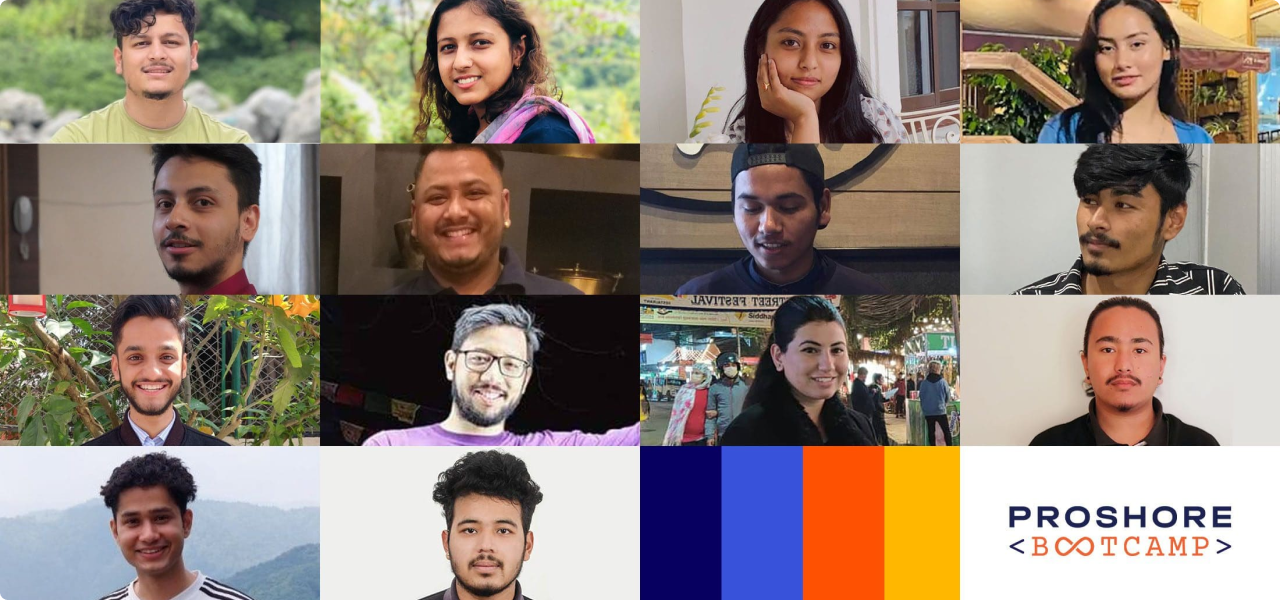
“What you are trying to do with your little IT company in Nepal from the Netherlands won't work, Haico. You have to be here and stay on top of things yourself.” Haico Duisters, co- founder of Proshore, was given this advice by a Belgian entrepreneur when he was in Kathmandu for business. “In the end, he had to pull the plug, while our company continues to grow!”
“We owe the success of our company in part to the way in which we work together with others. By giving our employees freedom and inviting them to provide input, we create an active and involved business culture.” We have applied the Dutch approach in Nepal - and it works. “Only new employees address me as ‘Sir,’ but they stop doing that in less than two weeks.”
Last week, I attended a presentation about process optimisation. They told me that the process takes precedence and people come second. I believe that people make the product and that they should be able to bring out the best in themselves. What that is, exactly, differs per person. Someone who comes to work for us straight out of school needs knowledge, so that must be available in the company. Sometimes, there are people who already possess the knowledge they need, but now they want to continue their professional development. We do our best to help them as well.
There are even some Nepalese colleagues who want to come work in the Netherlands. We are currently exploring the possibilities of facilitating that. Apparently, there are few Dutch entrepreneurs in Nepal and the consulate in in favour of the idea, so we are launching a new programme for this.” Nepalese people working at a business park in the North Brabant town of Heeze - you don't see that every day. Haico laughs: “Who knows, we may end up moving to the city!”
Moving competences around
Haico sees the company as a large collection of desired and available competences: “Our business partner Roshan is a technician. He has far more affinity with technology than with HR policy, for example. We have therefore assigned that task to someone else. In this manner, you can move the necessary competences around between people. By making managers owners of tasks they are good at, things will work out eventually. The same goes for lower levels of the organisation. We have someone who is an authority in the IT world when it comes to WordPress and we therefore support him in that role. For example, he gets to train two of his colleagues for an hour every day. That investment will pay for itself. I ask people what their personal goals are and how I can help them achieve those goals. You can tell that people appreciate having someone listen to what they want. The latter is even more important than one's salary, which is quite remarkable for a country like Nepal where a high wage is still seen as a status symbol.”
Some hierarchy to boost motivation
“Way back when, we started out with just six people. Before long, we had a team of fourteen or fifteen. There came a time when Roshan and I could no longer handle everything by ourselves. We then introduced a department structure: application development, front-end development, mobile development and e-commerce, with managers at the head of each department.”
That is uncommon, because it is said that managers should be kept away from knowledge workers. “In many cases, hierarchy doesn't actually add anything. For us, however, one layer of it resulted in far more initiative. On the one hand, people see that there are career advancement opportunities available to them, because the manager used to be one of them. On the other hand, it creates a far more active business culture. For example, they have weekly knowledge sessions in which people exchange ideas that others then develop further. The managers have their own meetings. They bring issues from their respective departments to the table, which the company actively seeks to resolve. People see that something is being done with their ideas. The threshold to approach me or Roshan was too high; people in Nepal are more likely to talk to someone whose hierarchical position is closer to their own.”
Haico has great respect for his Nepalese colleagues. “People in the Netherlands still think they follow us in everything, but that is not true anymore. In fact, they sometimes lead the way in the right composition. They take initiatives that make me think: “You took care of that well!”
[:en]“What you are trying to do with your little IT company in Nepal from the Netherlands won't work, Haico. You have to be here and stay on top of things yourself.” Haico Duisters, co-founder of Proshore, was given this advice by a Belgian entrepreneur when he was in Kathmandu for business. “In the end, he had to pull the plug, while our company continues to grow!”
A Dutch approach in Nepal
“We owe the success of our company in part to the way in which we work together with others. By giving our employees freedom and inviting them to provide input, we create an active and involved business culture.” We have applied the Dutch approach in Nepal - and it works. “Only new employees address me as ‘Sir,’ but they stop doing that in less than two weeks.”
Last week, I attended a presentation about process optimisation. They told me that the process takes precedence and people come second. I believe that people make the product and that they should be able to bring out the best in themselves. What that is, exactly, differs per person. Someone who comes to work for us straight out of school needs knowledge, so that must be available in the company. Sometimes, there are people who already possess the knowledge they need, but now they want to continue their professional development. We do our best to help them as well.
There are even some Nepalese colleagues who want to come work in the Netherlands. We are currently exploring the possibilities of facilitating that. Apparently, there are few Dutch entrepreneurs in Nepal and the consulate in in favour of the idea, so we are launching a new programme for this.”
Nepalese people working at a business park in the North Brabant town of Heeze - you don't see that every day. Haico laughs: “Who knows, we may end up moving to the city!” Moving competences around
Haico sees the company as a large collection of desired and available competences: “Our business partner Roshan is a technician. He has far more affinity with technology than with HR policy, for example. We have therefore assigned that task to someone else. In this manner, you can move the necessary competences around between people. By making managers owners of tasks they are good at, things will work out eventually. The same goes for lower levels of the organisation. We have someone who is an authority in the IT world when it comes to WordPress and we therefore support him in that role. For example, he gets to train two of his colleagues for an hour every day. That investment will pay for itself. I ask people what their personal goals are and how I can help them achieve those goals. You can tell that people appreciate having someone listen to what they want. The latter is even more important than one's salary, which is quite remarkable for a country like Nepal where a high wage is still seen as a status symbol.”
Some hierarchy to boost motivation
“Way back when, we started out with just six people. Before long, we had a team of fourteen or fifteen. There came a time when Roshan and I could no longer handle everything by ourselves. We then introduced a department structure: application development, front-end development, mobile development and e-commerce, with managers at the head of each department.”
That is uncommon, because it is said that managers should be kept away from knowledge workers. “In many cases, hierarchy doesn't actually add anything. For us, however, one layer of it resulted in far more initiative. On the one hand, people see that there are career advancement opportunities available to them, because the manager used to be one of them. On the other hand, it creates a far more active business culture. For example, they have weekly knowledge sessions in which people exchange ideas that others then develop further. The managers have their own meetings. They bring issues from their respective departments to the table, which the company actively seeks to resolve. People see that something is being done with their ideas. The threshold to approach me or Roshan was too high; people in Nepal are more likely to talk to someone whose hierarchical position is closer to their own.”
Haico has great respect for his Nepalese colleagues. “People in the Netherlands still think they follow us in everything, but that is not true anymore. In fact, they sometimes lead the way in the right composition. They take initiatives that make me think: “You took care of that well!”