

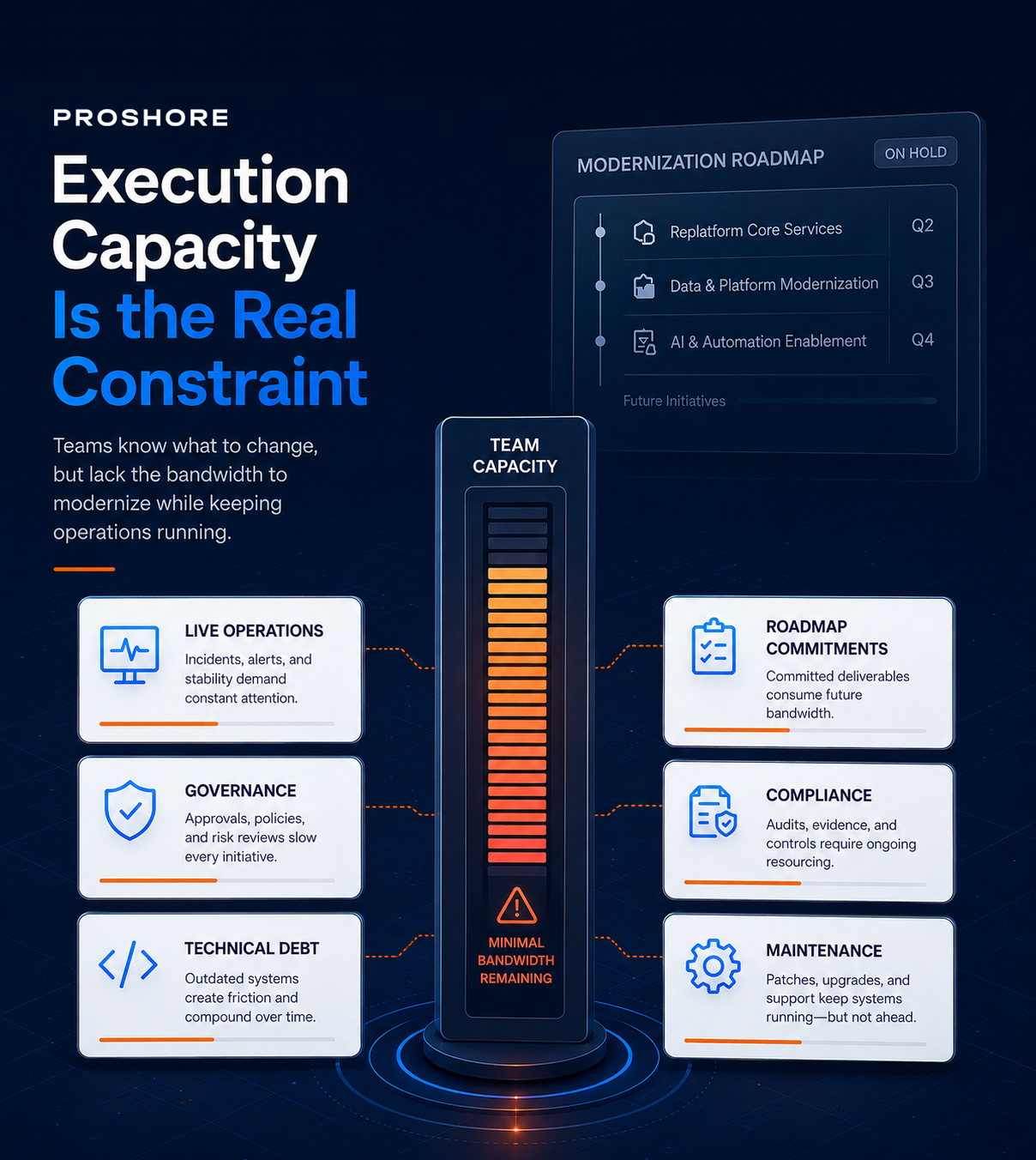
Most organizations do not struggle to identify what requires modernization. They struggle to execute it without disrupting core systems and ongoing operations.
Deloitte’s 2026 Global Technology Leadership Study estimates that technical debt consumes 21 to 40 % of IT spending and that a majority of legacy modernization initiatives fail or underdeliver.
This reinforces the cost and execution risk associated with large-scale change.
The need for modernization is clear, yet execution remains constrained by existing systems and operational risk.
The limitation lies not in vision or technology but in the ability to deliver change within live enterprise environments without compromising stability or continuity.
These challenges typically show up in the following patterns:
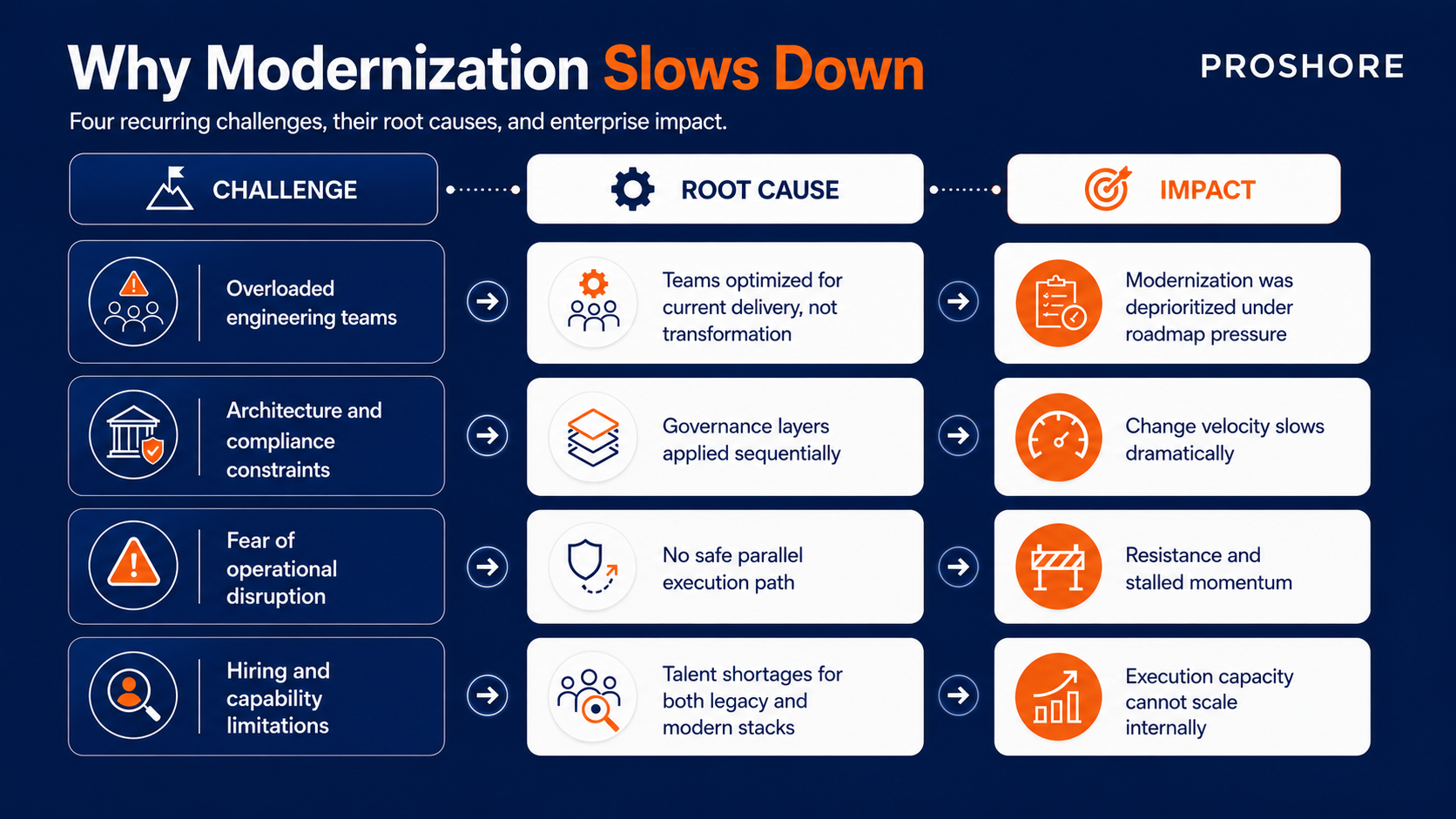
(Based on Saritasa Legacy Software Modernization Survey 2025 and Deloitte 2026 Global Technology Leadership Study)
The Real Constraint: Execution Capacity
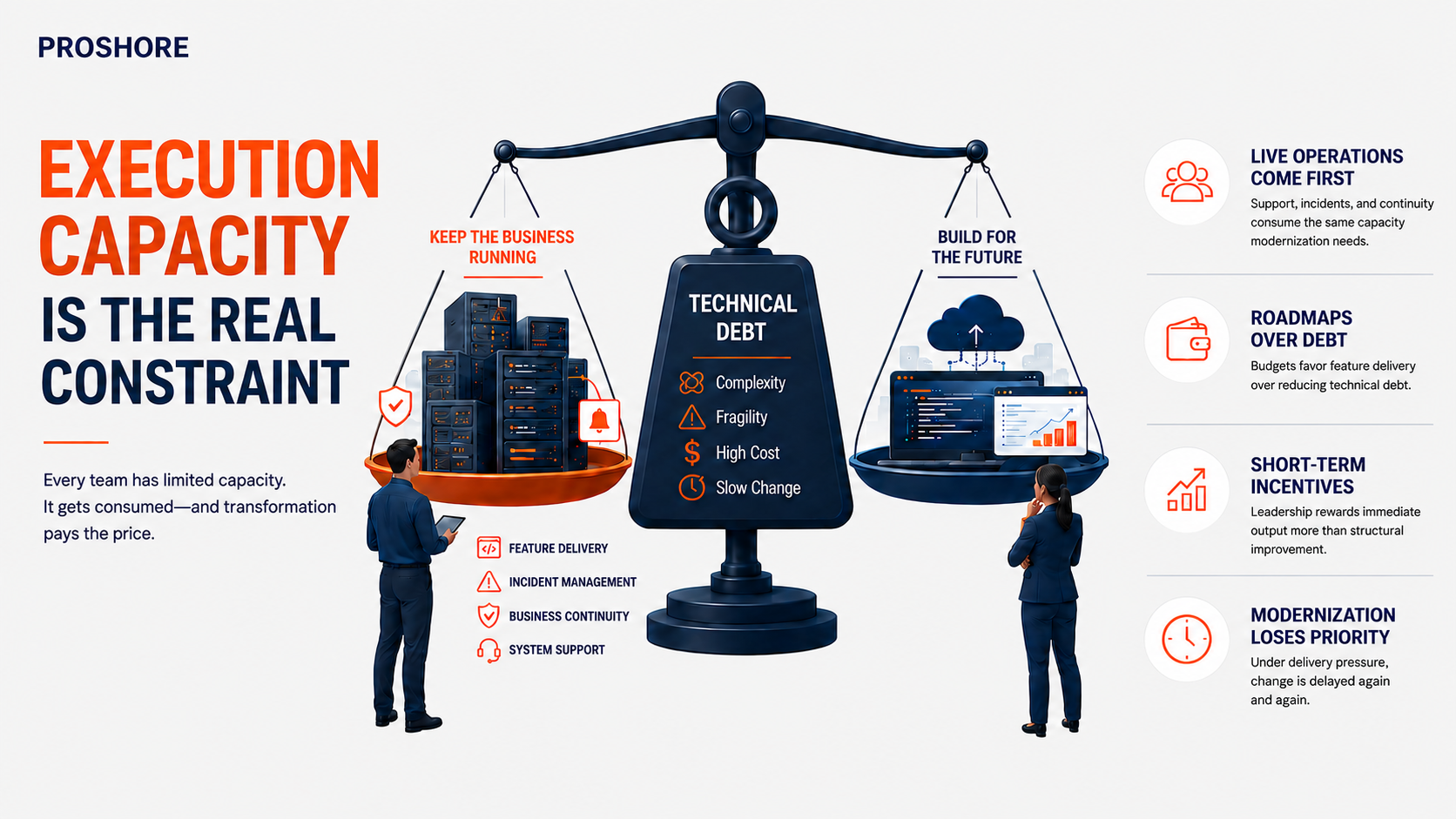
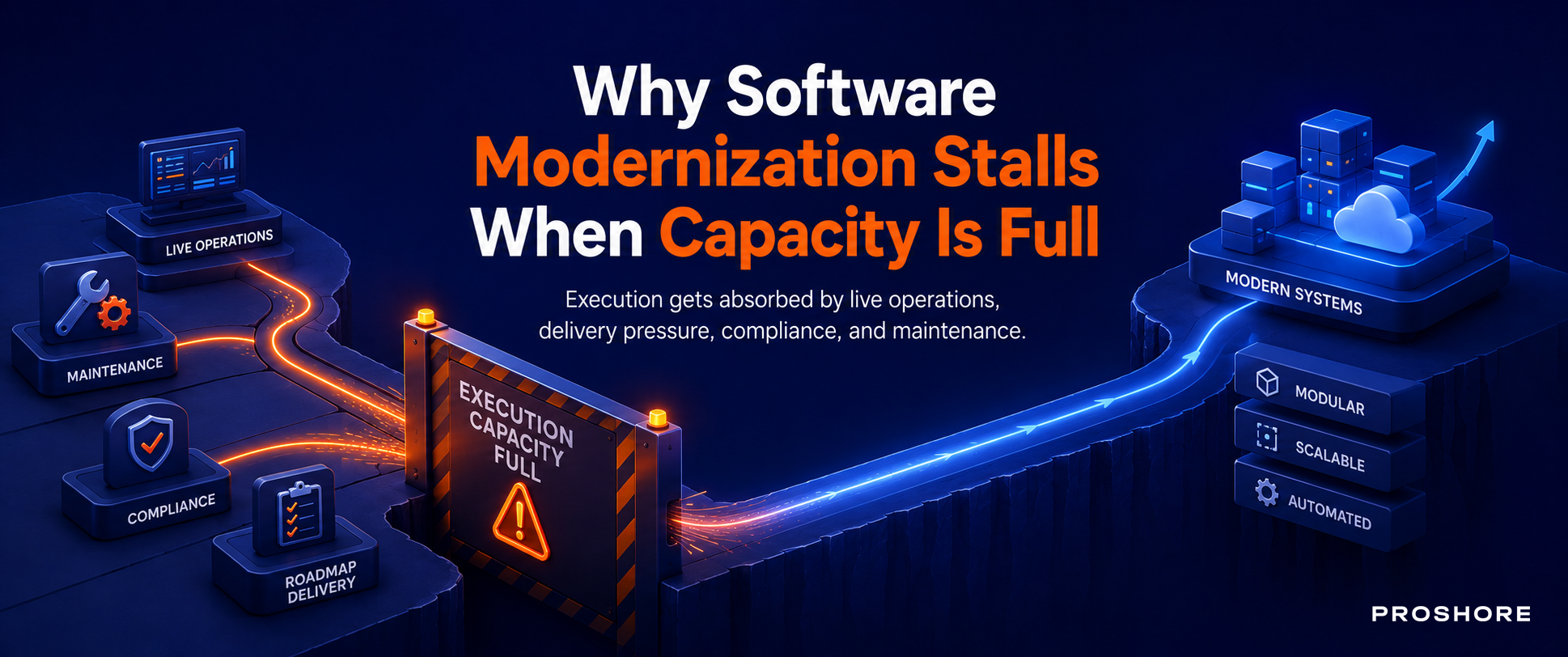
Modernization requires dedicated capacity and structured sequencing. It must be executed alongside live operations and ongoing system support.
Teams are organized and incentivized for delivery continuity rather than structural evolution. Budgets prioritize roadmap commitments over reducing technical debt.
Leadership incentives emphasize short-term output over long-term system improvement.
This creates a resource-allocation trade-off in which modernization competes with feature delivery, incident management, and business continuity. It consistently loses priority under delivery pressure.
This reflects a systems design failure where execution capacity is not established as a continuous capability alongside live operations.
Why Full System Replacement Often Fails
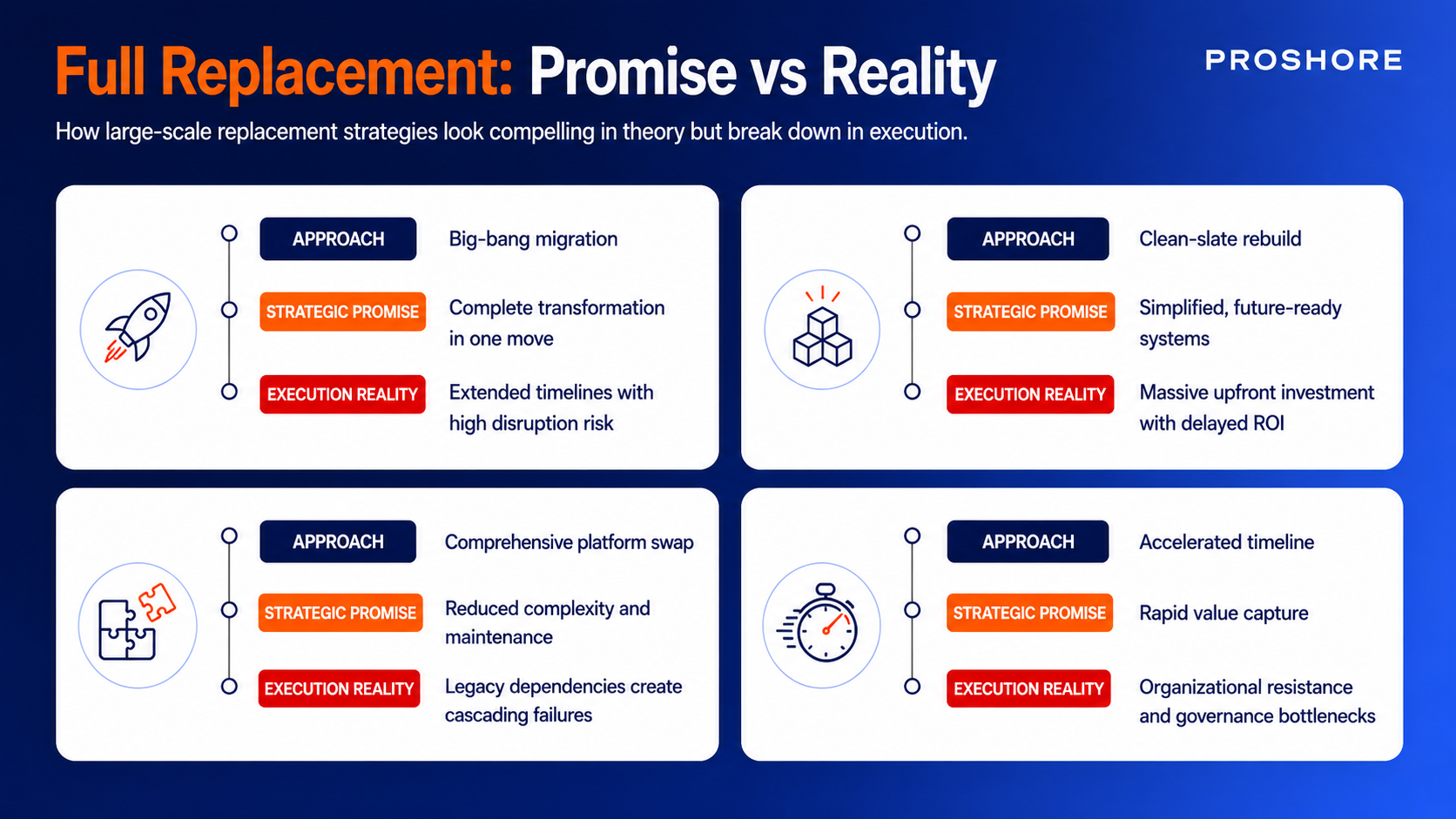
Full system replacement is attractive at the strategy level. It promises a clean slate and a future-ready architecture with simplified operations.
In execution, it introduces long delivery timelines, high operational risk, delayed value realization, and large upfront investment.
It also creates significant organizational resistance.
These programs assume uninterrupted focus, sustained capacity, and tolerance for disruption that do not exist in live enterprise environments.
Strategic intent collides with operational feasibility. Most full replacements stall because the delivery model cannot sustain execution alongside day-to-day operations.
A Lower-Risk Modernization Model
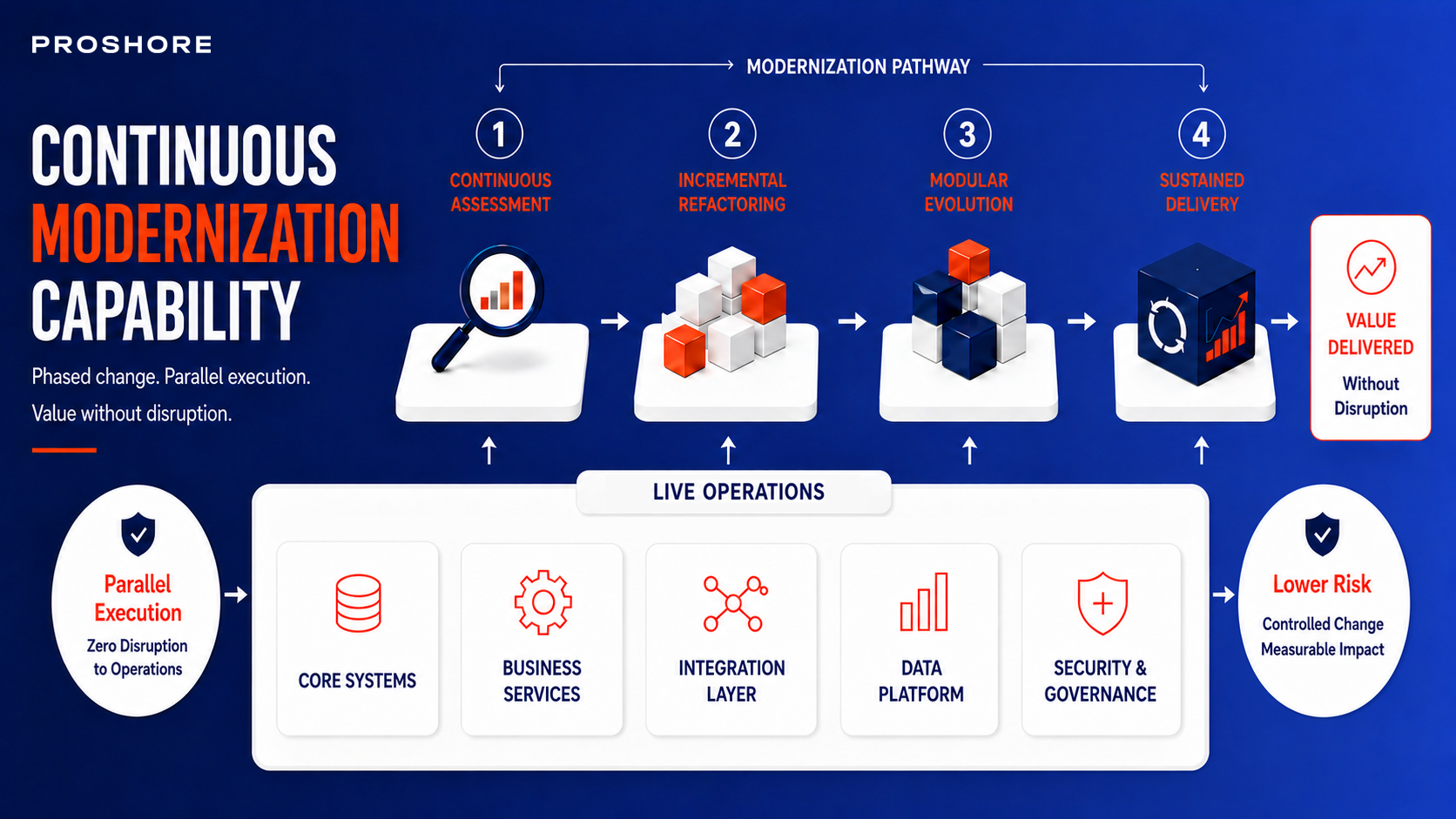
Modernization succeeds when it is treated as a continuous capability within the delivery system.
It runs in parallel with live operations through phased assessment and incremental refactoring. Modular architecture evolves over time with dedicated execution support.
Continuous assessment identifies priorities. Incremental refactoring delivers value without disruption.
Modular evolution reduces system dependencies over time. This approach converts technical debt into a structured backlog.
It enables controlled system evolution and sustained delivery progress.
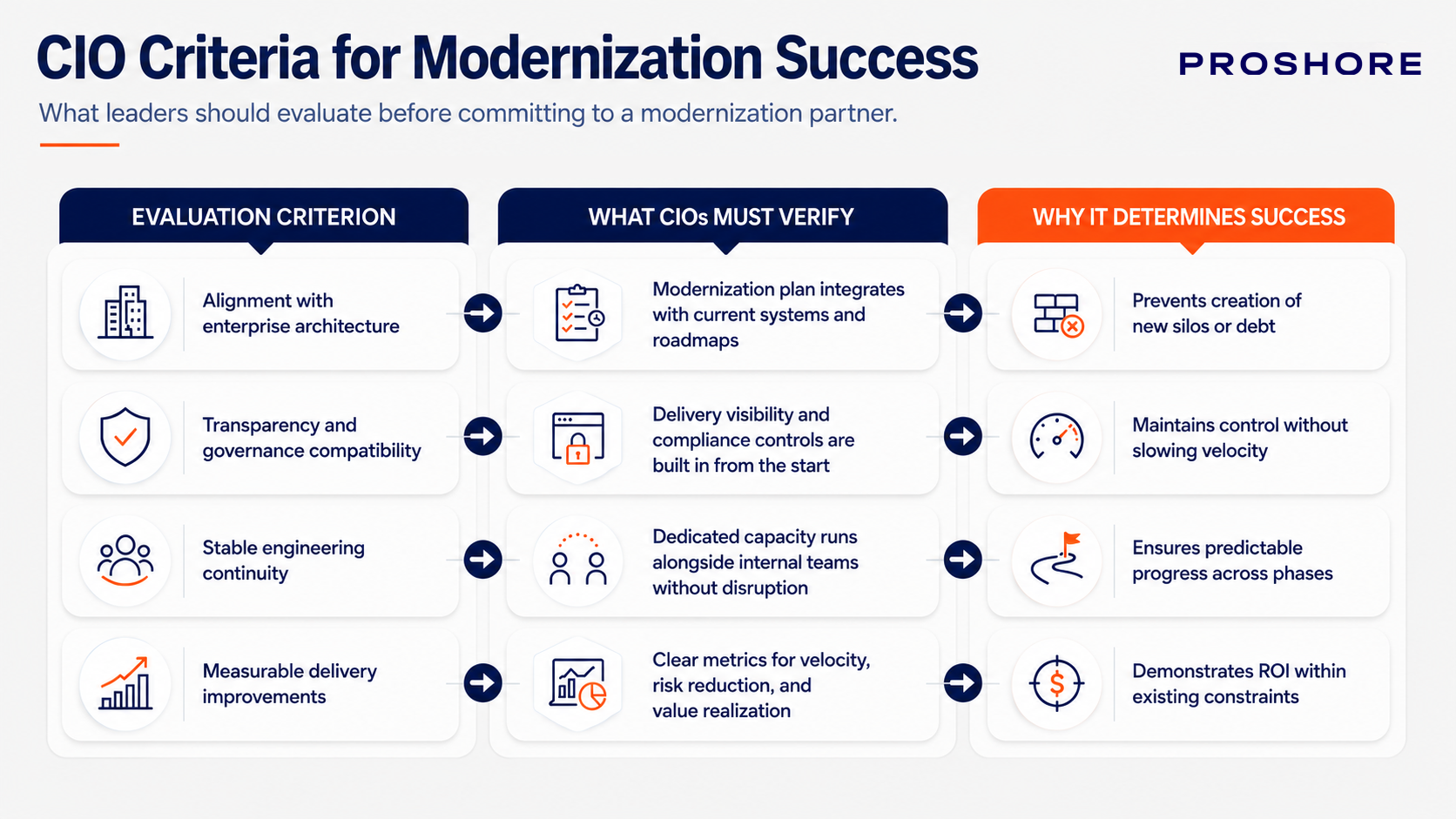
Evaluating Modernization Within Enterprise Constraints
CIOs are not selecting technology in isolation. They are selecting execution initiatives that align with governance structures. These models must sustain operational continuity and deliver measurable improvement within the broader roadmap.
The central question then often shifts from “Is this the right architecture?” to “Can this modernization approach align with our governance realities and execution capacity?”
Proshore as an Execution Layer for Continuous Modernization
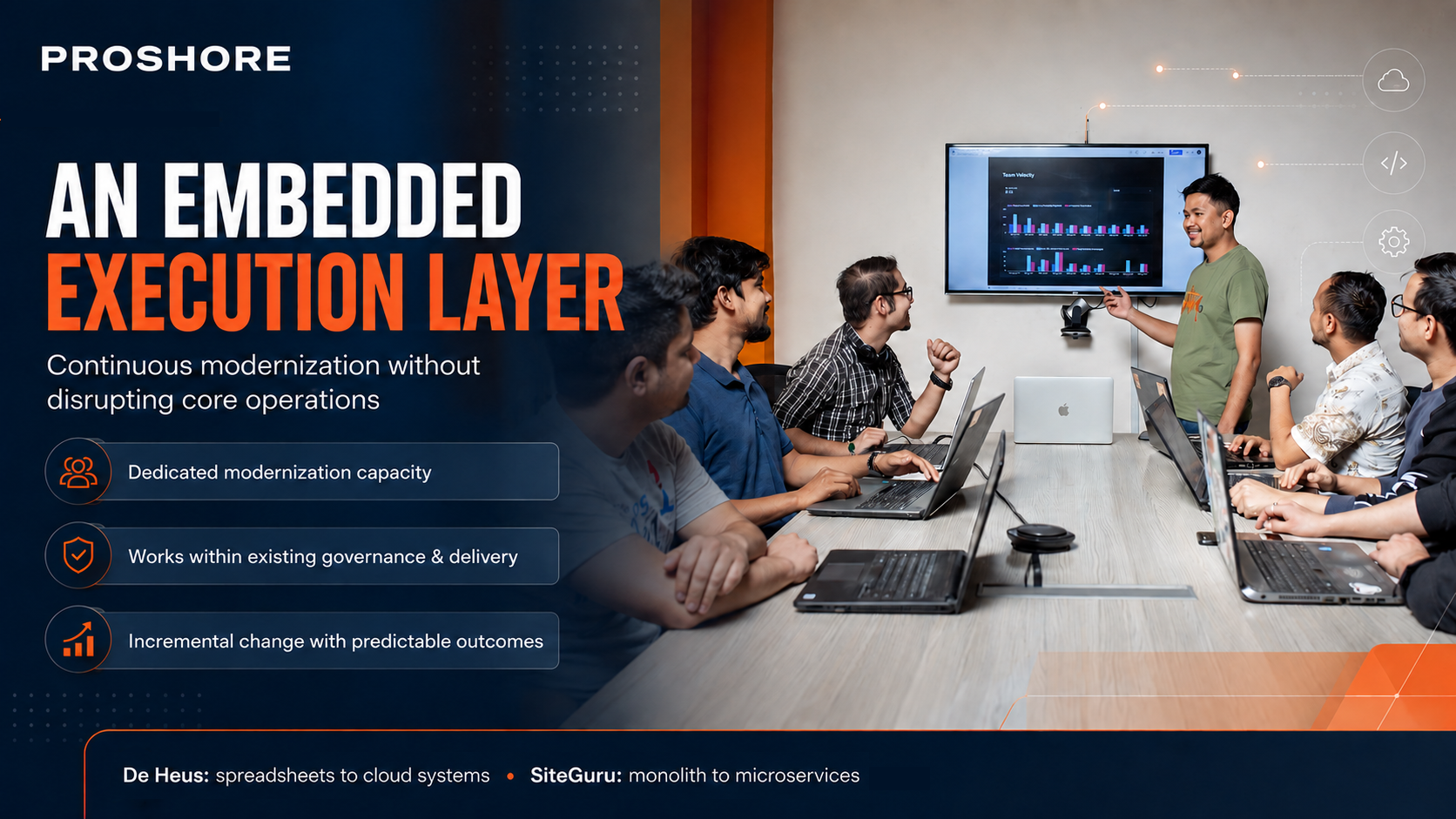
Proshore supports internal teams by providing dedicated modernization capacity that does not compete with roadmap delivery.
It operates within existing governance structures and delivery systems as an embedded execution layer.
This approach enables incremental modernization while maintaining operational continuity and delivery stability.
Organizations modernize without disrupting core operations. Systems evolve while business commitments continue. Progress is delivered in controlled increments with predictable outcomes.
Since 2018, Proshore has supported De Hues in modernizing operations by replacing spreadsheet-driven workflows with scalable cloud-based systems integrated across business units, improving operational visibility and reducing manual dependency.
Proshore also modernized SiteGuru by transitioning a monolithic application to a microservices architecture, increasing system flexibility and enabling continuous delivery without service disruption.
Conclusion
Modernization breaks down under delivery pressure as capacity shifts to live operations, and systems resist parallel change.
This forces a trade-off. Feature delivery is often prioritized over stability, and incident response and modernization are delayed or fragmented.
Sustained modernization requires a different execution model. Capacity must be allocated alongside ongoing delivery. System change must be incremental and integrated into existing workflows.
Organizations that achieve this do not rely on large-scale programs. They modernize through controlled increments that maintain stability and improve systems over time.
As execution becomes consistent, change becomes manageable, and outcomes become more visible.