

Why SaaS Scaling Slows Down Product Delivery
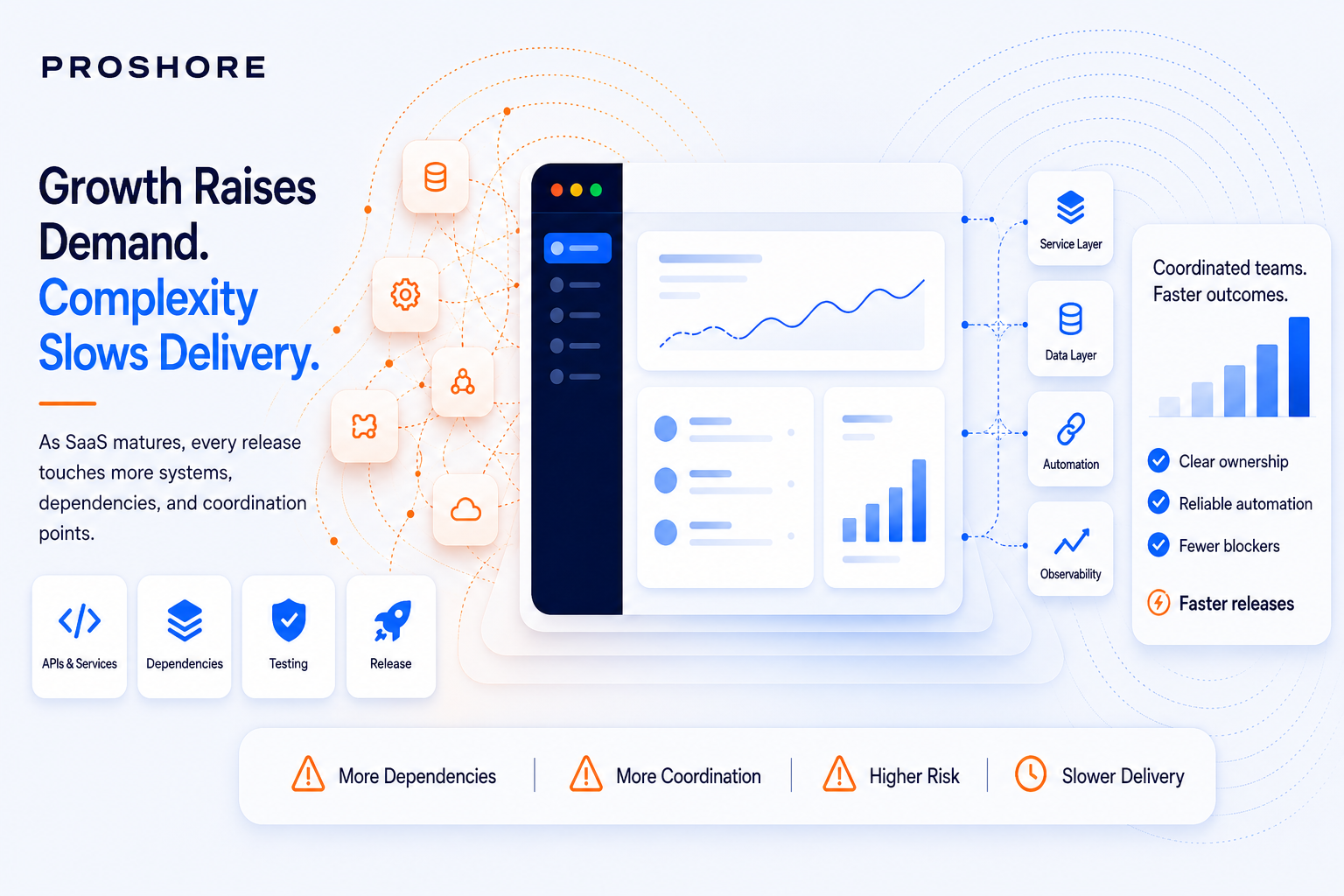
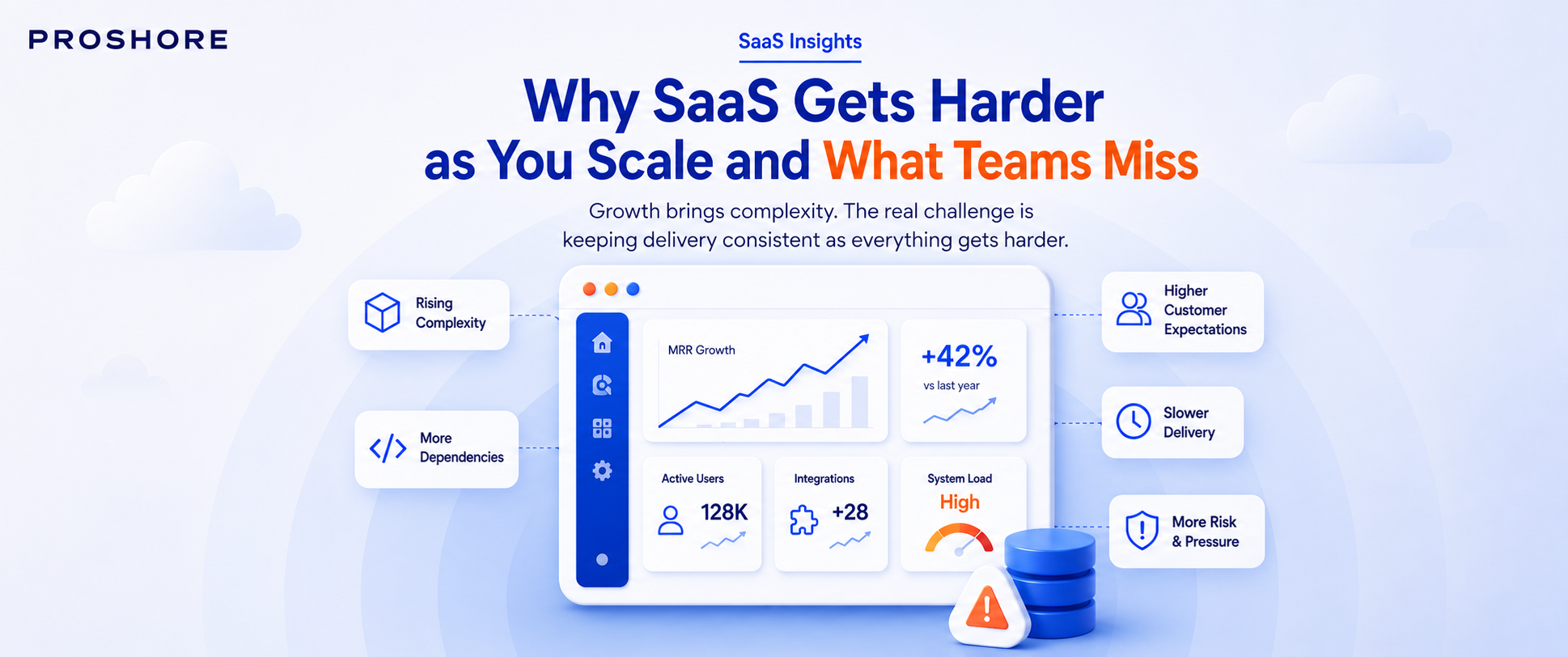
SaaS growth increases complexity across every layer of the product.
As usage grows and customer needs become more complex, the same delivery model becomes harder to sustain.
The product does not simply become bigger. It becomes harder to change.
Early-stage SaaS teams often move quickly because the system is still relatively contained.
The codebase is smaller, and decisions move faster because fewer dependencies are involved. As the platform matures, every new feature interacts with more existing systems.
A simple product update may now move through application changes, API updates, testing, and customer communication before release.
This is where SaaS companies begin to feel the hidden cost of scale.
Growth increases demand, but complexity reduces delivery speed. The constraint is no longer whether the product has market potential.
The constraint becomes whether the engineering organization can keep delivering consistently under rising system pressure.
What Changes as a SaaS Product Grows
Scaling changes the operating environment around the product.
A SaaS platform that once served one focused user group may eventually support broader customer needs and more complex workflows.
Each new layer adds value, but it also increases the number of things the engineering team must protect.
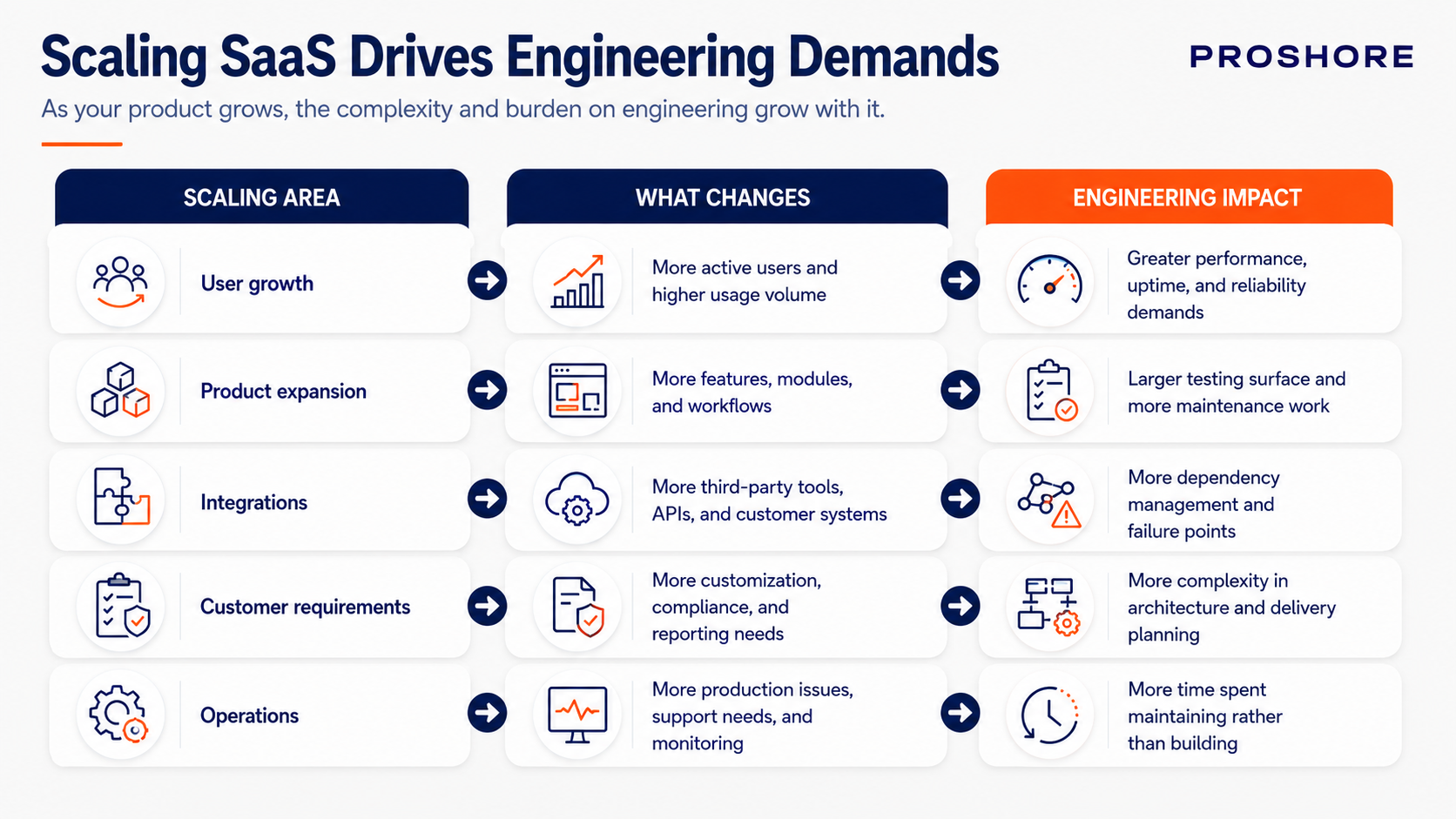
These changes usually accumulate slowly rather than appearing all at once.
That is why many SaaS teams do not notice the problem until delivery speed has already declined.
The team is still working hard, but output feels slower. Roadmaps become harder to commit to.
Product leaders start questioning why a team that once moved quickly now needs more time for each release.
Where SaaS Teams Start Slowing Down
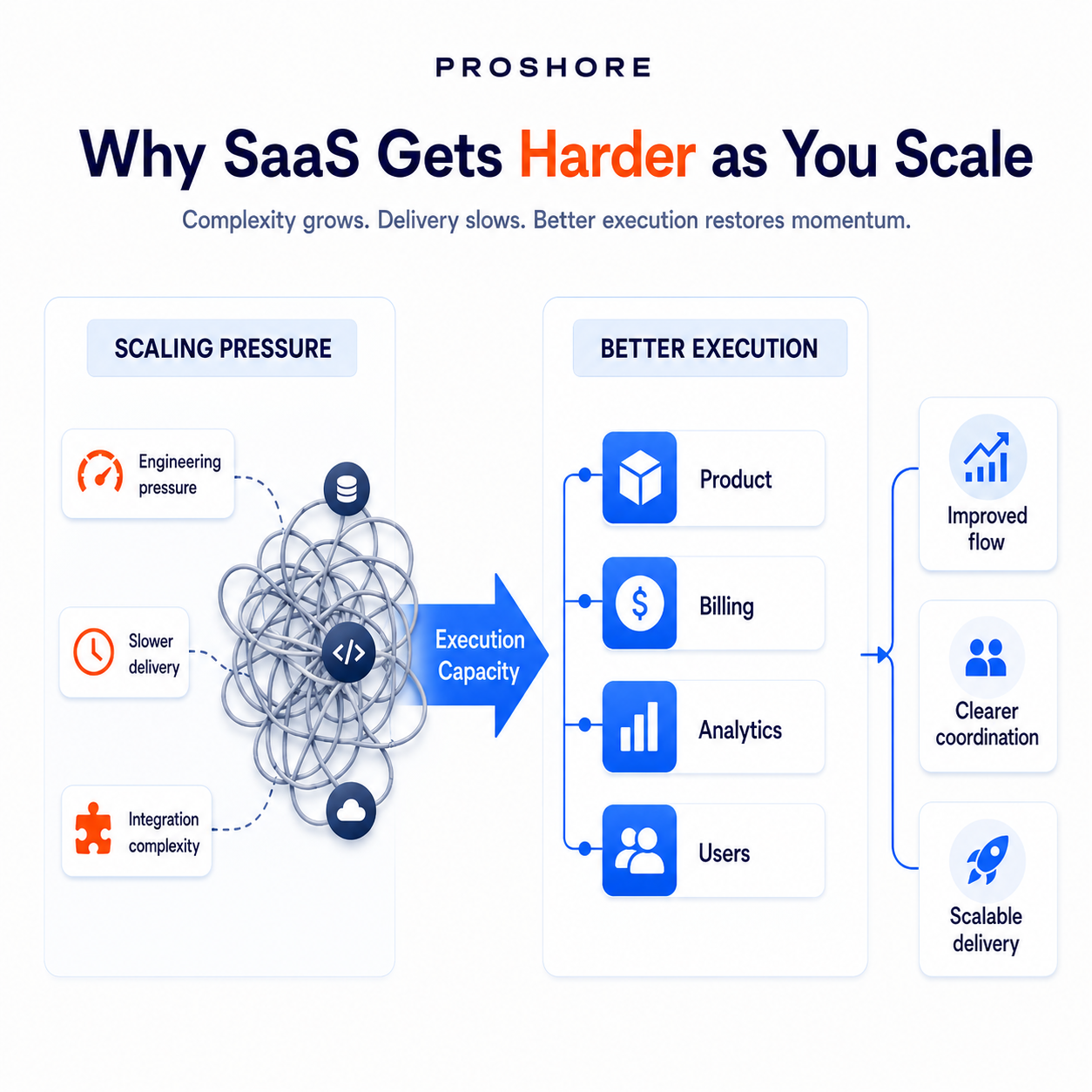
SaaS teams usually slow down when engineering capacity gets pulled in too many directions at the same time.
The same team is expected to keep building new features while also protecting platform stability and handling urgent delivery work.
At first, this may feel manageable. Over time, the balance shifts from proactive product development to reactive maintenance.
This slowdown usually appears in a few familiar patterns.
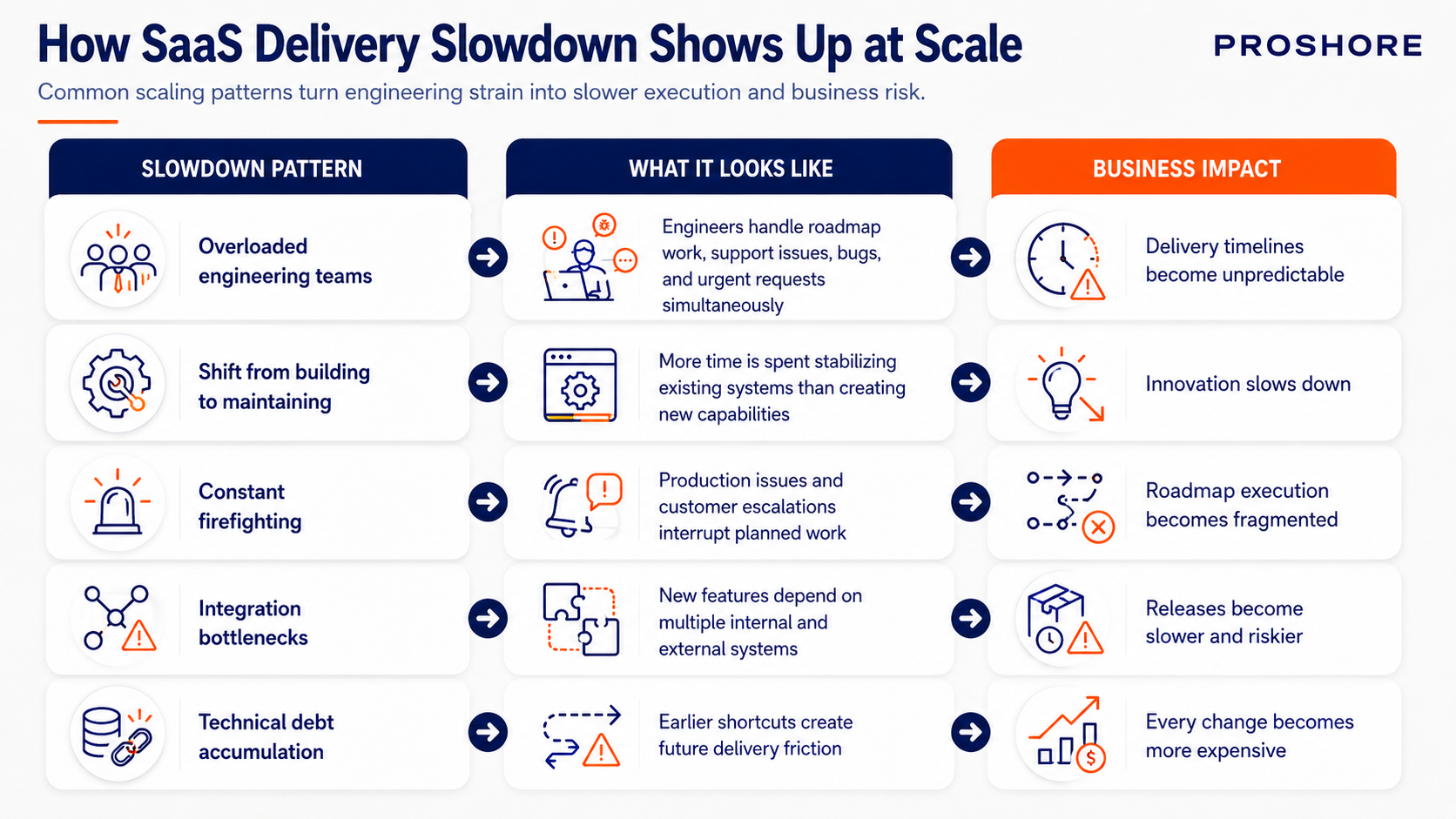
This creates a difficult cycle. Growth keeps moving forward, but engineering capacity is pulled deeper into maintaining the platform already in place.
The team is not failing. The delivery model has not evolved with the product.
Why SaaS Growth Becomes a Delivery Capacity Problem
As SaaS products scale, the main constraint often becomes the team’s ability to keep delivery predictable.
This is different from simple headcount. A company may have developers and still lack delivery capacity.
It may have a roadmap and still lack the operational ability to execute it predictably.
Even strong engineers can struggle when they are spread across too many competing responsibilities.SaaS scaling requires steady delivery support that fits the existing product environment.
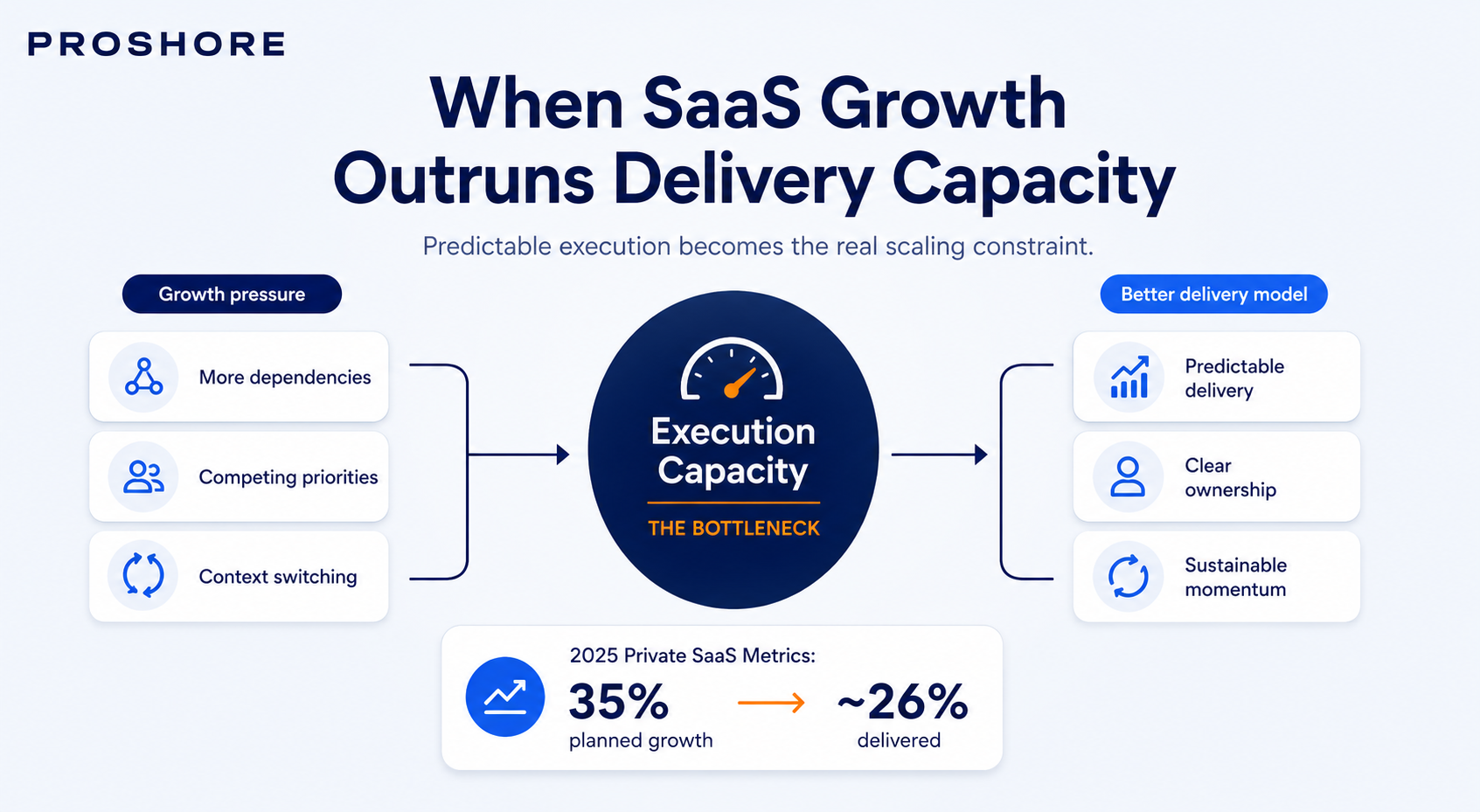
SaaS Capital’s 2025 Private SaaS Metrics report shows the gap clearly. Many companies planned for 35% growth but delivered around 26%, showing how execution often falls behind ambition. (Source: SaaS Capital 2025 Private SaaS Metrics)
Instead of asking, “How many features can we build?” SaaS leaders need to ask, “Can our engineering model support the product complexity we have created?”
That question matters because SaaS growth depends on delivery that remains consistent under pressure.
Why Hiring More Developers Does Not Always Fix SaaS Scaling
Hiring is often the first response when SaaS delivery slows down. The logic seems reasonable. More work requires more people.
But hiring alone rarely solves the pressure quickly because new engineers need time to understand both the product and the delivery environment.
A larger team can help, but it also adds coordination needs that must be managed carefully.
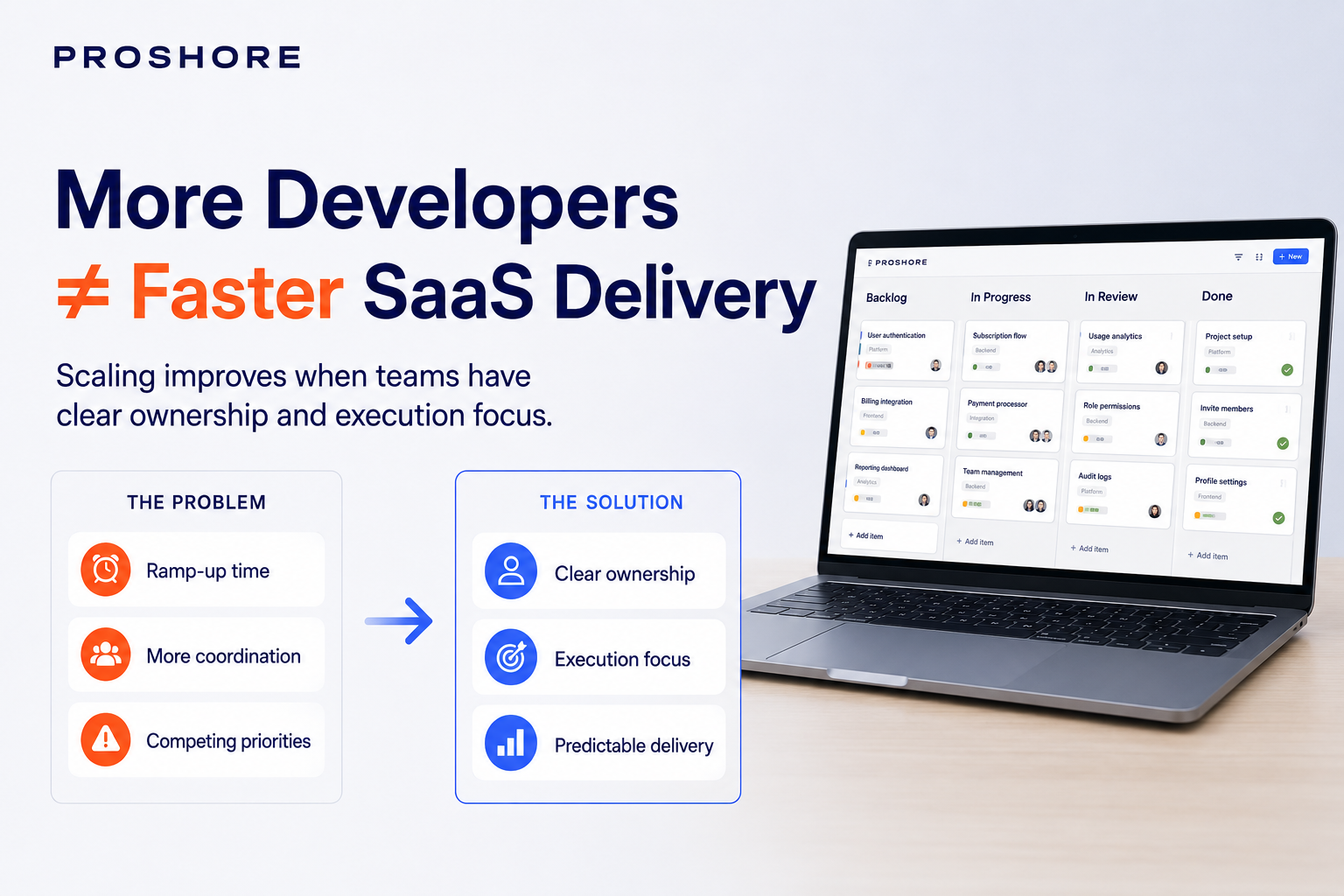
Without the right delivery structure, adding headcount can increase complexity before it improves output.
Hiring is still necessary, but it rarely solves immediate execution pressure by itself.
For CTOs, the risk is assuming a larger team will automatically improve delivery. Scaling improves when the delivery model gives teams clear ownership and execution focus.
How SaaS Teams Can Scale Delivery Without Overloading Engineers
A more sustainable SaaS scaling model combines internal product ownership with embedded execution support.
Internal teams should continue owning the product vision and strategic direction behind the platform.
But they do not need to absorb every layer of execution pressure alone.
Embedded teams can support the existing engineering model by keeping delivery moving while internal teams stay focused on strategic product work.
This becomes more important as SaaS companies add AI into existing products.
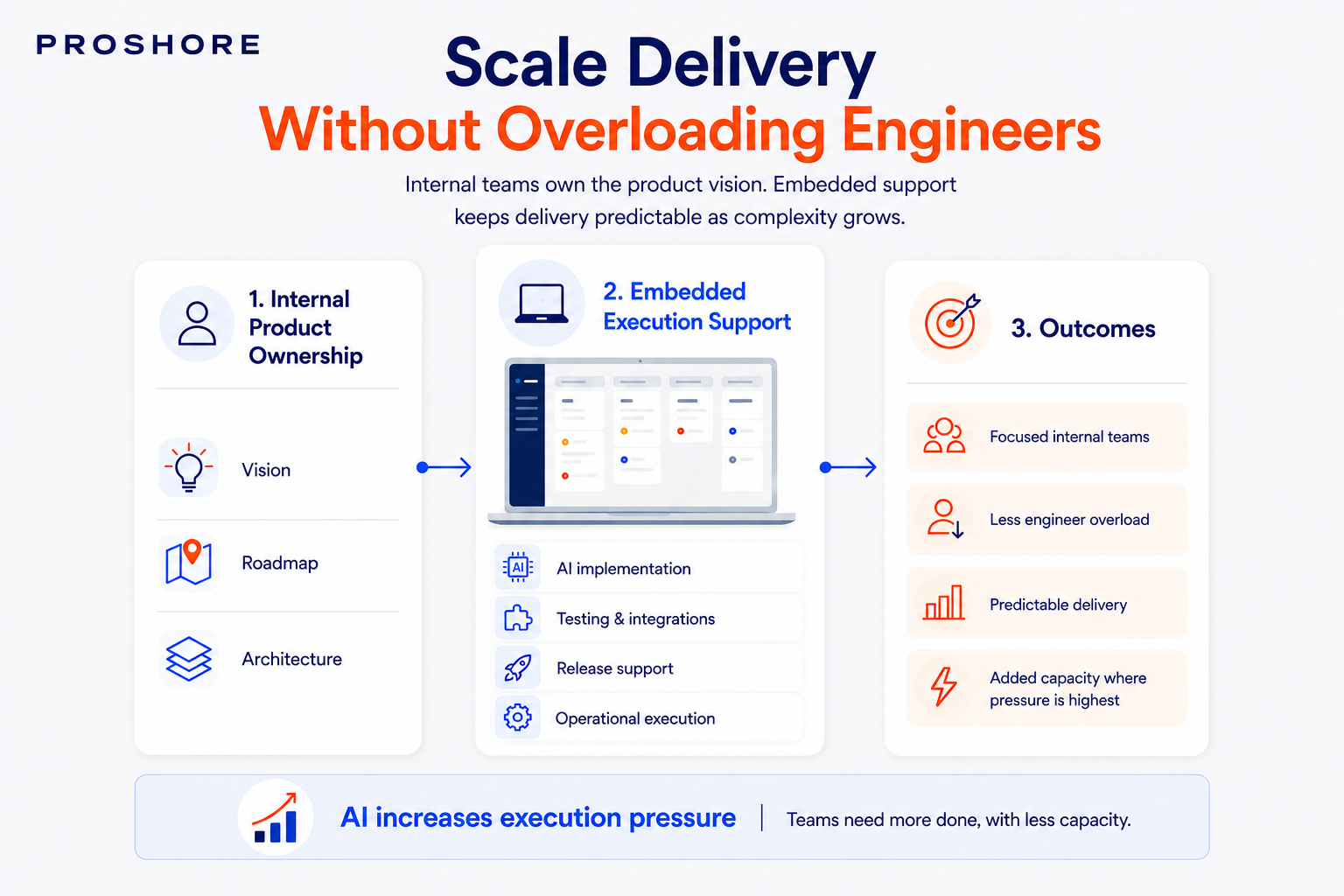
Legacy SaaS companies must reinvent architectures without disrupting core products, while execution teams operationalize AI across engineering, support, and operations. (Source: McKinsey 2025 AI in SaaS Report)
Instead of relying only on permanent hiring cycles, SaaS companies can add delivery capacity where pressure is highest. Embedded support also helps protect internal engineers from execution-heavy work that slows roadmap delivery.
However, embedded support is not meant to replace internal teams. It helps them stay focused while delivery remains predictable as product complexity grows.
This model is especially important when SaaS companies are past the early product stage but not yet large enough to absorb all execution demands internally.
At that stage, growth creates enterprise-level complexity before the organization has enterprise-level engineering capacity.
What CTOs Should Look For When Scaling SaaS Delivery
CTOs need to evaluate SaaS scaling through delivery capacity and technical readiness.
The question is not only whether the product can support more users. The deeper question is whether the engineering model can support more complexity without slowing down the business.
CTOs should verify that the team can maintain roadmap execution while supporting existing systems.
They must confirm the platform can grow without making delivery or reliability less predictable.Integration work needs clear ownership so dependencies do not block releases.
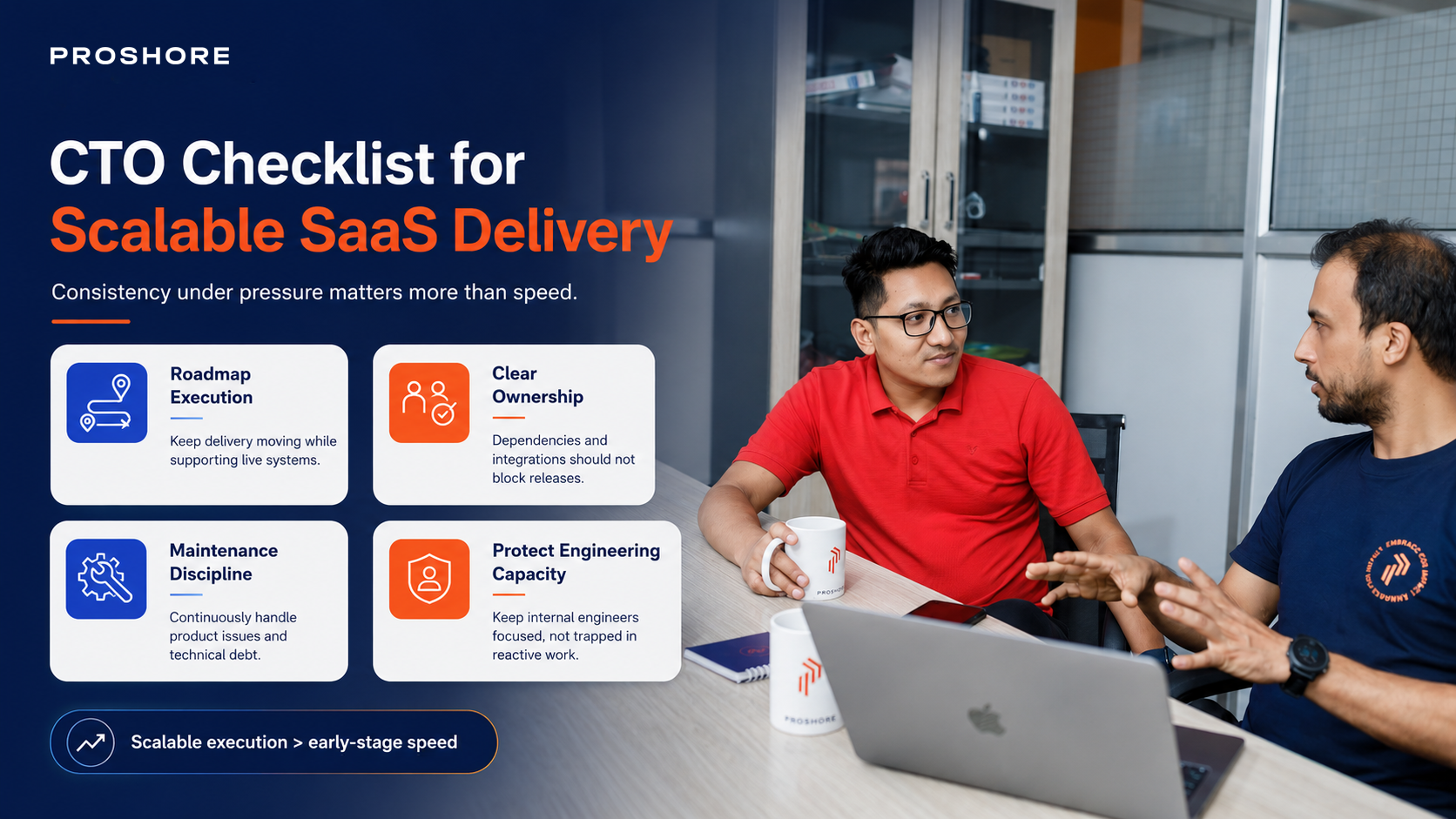
Maintenance discipline is critical so product issues and technical debt are handled continuously.
Most importantly, internal engineers should not be constantly pulled into reactive work because that protects strategic engineering capacity.
For CTOs, speed often matters less than consistency under pressure. A scaling SaaS team must keep delivery moving even as complexity increases.
That is the difference between early-stage speed and scalable execution.
How Proshore Supports SaaS Scaling Execution
Proshore helps SaaS companies protect delivery momentum as product complexity grows.
As SaaS platforms expand, engineering teams are expected to keep delivery moving while managing integration debt and introducing AI without disrupting the core platform.
Proshore helps absorb that pressure through embedded development capacity that works alongside internal teams.
This is reflected in MerchPIM, a Shopify-native PIM built to simplify product catalog management.
Proshore helped create a plug-and-play platform that makes bulk editing and change rollback easier to control. The benefit is a faster, cleaner catalog workflow that gives teams more control as product volume grows.
Proshore also introduced AI-powered product enrichment within MerchPIM, built around API and data integration standards.
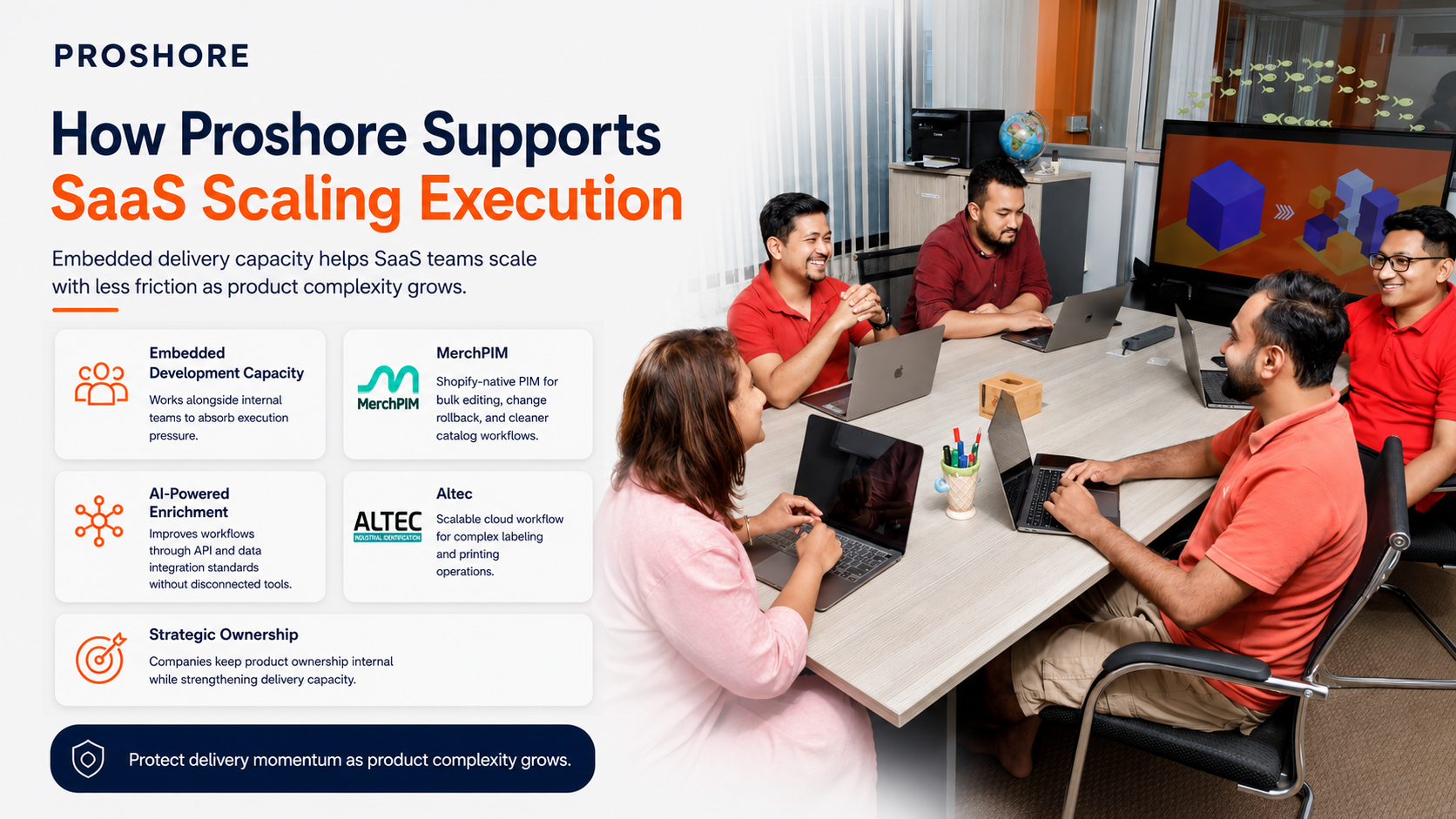
This shows how AI can improve SaaS workflows without creating disconnected tools or extra operational complexity.
The same value appears in Proshore’s work with Altec. Proshore helped deliver a scalable cloud-based SaaS platform that centralizes complex labeling and printing operations.
The benefit is a more consistent SaaS workflow that helps teams manage printing complexity as the business grows.
For CTOs, this creates a practical scaling path.
Companies keep strategic ownership internal while strengthening the delivery capacity needed to scale with less friction. The result is a more stable engineering model for SaaS growth.
Final Takeaway for SaaS Leaders
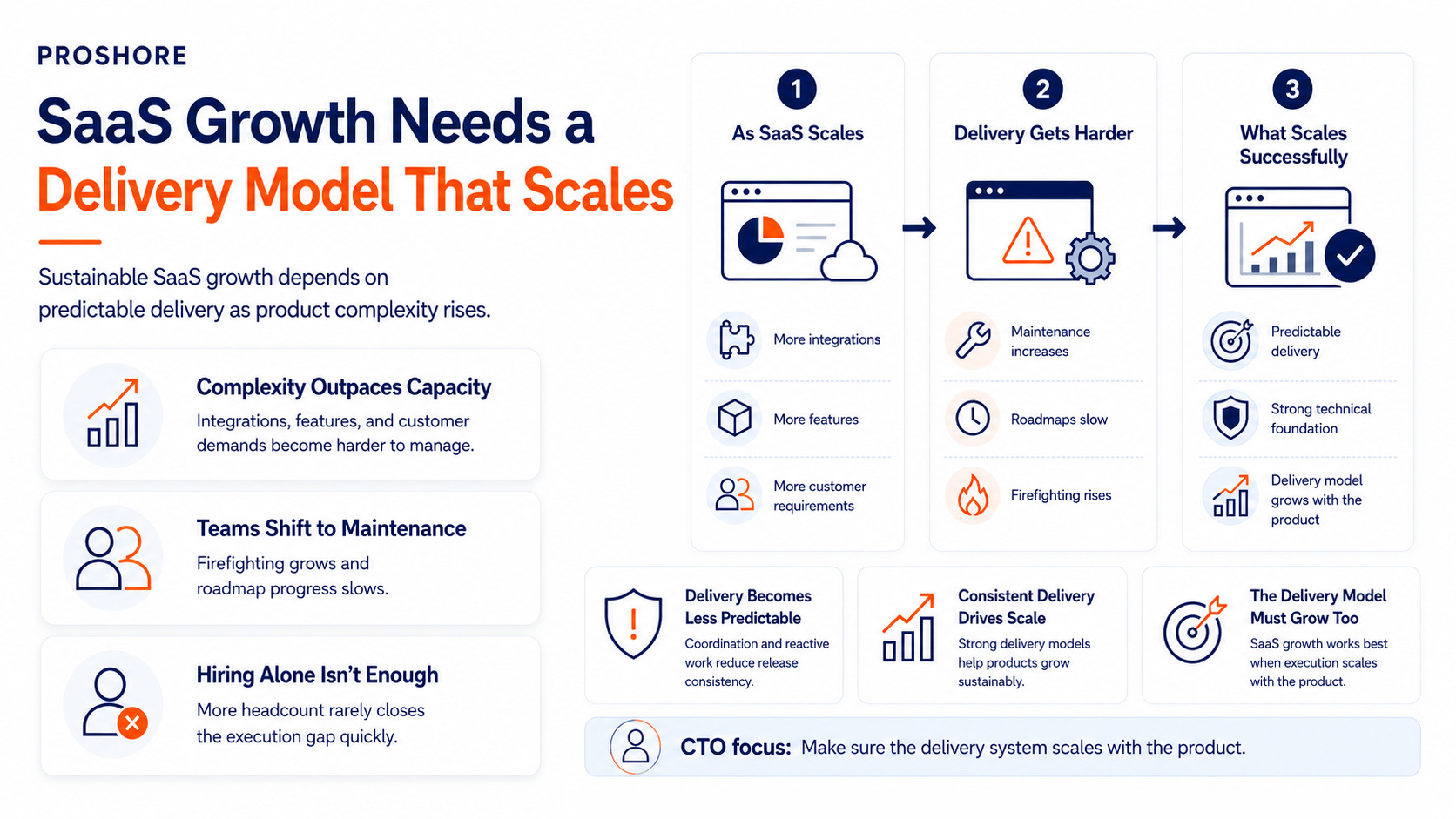
SaaS scaling becomes difficult when growth increases complexity faster than the engineering model can absorb it.
As usage grows, the delivery environment becomes harder to manage across integrations, features, and customer requirements.
Internal teams begin shifting from building new capabilities to maintaining what already exists. Roadmap delivery slows as firefighting increases, and hiring alone often moves too slowly to close the gap.
The companies that scale successfully are not only the ones with strong products. They are the ones that build a delivery model capable of staying consistent as complexity grows.
For CTOs, the real challenge is making sure the delivery system scales with the product.
SaaS growth becomes sustainable when delivery stays predictable while the technical foundation continues to support scale.
The product may be built for growth, but the delivery model must grow with it.