

Why Cloud Migration Success Doesn't Equate to Business Success

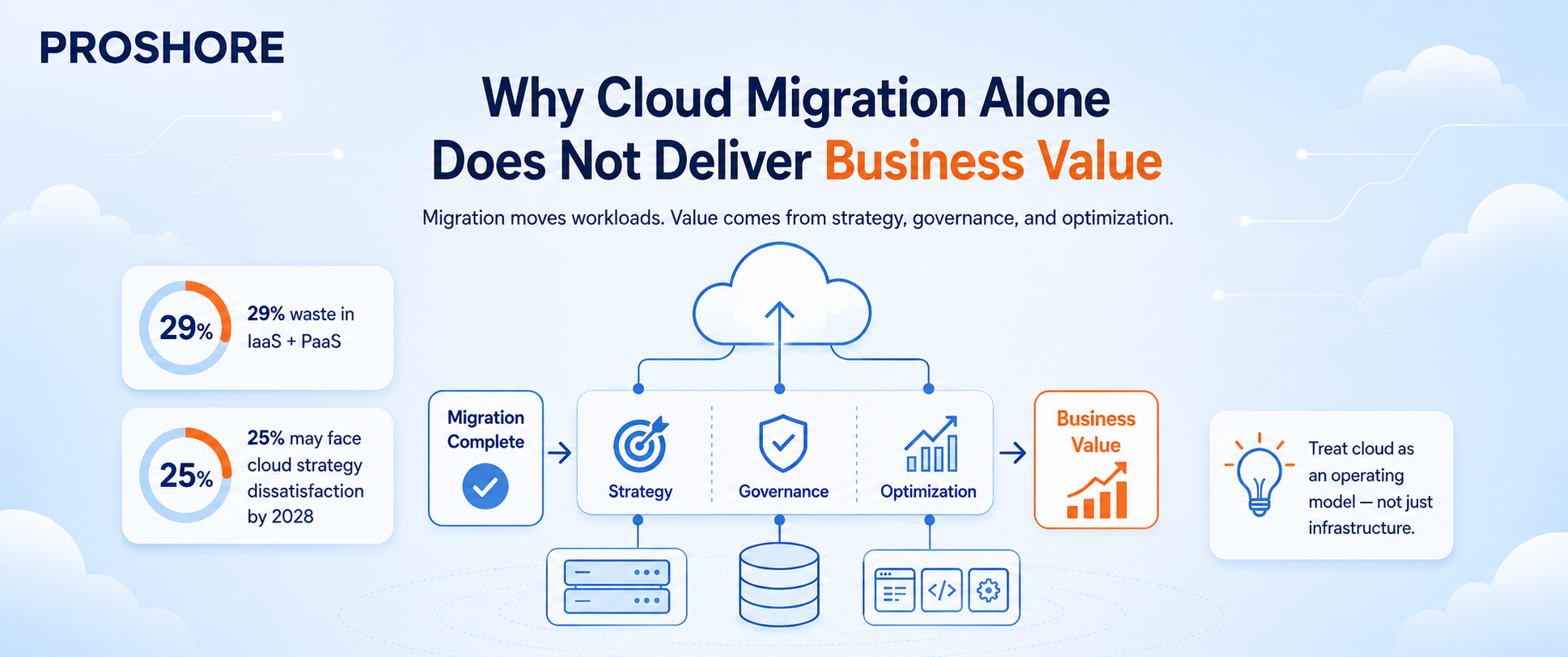
Migration projects frequently reach completion on schedule and within scope, yet the anticipated gains in cost efficiency and innovation rarely follow at scale.
In practice, lift-and-shift approaches deliver functional environments without the deeper redesign needed to unlock new operating models.
Applications run in the cloud, but they often carry forward the same inefficiencies and manual interventions that existed on-premises.
Real enterprise value emerges only when cloud platforms power reengineered end-to-end processes, real-time decision-making, automated scaling, and seamless cross-functional collaboration.
That level of impact requires mature cost governance, cultural shifts toward shared accountability, and an architecture that positions cloud as a strategic capability rather than simply a lower-cost hosting layer.
Modern migration tools and automation speed up the initial transition, but they cannot overcome fragmented ownership or the lack of continuous optimization routines.
The fundamental constraint often is the missing connection between infrastructure readiness and enterprise-wide performance improvement.
What Structural Issues Limit Cloud Migration Success?
Most cloud migration challenges are not technical and come from misaligned ownership, governance, and execution.
These shortfalls trace back to consistent organizational patterns rather than one-off technical issues.
Migration initiatives often proceed in isolation from business strategy teams, while architecture, risk, and governance functions engage only after major decisions are locked in.
Legacy operating assumptions persist, and hybrid or multi-cloud environments quickly become sources of hidden complexity.
Geopolitical pressures and data sovereignty requirements are accelerating rapidly, introducing late-stage rework that should have informed architecture choices from the outset.
Value at scale remains elusive when the cloud is managed as a tactical IT exercise rather than a core enabler of enterprise transformation.
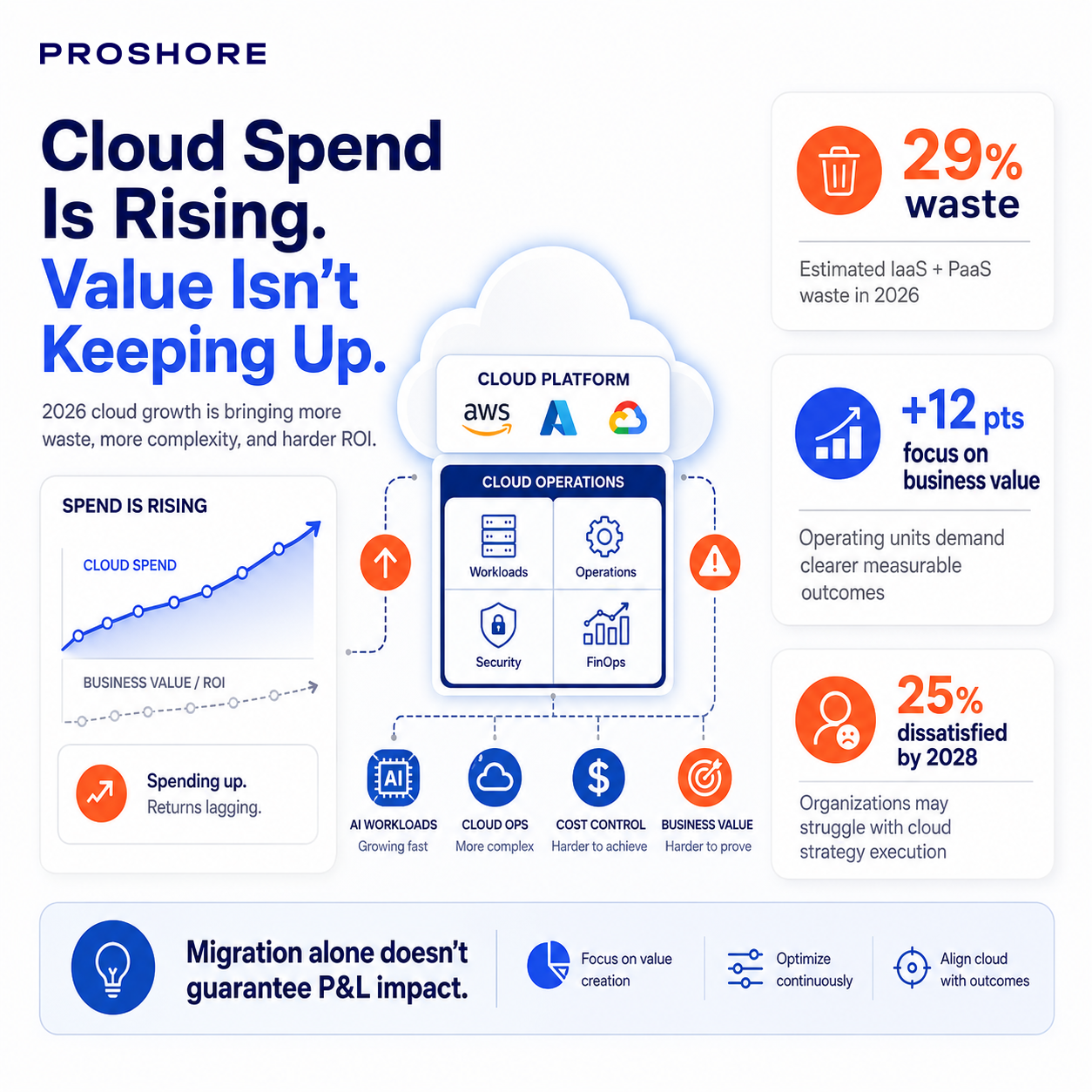
In 2026, with AI workloads reshaping the economy and sovereign cloud demand growing at 35.6%, organizations that treat migration checklists as sufficient proxies for strategic change continue to underperform.
Four patterns appear repeatedly:
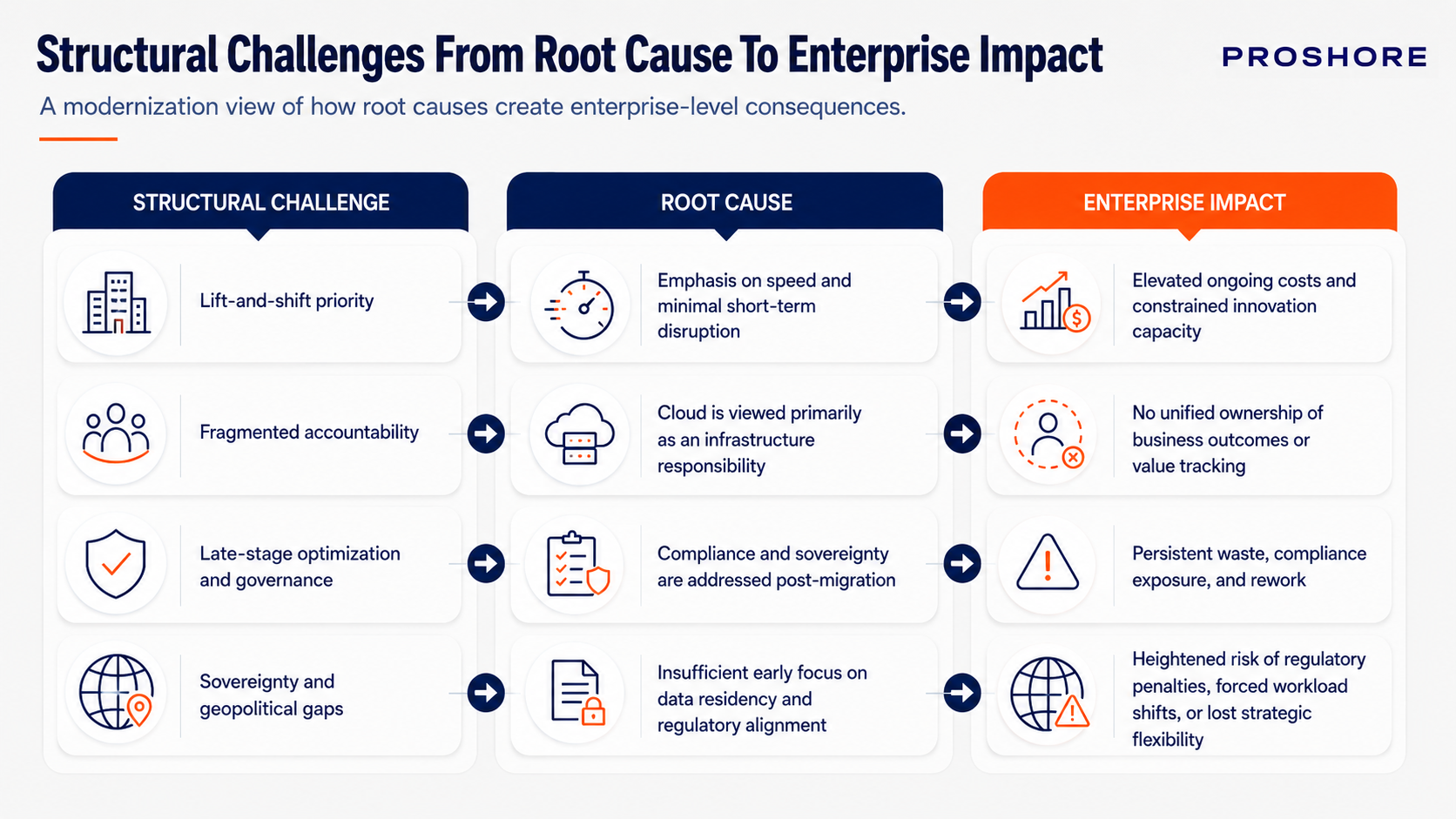
(Based on patterns in Flexera’s 2026 State of the Cloud Report | Gartner cloud trend analysis)
The Compounding Costs of Migration Without Full Value Realization
When migration concludes without an embedded value framework, inefficiencies compound across the enterprise. Discovery and planning efforts are duplicated across units.
Post-migration environments experience resource drift, with AI-driven workloads amplifying underutilized capacity.
Leadership confidence erodes as promised improvements in speed, resilience, and financial performance remain only partially delivered.
These frictions usually appear in several consistent patterns.
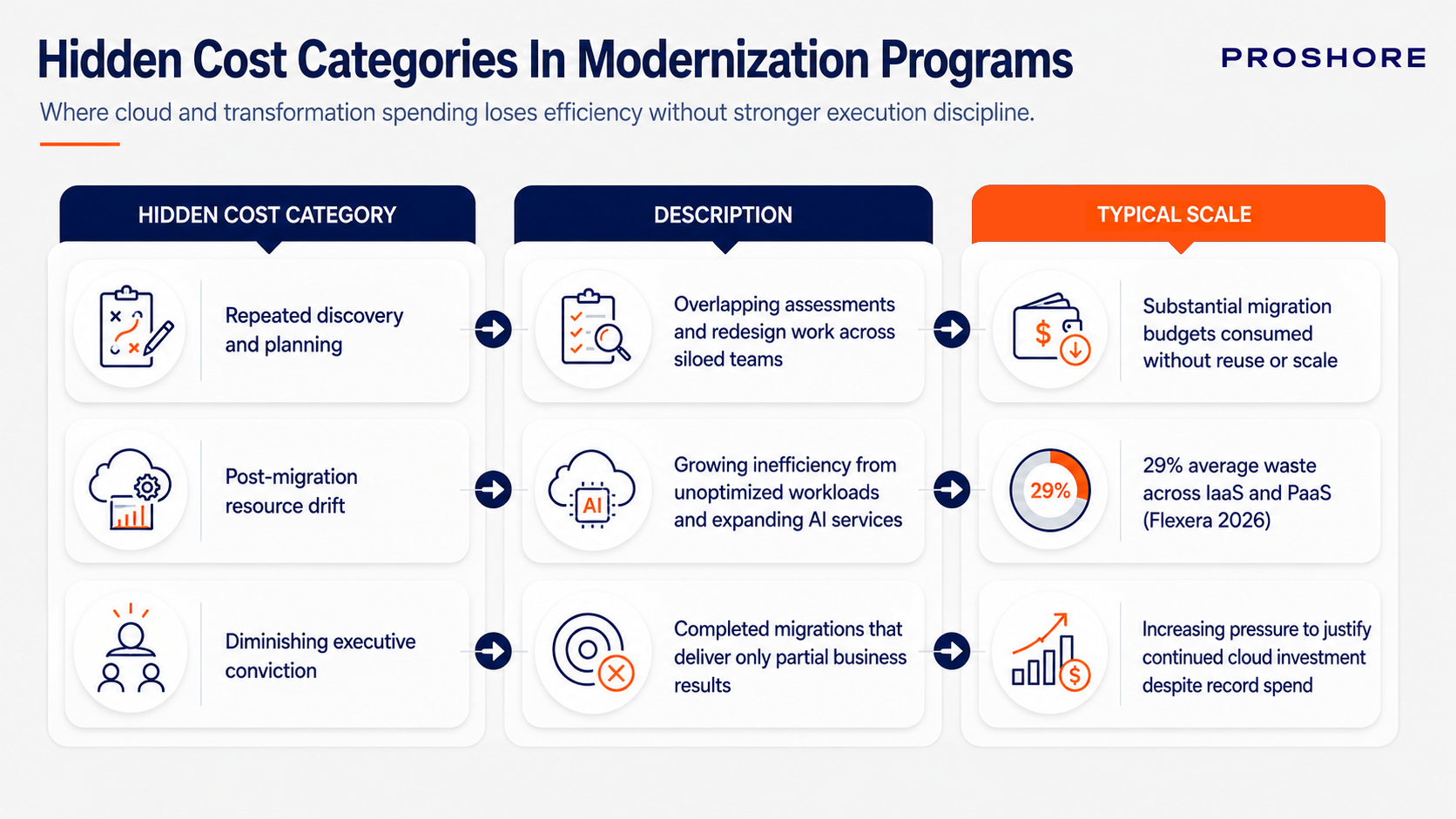
(Source: Flexera 2026 State of the Cloud Report)
How Can You Make Cloud Migration Deliver Real Business Value?
Cloud generates durable enterprise performance when it functions as an integrated layer inside broader digital and operational transformation initiatives.
The operating model connects cloud efforts directly to strategic priorities, modernizes applications in parallel with infrastructure shifts, and embeds cost governance, risk management, and continuous optimization into the foundation rather than layering them on afterward.

Architecture, delivery processes, and performance routines reinforce one another from the beginning.
This structure converts migration from a discrete project into an ongoing driver of competitive capability.
Critical Factors That Determine Cloud Value Realization
Enterprise cloud programs are evaluated through the lens of strategic alignment, execution readiness, and sustained performance rather than migration milestones alone.
The decisive consideration shifts from whether workloads have moved to whether the organization possesses the structures required to capture and maintain value at scale.
Proshore’s Approach to Enterprise Cloud Performance
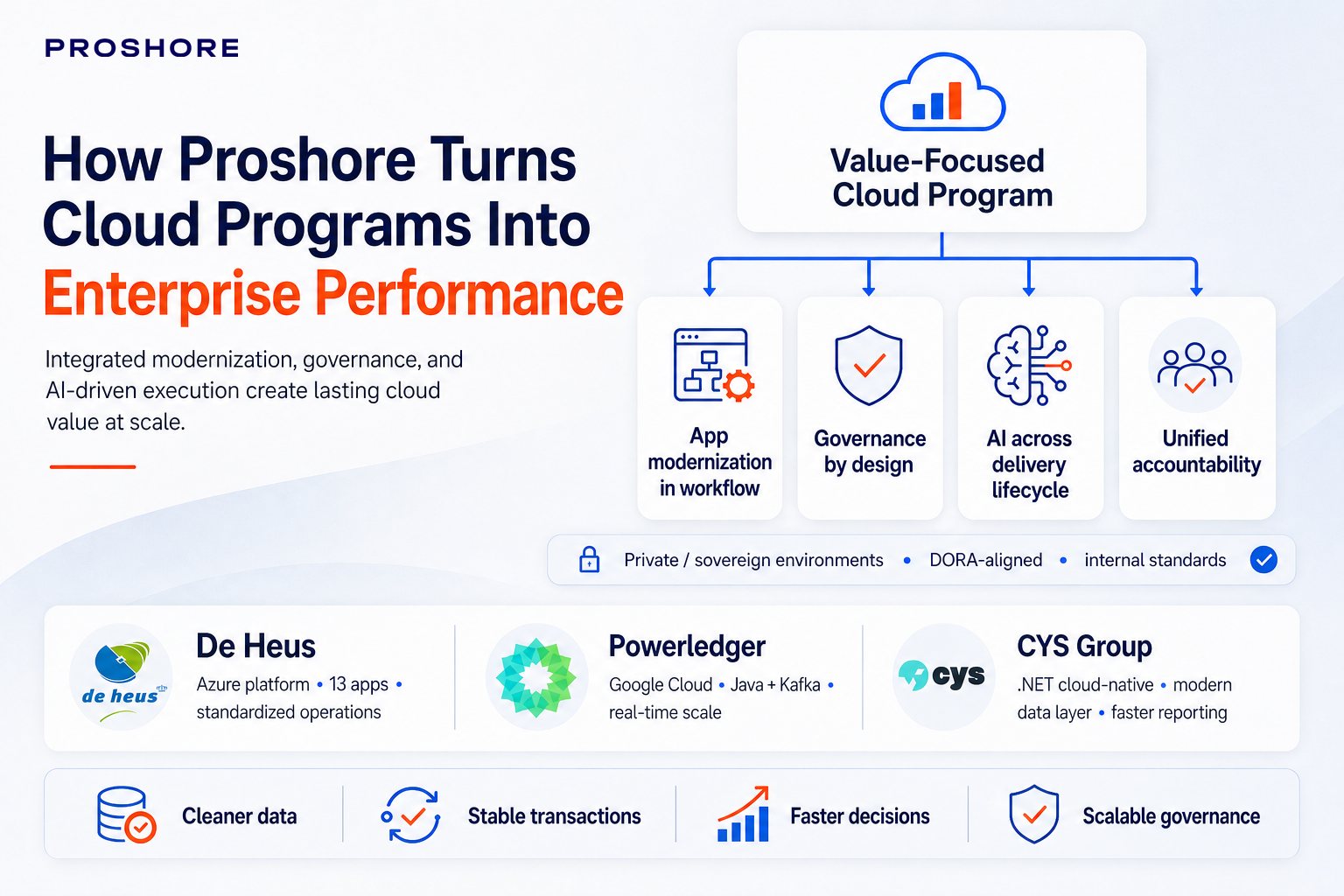
Proshore targets the systemic issues that prevent migrations from translating into lasting value by designing every program as a fully optimized, value-focused initiative from the outset.
Rather than executing standalone infrastructure shifts, the approach integrates application modernization and governance directly into business workflows and architectural decisions, ensuring tight alignment with enterprise goals and long-term scalability.
The work with De Heus, Powerledger, and CYS Group shows how this is executed in practice.
At De Heus, Proshore replaced spreadsheet-driven workflows with a cloud platform on Microsoft Azure. Legacy systems were consolidated, and 13 applications were built to standardize operations. The result was cleaner data and a platform that scales without added complexity.
For Powerledger, Proshore built a cloud marketplace on Google Cloud using Java and Kafka. The system supports real-time data flow and stable transaction performance under scale.
With CYS Group, Proshore developed cloud-native .NET services and a modern data layer. Reporting became consistent, and decision-making moved faster without manual intervention.
AI is applied across the complete delivery lifecycle to accelerate outcomes. Requirements gain clarity faster, and optimization opportunities surface early, shortening timelines and minimizing rework.
Projects operate strictly within enterprise parameters: sovereign or private environments, DORA-aligned practices, and internal standards are foundational.
Accountability is unified, systems integrate purposefully, and governance operates by design, eliminating the fragmentation and drift that typically undermine cloud programs.
How Can Enterprises Get Better Results from Cloud Migration?
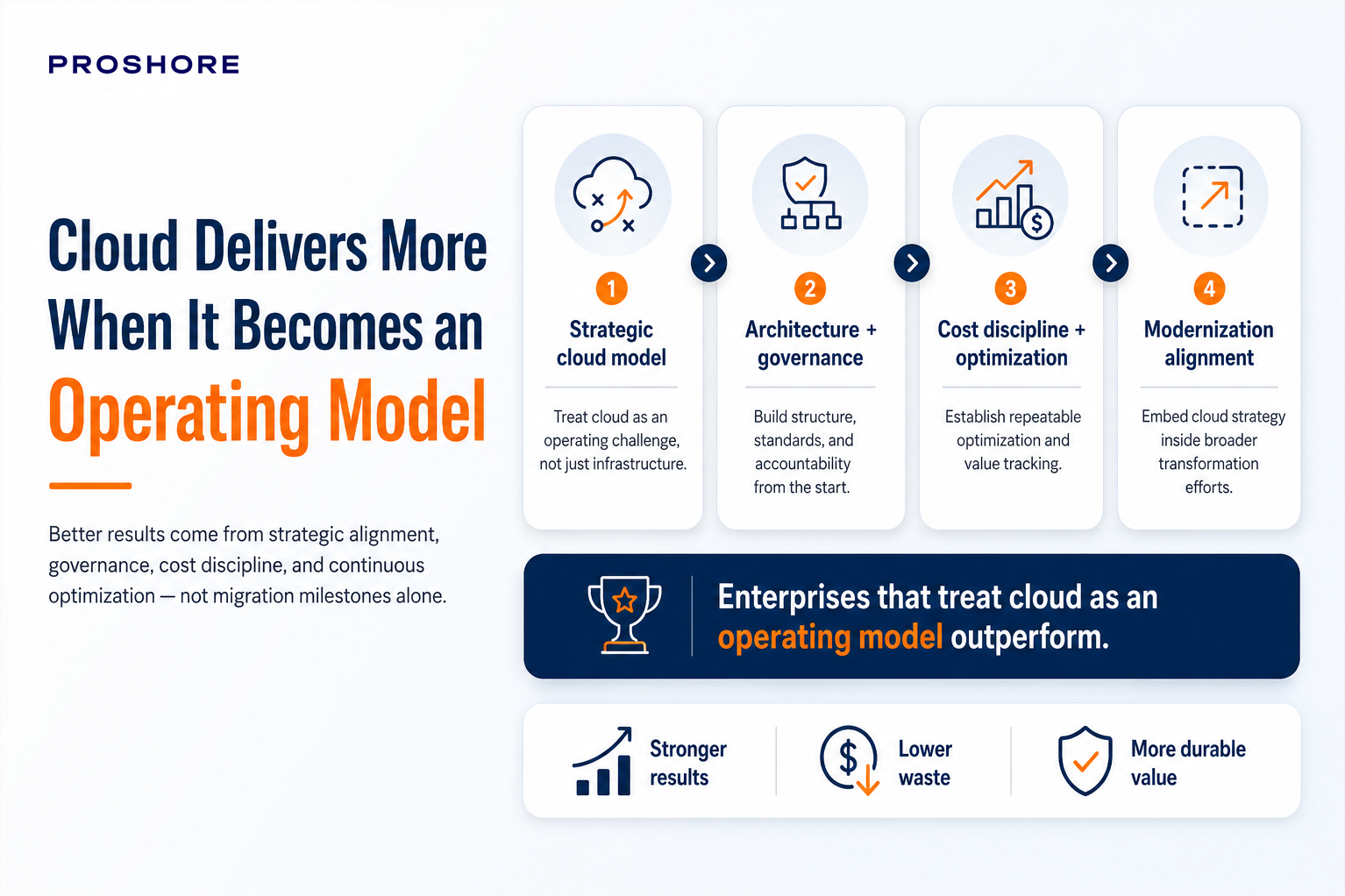
Cloud platforms create meaningful enterprise advantage only when migration evolves into a comprehensive transformation.
Organizations that move beyond migration completion metrics and treat cloud as a strategic operating challenge, addressing architecture, governance, cost discipline, and cultural alignment as essential requirements, consistently achieve stronger results.
By embedding cloud strategy within larger modernization efforts, establishing repeatable optimization practices, and designing for value from the outset, enterprises can break the pattern of high expenditure and limited returns.
Enterprises that treat cloud as infrastructure will continue to overspend. Those who treat it as an operating model will outperform.