

Why AI Pilots Are Easy, but Production AI Is Difficult
AI pilot success is routinely misinterpreted as enterprise readiness, with working models and proofs of concept treated as indicators of success.
In practice, experimentation outcomes do not translate into operational capability, as model accuracy does not ensure business integration, and prototypes do not function as production systems.
Most pilots produce isolated models, while enterprise value is realized only when AI is embedded into business decisions within live workflows.
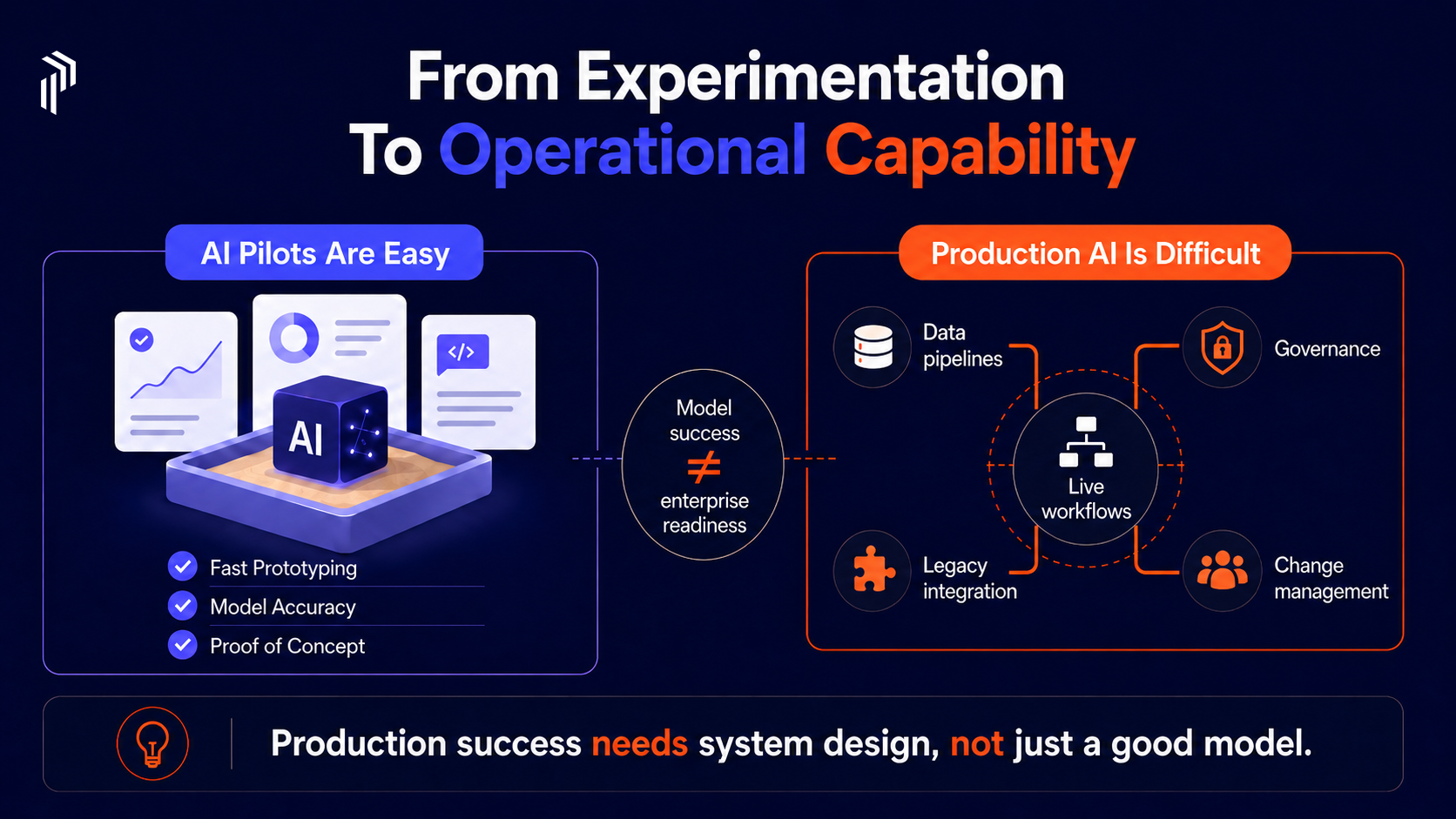
Production success depends on production-ready data pipelines, governance controls, change management processes, and repeatable execution mechanisms that extend beyond the model itself.
While rapid experimentation tools and cloud environments accelerate development, integration with legacy systems and cross-functional operations and data exposes underlying misalignment.
The limitation is rooted in a missing production system design rather than model development.
Structural Challenges Preventing AI Scaling
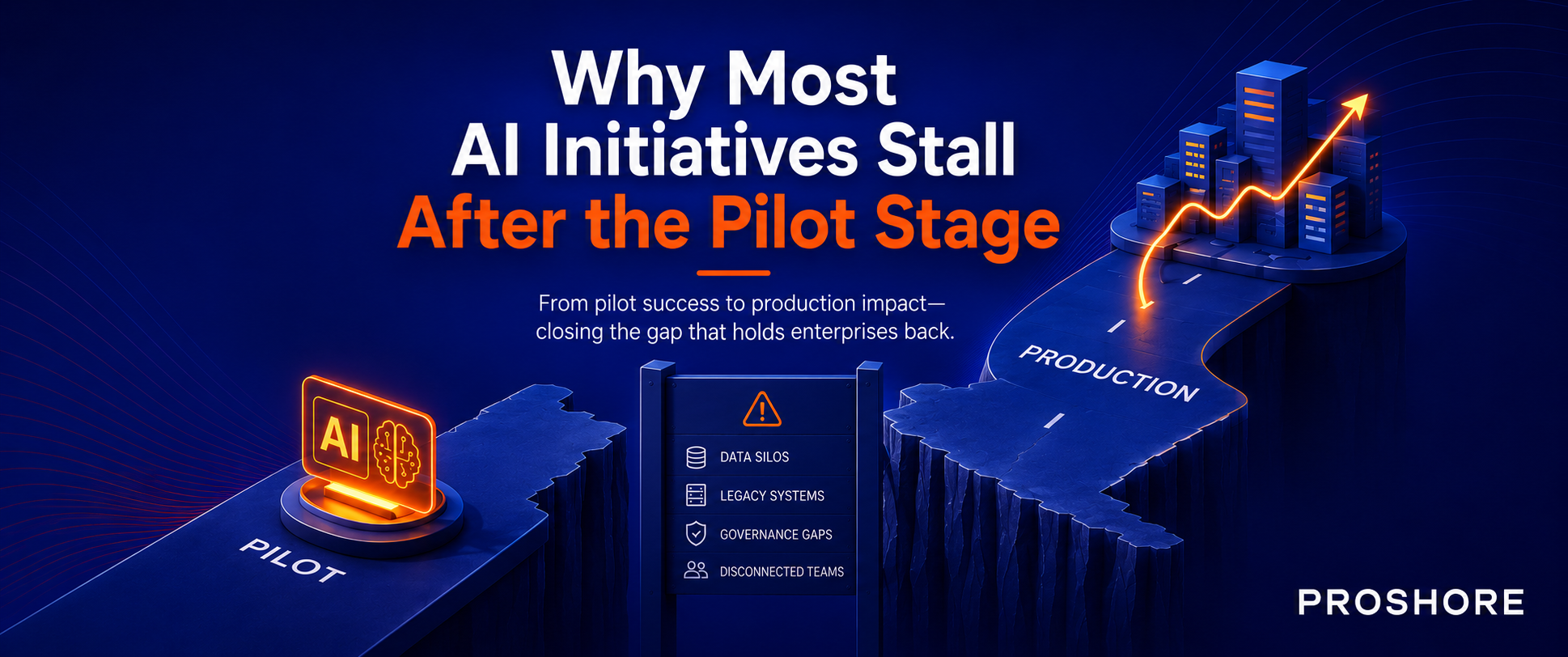
AI stalls reflect recurring patterns of systemic misalignment rather than technical failure.
Innovation teams operate in isolation, with ownership fragmented across data, IT, and business units.
Alignment with broader transformation programs is limited, and enterprise architecture does not support AI integration at scale.
Legacy systems impose structural constraints, and data pipelines lack production readiness.
Security and governance reviews introduce deployment bottlenecks due to late integration.
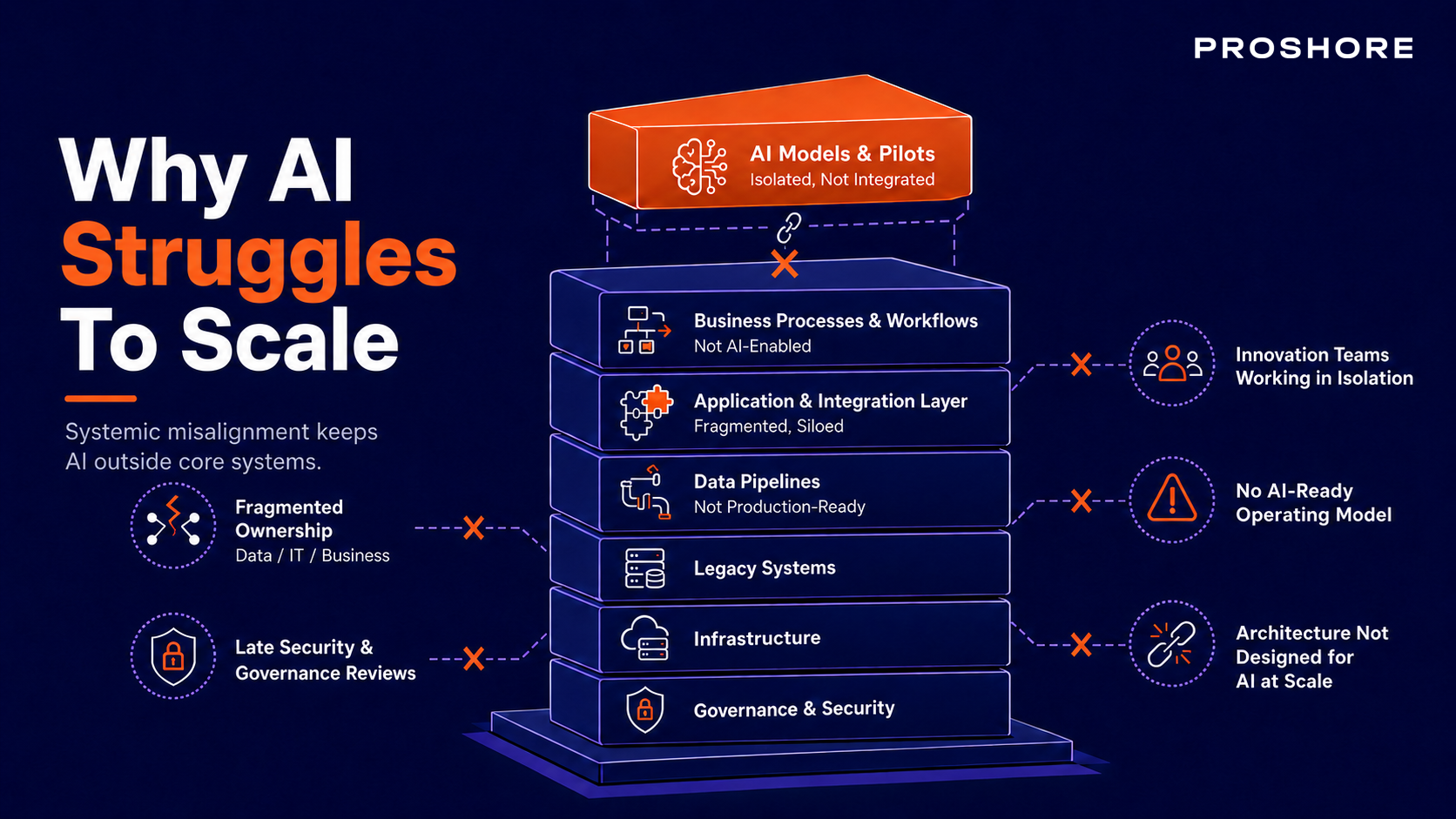
AI remains outside core systems instead of being embedded within them.
Scaling is constrained by the absence of an operating model and architecture that treats AI as a capability layer.
Organizations continue to equate capability creation in controlled environments with enterprise deployment.
These structural issues typically show up in four recurring patterns:
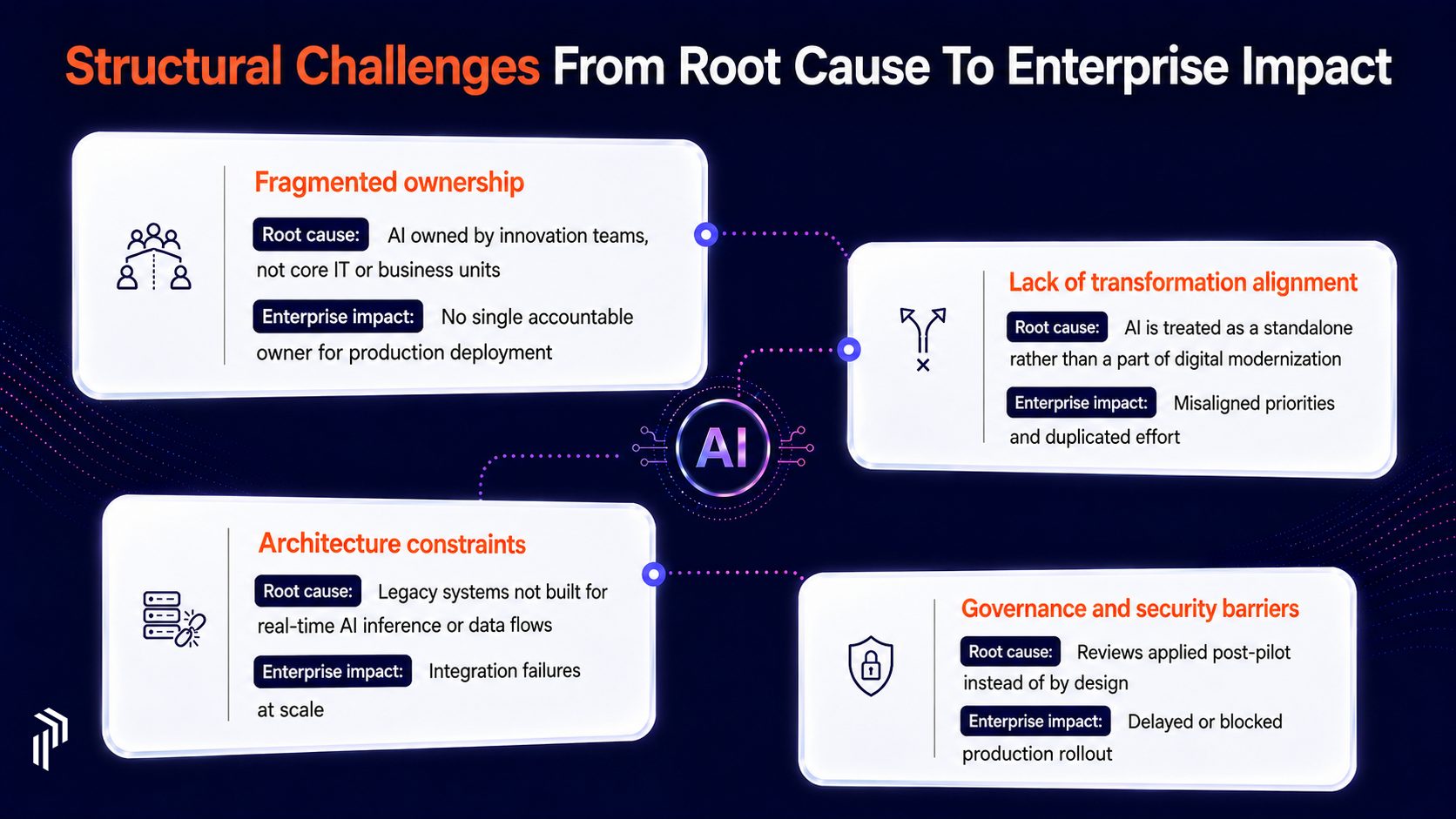
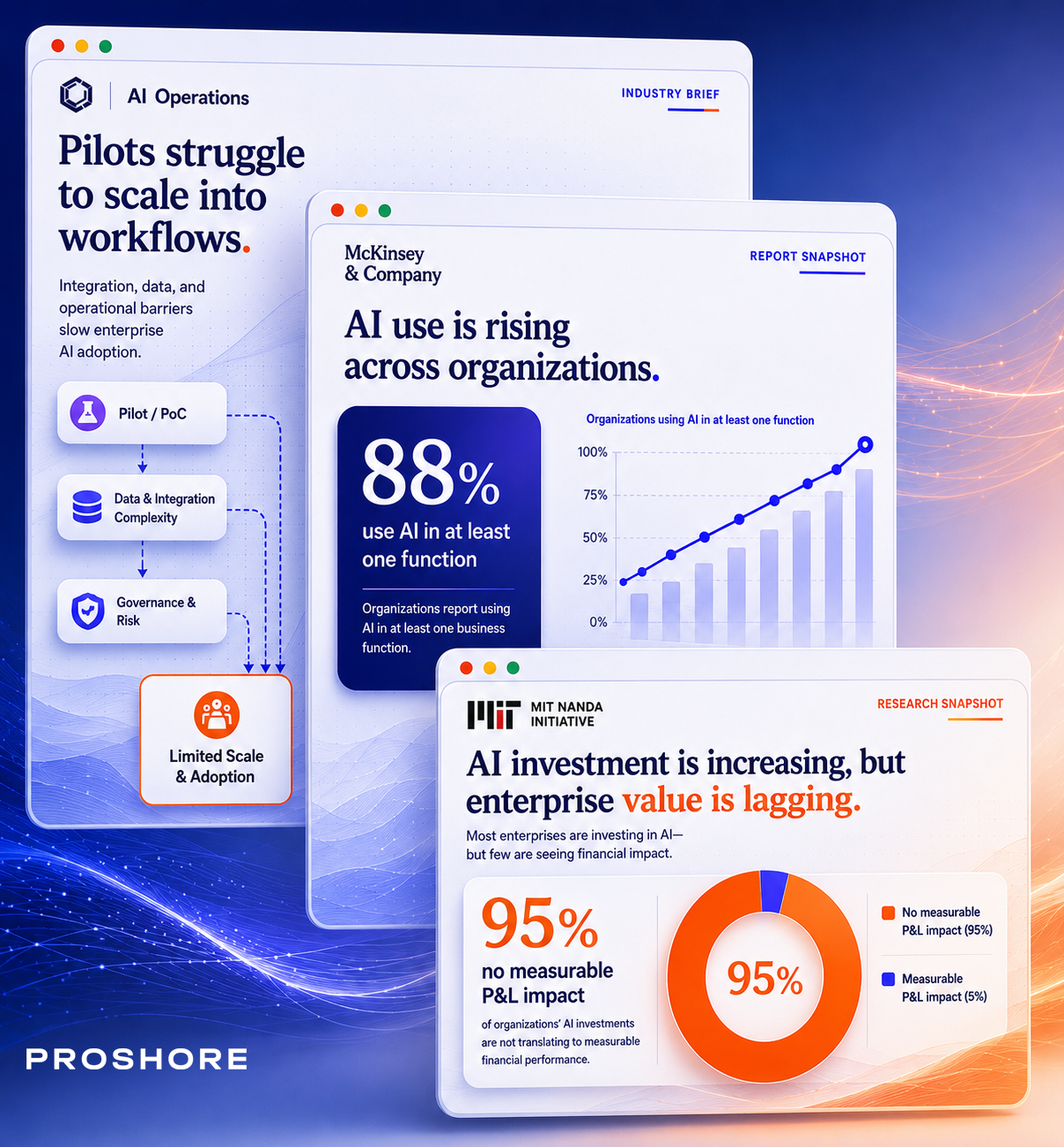
(Based on patterns in MIT’s GenAI Divide: State of AI in Business 2025 | McKinsey’s State of AI 2025, and related Gartner analysis)
The Cost of Fragmented AI Adoption
The disconnect between pilot optics and execution reality introduces compounding hidden costs.
Teams repeat similar experiments across business units without sharing learning or reusing them.
Investments are duplicated across functions.
Executive confidence declines as expected transformation value does not materialize.
This fragmentation manifests in the following hidden costs:
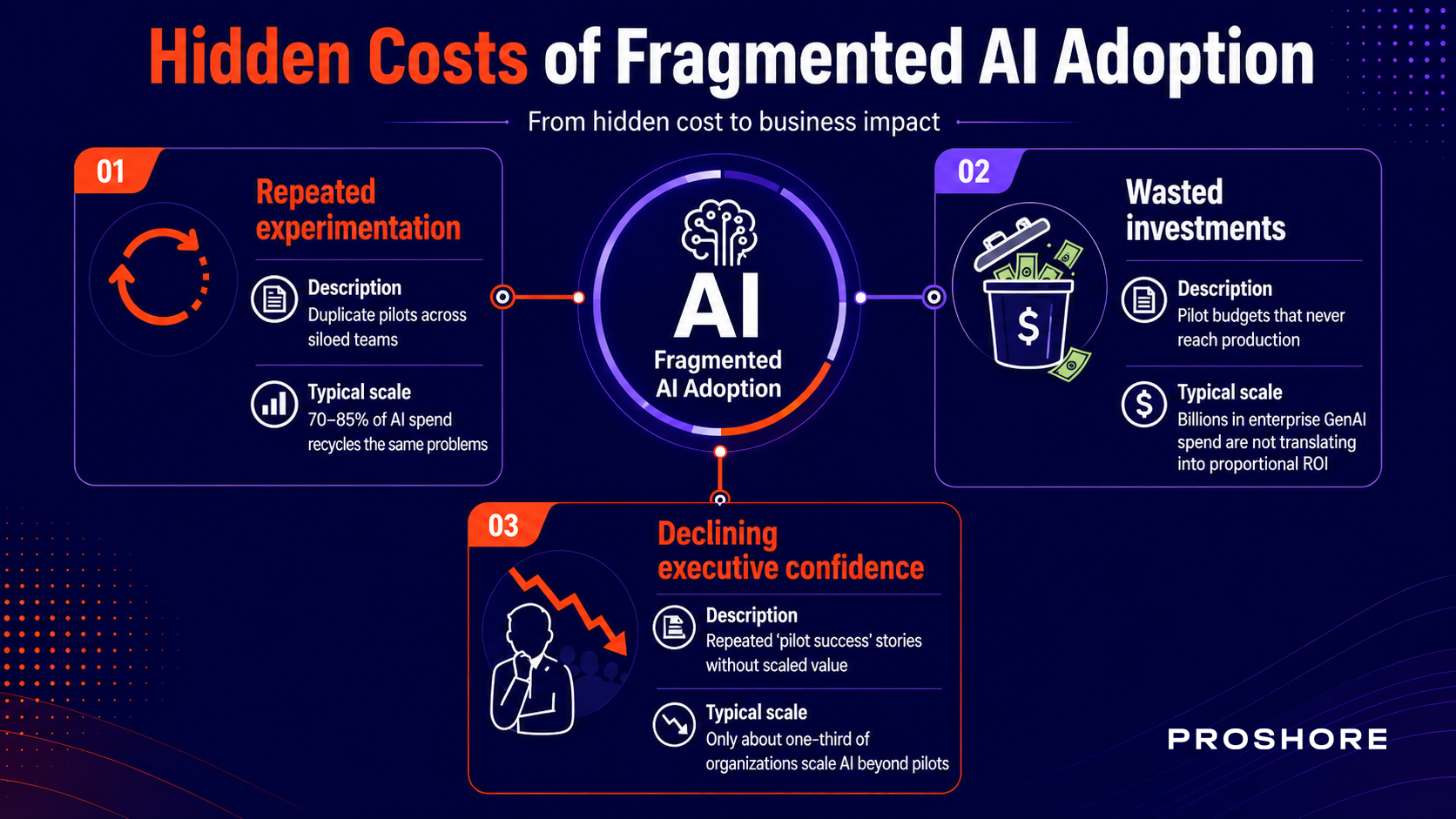
(Source: MIT’s GenAI Divide: State of AI in Business 2025 and McKinsey State of AI 2025)
A Better Approach to AI Adoption
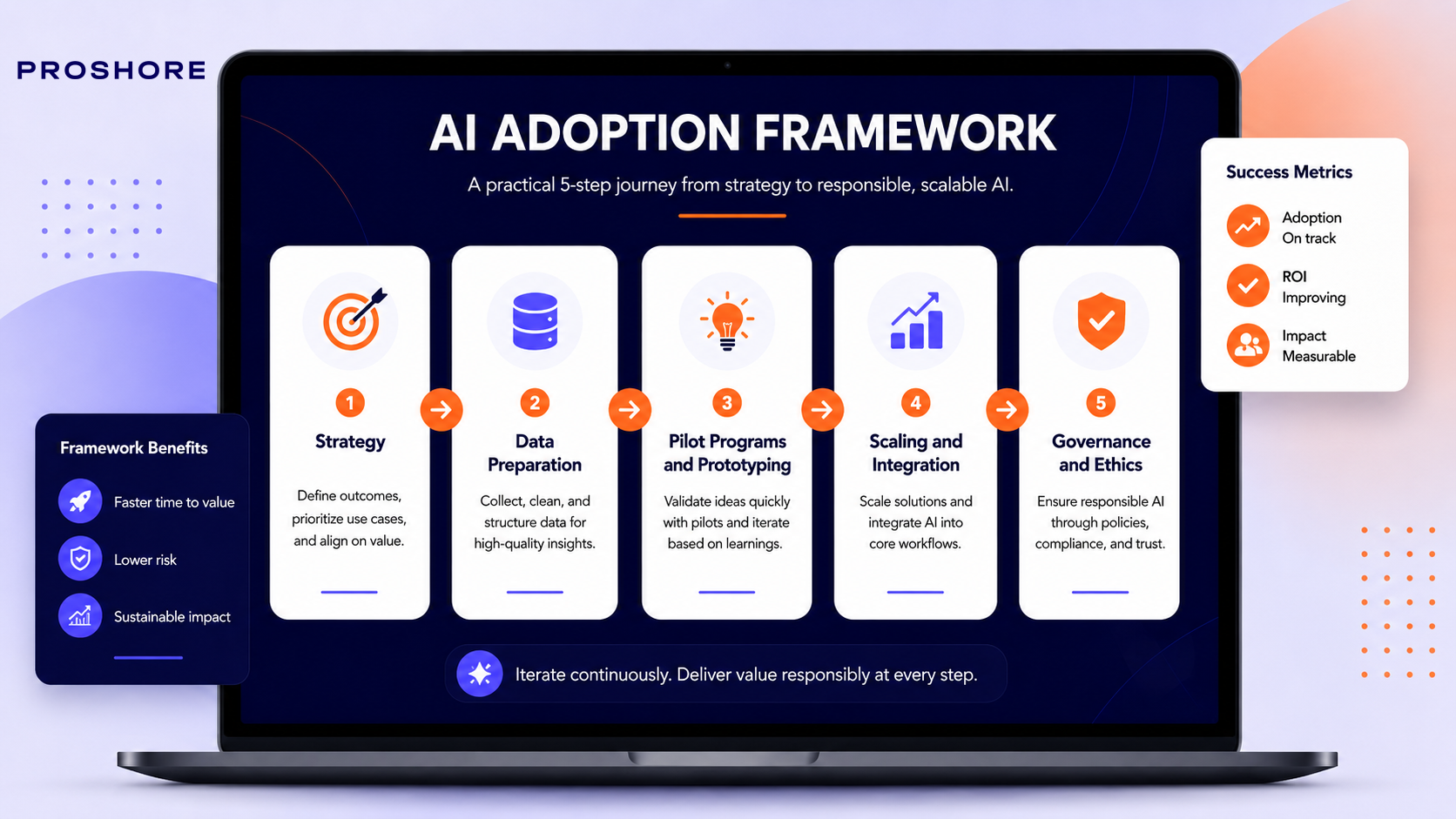
AI delivers value when positioned as a capability layer within existing transformation programs.
The operating model aligns AI with digital transformation, integrates it with cloud modernization and data architecture, and embeds it into core systems and workflows from the outset.
In this approach, architecture enables integration and scale, transformation programs drive delivery, and governance enables controlled execution.
This structure enables the transition from pilot activity to operational deployment.
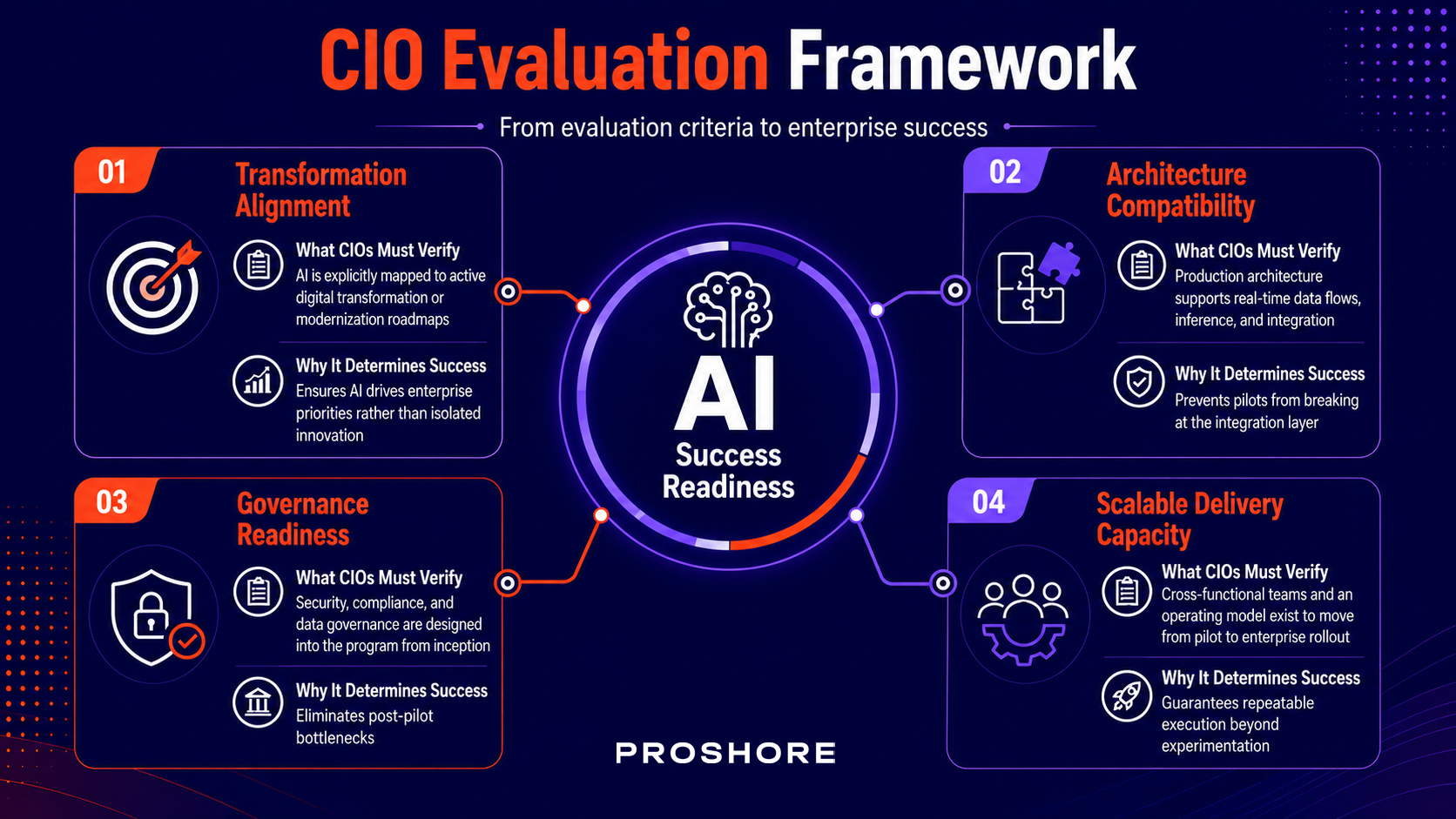
What CIOs Should Look for in AI Programs
CIOs must evaluate AI programs through systems and governance alongside technology considerations.
The central question should often not be “Should we invest in AI?” but “Can our enterprise systems support AI at scale?”
Proshore’s Role in Enterprise AI Execution
Proshore addresses the structural causes that prevent AI pilots from scaling by designing every implementation as a production system from the outset.
Instead of developing isolated models, Proshore integrates AI directly into enterprise workflows, data pipelines, and governance frameworks, ensuring alignment with transformation programs and core architecture.
At the same time, in Proshore AI is not only deployed within products but leveraged across the entire software development lifecycle.
Requirements are defined faster using AI-assisted interpretation and clear acceptance criteria. Prototyping and refinement cycles move quickly through rapid iteration and visualization, reducing back-and-forth and helping teams reach workable solutions sooner.
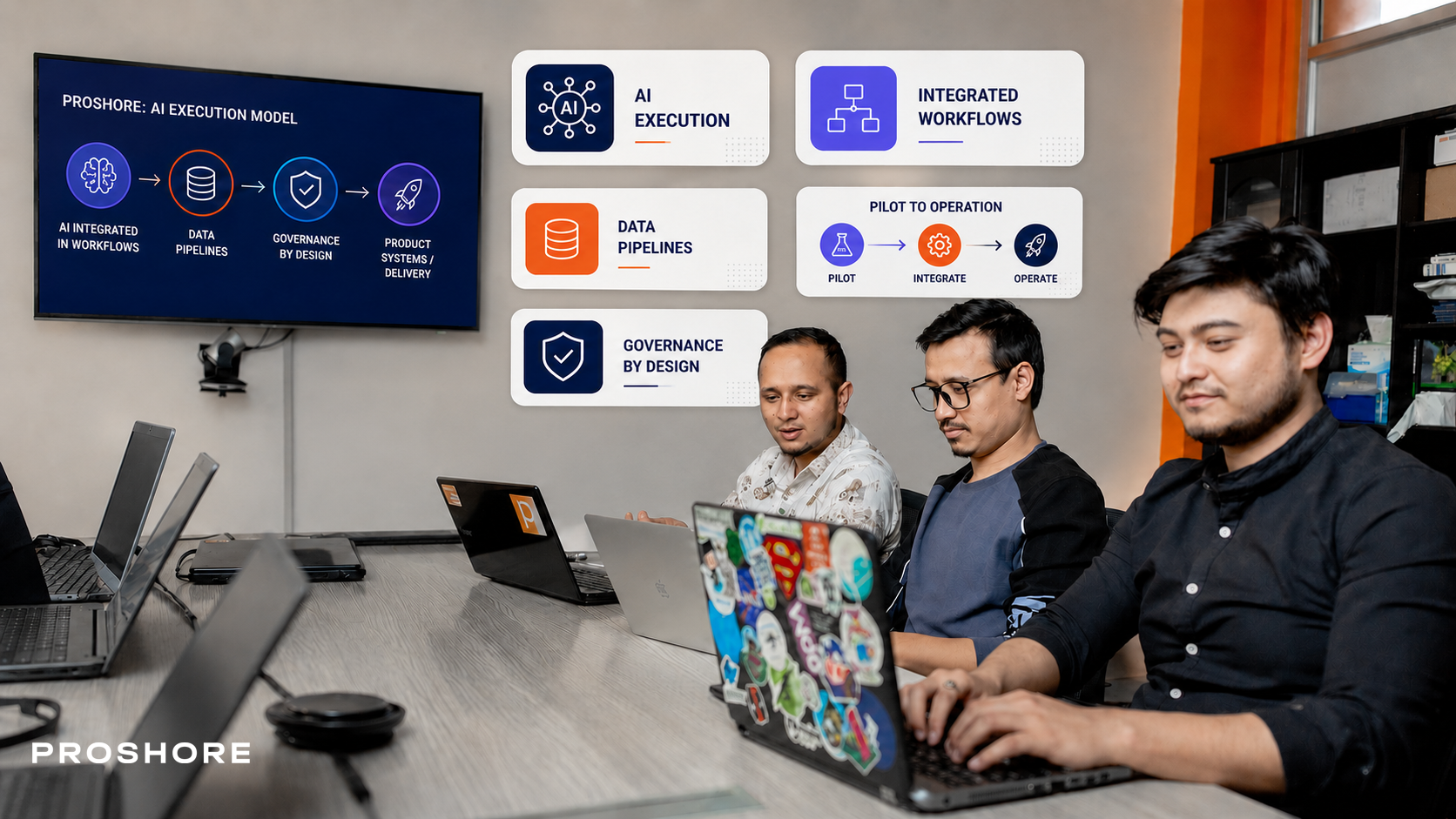
Crucially,Proshore operates within enterprise constraints. Private AI environments, DORA-aligned practices, and internal data standards are built into delivery from the start, ensuring compliance and consistency.
Prompt and context optimization keep costs predictable while maintaining performance across managed AI systems.
In practice, this approach is reflected in projects such as MerchPIM, where AI is embedded into product data workflows.
This enables enterprises to scale data quality and consistency across systems without creating parallel processes or manual dependencies.
Proshore aligns ownership, integrates with existing systems, and embeds governance in execution from the outset, preventing fragmentation and deployment bottlenecks that stall AI initiatives.
Conclusion
AI becomes valuable when it transitions from experimentation into operational capability.
The organizations that succeed are those that stop celebrating isolated pilots and start treating AI as an enterprise systems problem.
By aligning AI with transformation programs, addressing architecture and governance as first principles, and building repeatable execution models, CIOs can move beyond pilot purgatory and deliver the enterprise value their investments were always intended to create.
The technology is not the constraint. The operating model is.