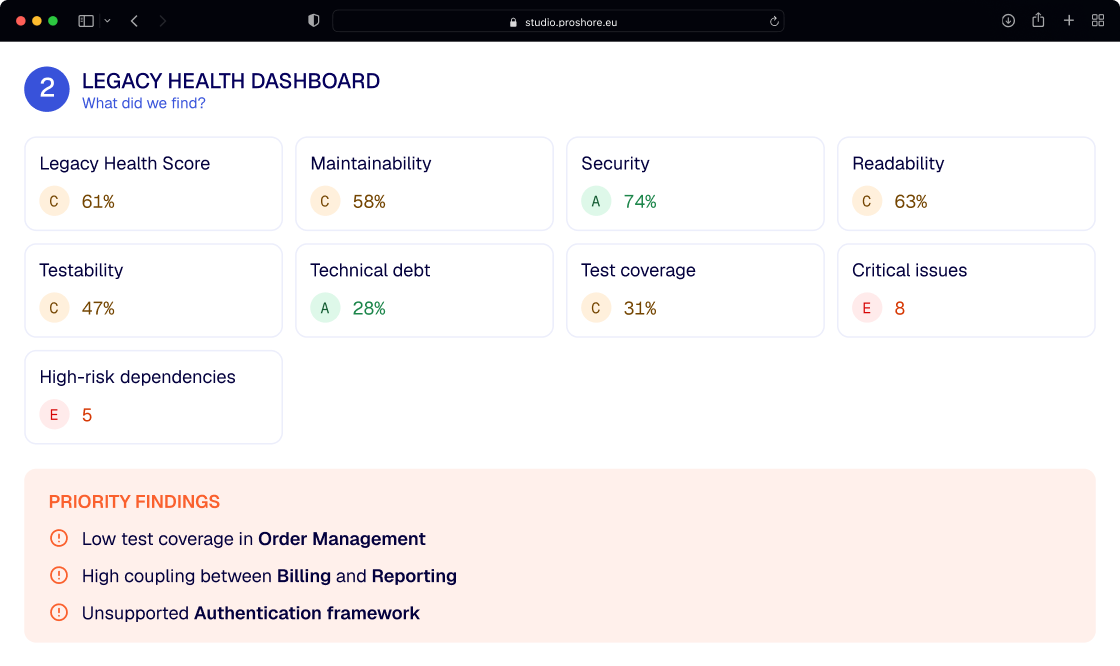
We fix the legacy.
Your team hits the roadmap.
Old systems eat budget and slow every release. We modernize them in phases while your team keeps shipping, backed by our standardized modernization process, purpose-built tooling and AI-supported engineering.
Used by the world's leading companies





Legacy costs more than maintenance
A full replacement requires significant investment and creates operational risk. So legacy systems remain in place, while the hidden costs keep growing. Releases take longer, integrations become harder and more engineering capacity is spent maintaining the past instead of building what comes next.
TheChallenge
The Impact
Modernize in phases, without stopping delivery
We break modernization into controlled steps. Each phase delivers value in production before the next one starts.
Assess
We map the architecture, dependencies, technical debt and business-critical flows.
Stabilize
We improve testing, documentation, security and system visibility before making major changes.
Modernize
We refactor, replatform or rebuild selected components in controlled phases.
Accelerate
With a stronger foundation, your team can release faster and add new integrations, cloud services and AI capabilities.
A faster, safer approach to software modernization
Traditional dedicated teams rely heavily on manual analysis, documentation and engineering work. We combine experienced teams with a standardized modernization process and our own AI-supported tooling, so we understand systems faster and identify risks earlier. Our engineers stay responsible for architecture, quality and production decisions.





Where Our Work Creates Visible Change
When systems improve, the entire organization feels the shift. These stories highlight the kind of progress teams experience.
De Heus
De Heus
Challenge
Spreadsheet-driven workflows created manual work and limited scalability across business units.
What Proshore changed
Proshore helped replace these workflows with scalable cloud-based systems integrated across the organization.
Result
Less manual work, better operational consistency and a stronger foundation for further digital development.

SiteGuru
Udea
Challenge
The backend had grown over seven years on CakePHP. Scaling became difficult, updates had to be done manually, and developers who could still support the framework were hard to find.
What Proshore changed
Migrated the backend from CakePHP to Laravel. The applications were separated into microservices and rebuilt in phases, with the new and the legacy system running simultaneously so end users kept working throughout. Deployment moved to Laravel Vapor on AWS, which removed server management entirely.
Result
A backend that scales and a stack that a new generation of developers can support.


Health Catalyst
Health Catalyst
Challenge
Rapid growth put pressure on infrastructure, engineering capacity and delivery speed, in an environment where compliance and secure handling of sensitive data cannot bend.
What Proshore changed
A critical analytics solution was replatformed to a modern architecture.
Result
Faster data processing and a platform that scales with continued enterprise growth.
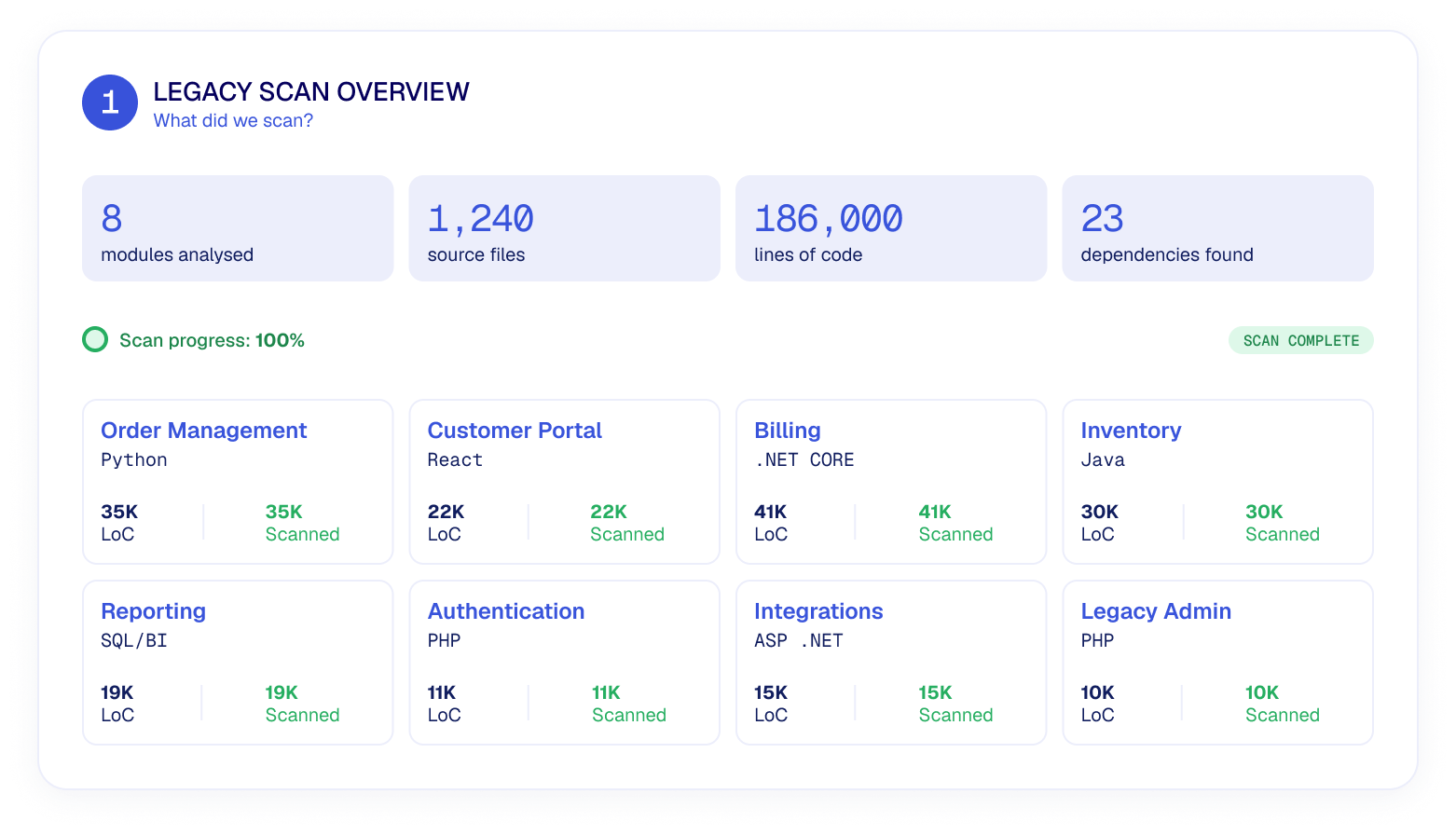
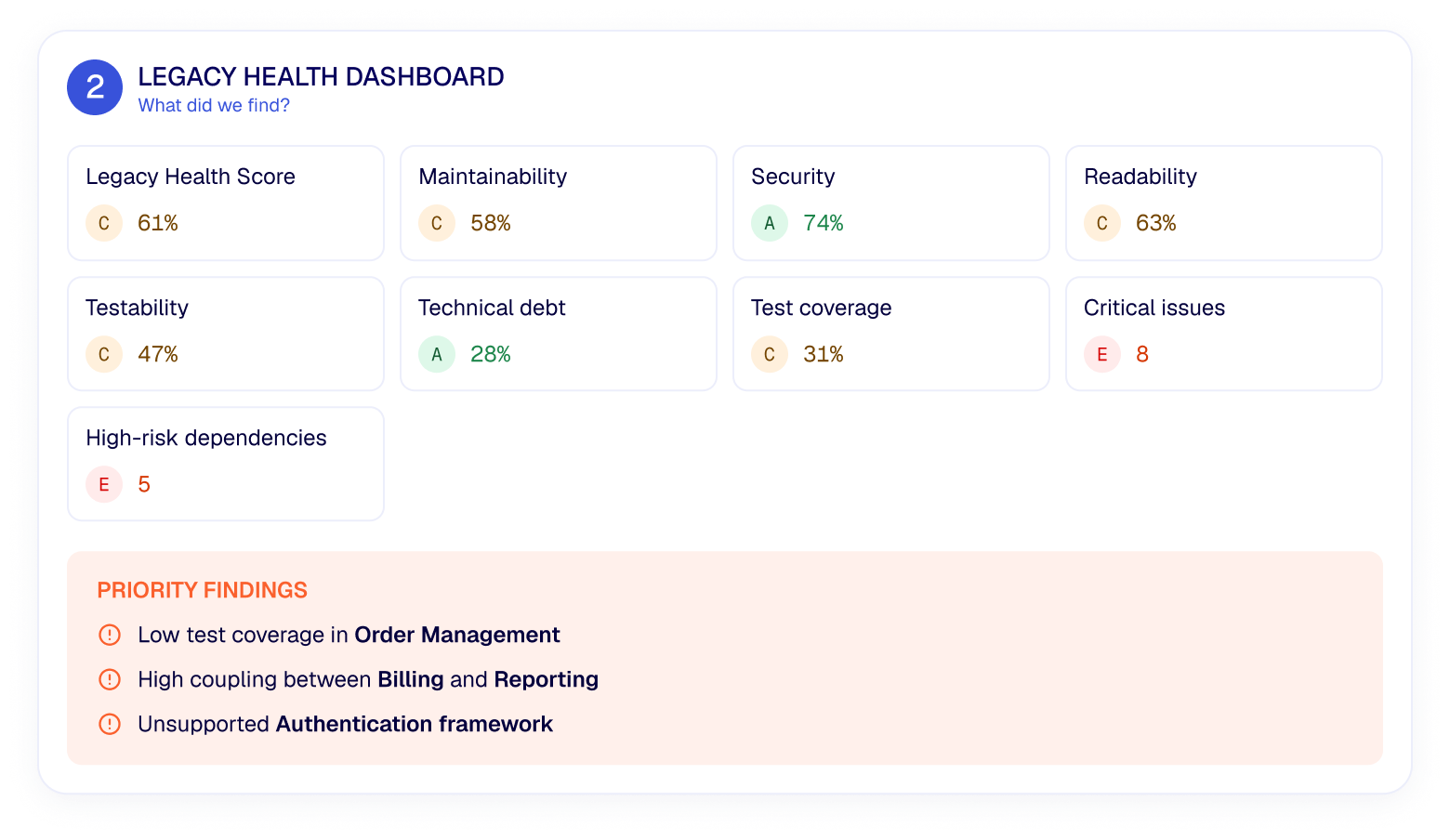
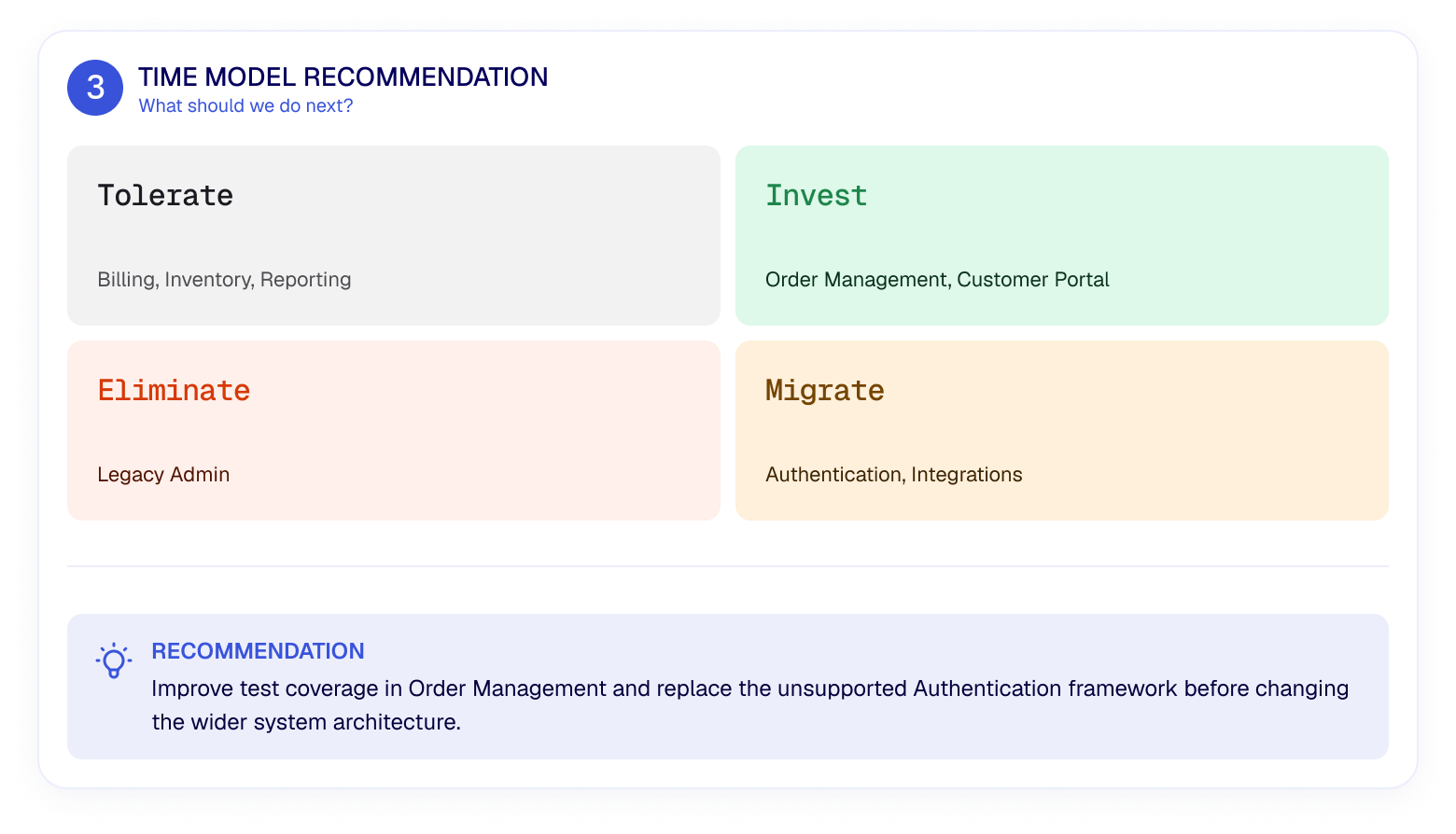
Know where your legacy stands before you commit

Your team
keeps control
We work alongside your internal team and existing partners. Together, we define priorities, architecture decisions and release phases. Proshore adds the engineering capacity, process and tooling needed to move modernization forward without taking focus away from the roadmap.
Questions
A full replacement means a long freeze, a large upfront investment and one risky cutover moment. Phased modernization keeps the current system running and delivers improvement per phase, so cost and risk spread over time. It also leaves you the option to reprioritize after any phase, which a full replacement does not.
Yes, and that is usually where we start. The assessment shows which component carries the most technical debt or blocks delivery the hardest, and that one becomes the first phase. You get a working result and a realistic picture of what a wider modernization would ask of you, before committing to more.
We modernize alongside the running system instead of replacing it in one move. Before anything substantial changes, we strengthen testing, documentation and system visibility, so we can prove the system still behaves the way it should. Every phase is tested and shipped on its own, which means daily operations continue and there is no big-bang cutover.
Usually yes. The assessment shows which parts of the stack still serve you and which parts hold you back. We modernize where it pays off and keep what works, so you are not replacing components that are doing their job.
The slowest part of a modernization is understanding the system you already have. Our tooling maps the codebase, its dependencies and the risk areas before anything changes. AI agents document how the legacy system behaves today and generate the tests that prove it still behaves that way after a change, and they migrate recurring code patterns. Our engineers review all of it and stay responsible for architecture, quality and production decisions.
You receive an overview of technical debt and delivery bottlenecks, the key security and continuity risks, a map of your system dependencies, modernization options ranked by priority, a phased roadmap that keeps current operations running, and a recommendation for the first modernization pilot. Nothing needs to be prepared on your side. We align on scope, access and business priorities in a short call first.
Yes. Our teams plug into your IT department and work with the partners you already have. Priorities, architecture decisions and release phases are set together, and knowledge transfers to your team as the work progresses. We add engineering capacity, process and tooling. Direction stays with you.
From the first phase. Every phase ships to production before the next one starts, so improvements in speed, stability and maintainability become visible early instead of at the end of a lengthy program. We do not put a timeline on it before the assessment, because it depends on the state of your systems. Establishing that is exactly what the scan is for.
Ready to modernize without freezing the roadmap?
Start with a legacy scan. You get an independent view of where your systems stand and a modernization path that keeps your roadmap running. It begins with a short call, and there is nothing you need to prepare.