

From Bootcamp Exercise to Real Business Context
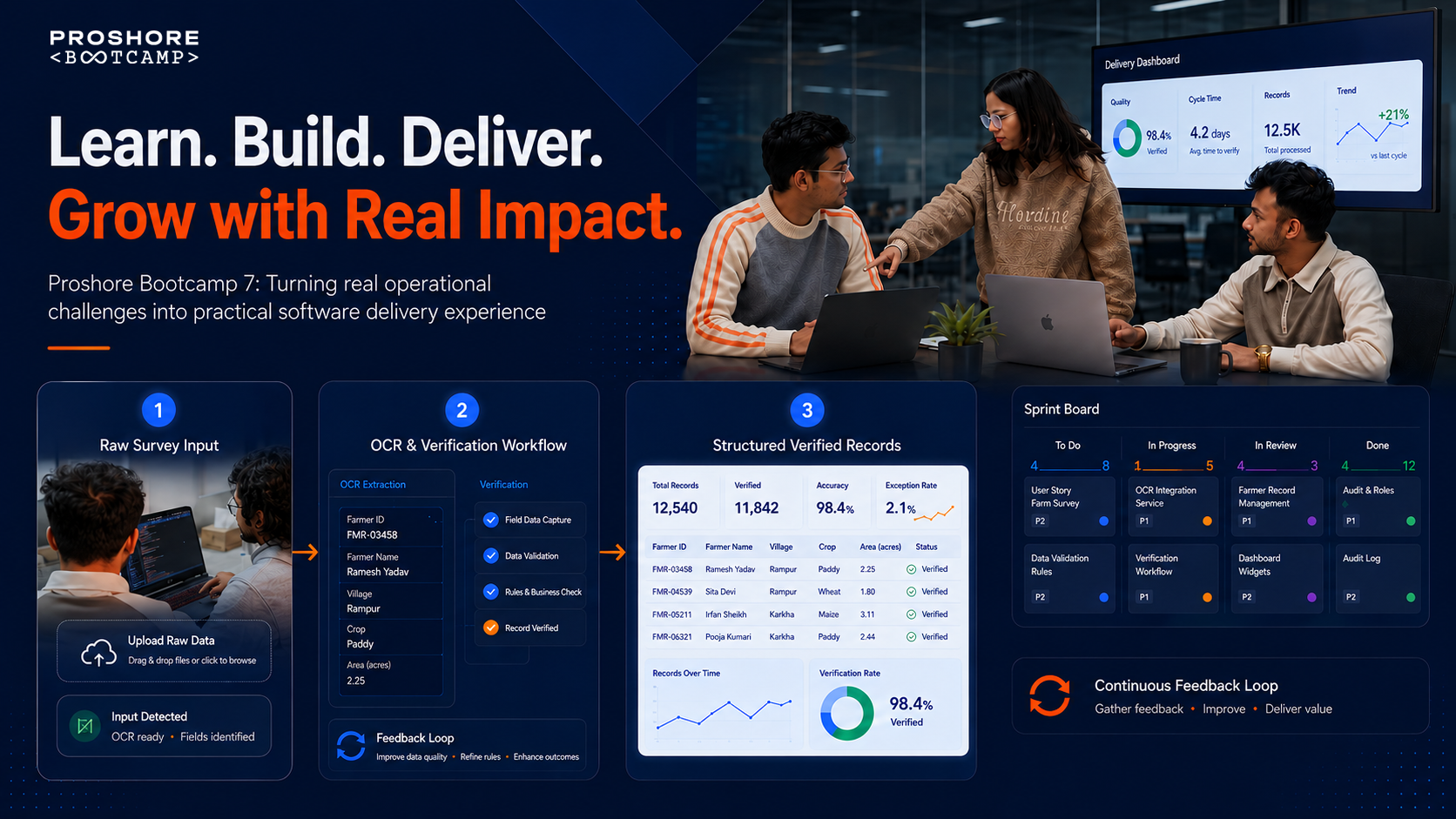
Proshore Bootcamp 7 was built around a clear business problem.
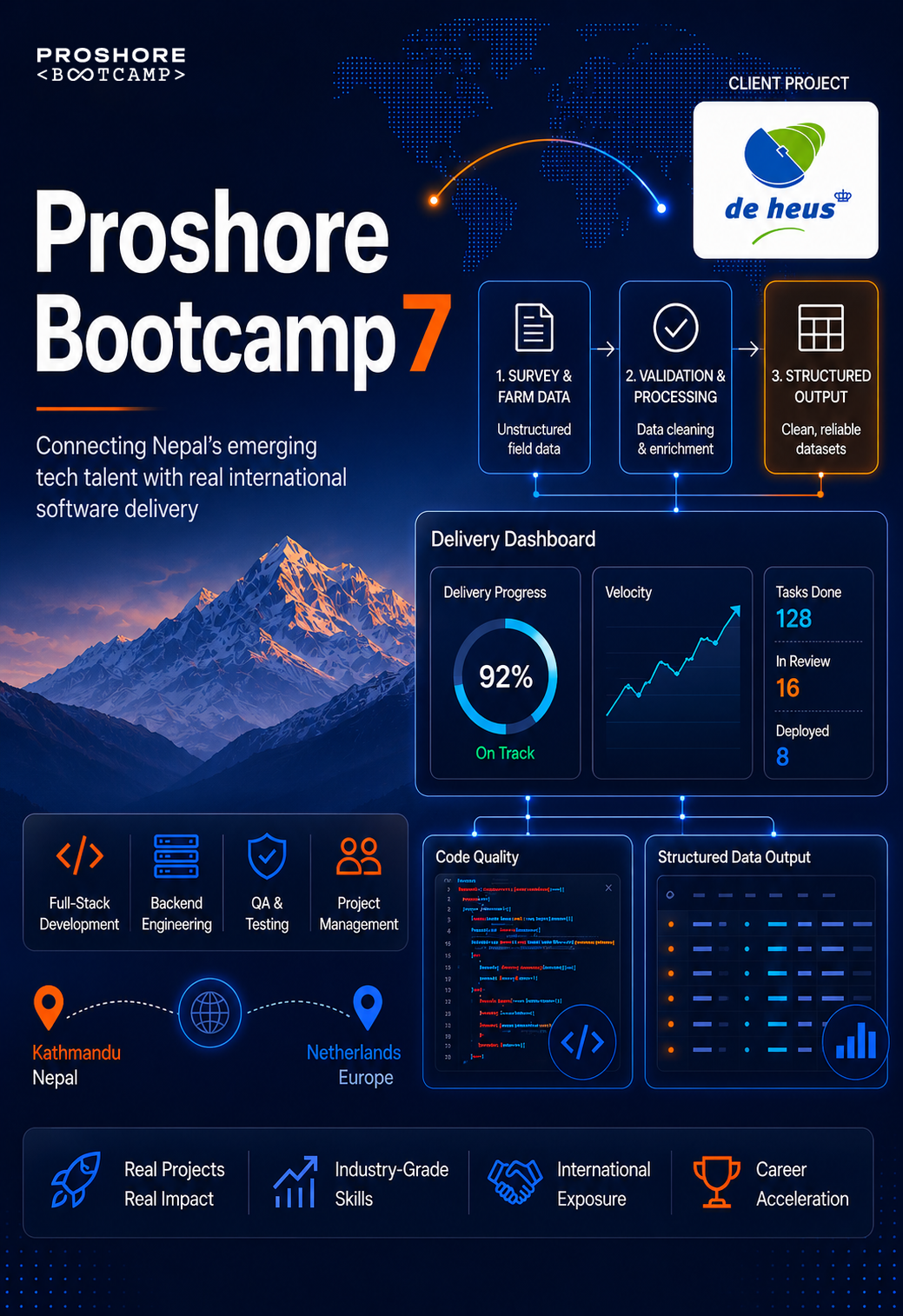
The assignment focused on improving how farm survey data could move from unstructured inputs into a more usable digital workflow.
The manual survey process needed a more reliable way to turn farm data into verified digital records.
Participants explored how OCR technology and verification workflows could support that process.
The work was connected to a real operational need, with real expectations and stakeholder feedback. That gave the Bootcamp a real delivery structure, shaped by client expectations and practical software work.
Participants worked in a setup designed to reflect how software teams operate in client delivery. Sprint planning, refinement sessions, demos, retrospectives, and continuous feedback shaped the project's rhythm.
This helped participants understand how delivery teams break down requirements, clarify expectations, coordinate across roles, and present progress clearly.
As Floris van Haaren, Project Manager Software Development at De Heus, shared:
Learning Through Real Accountability
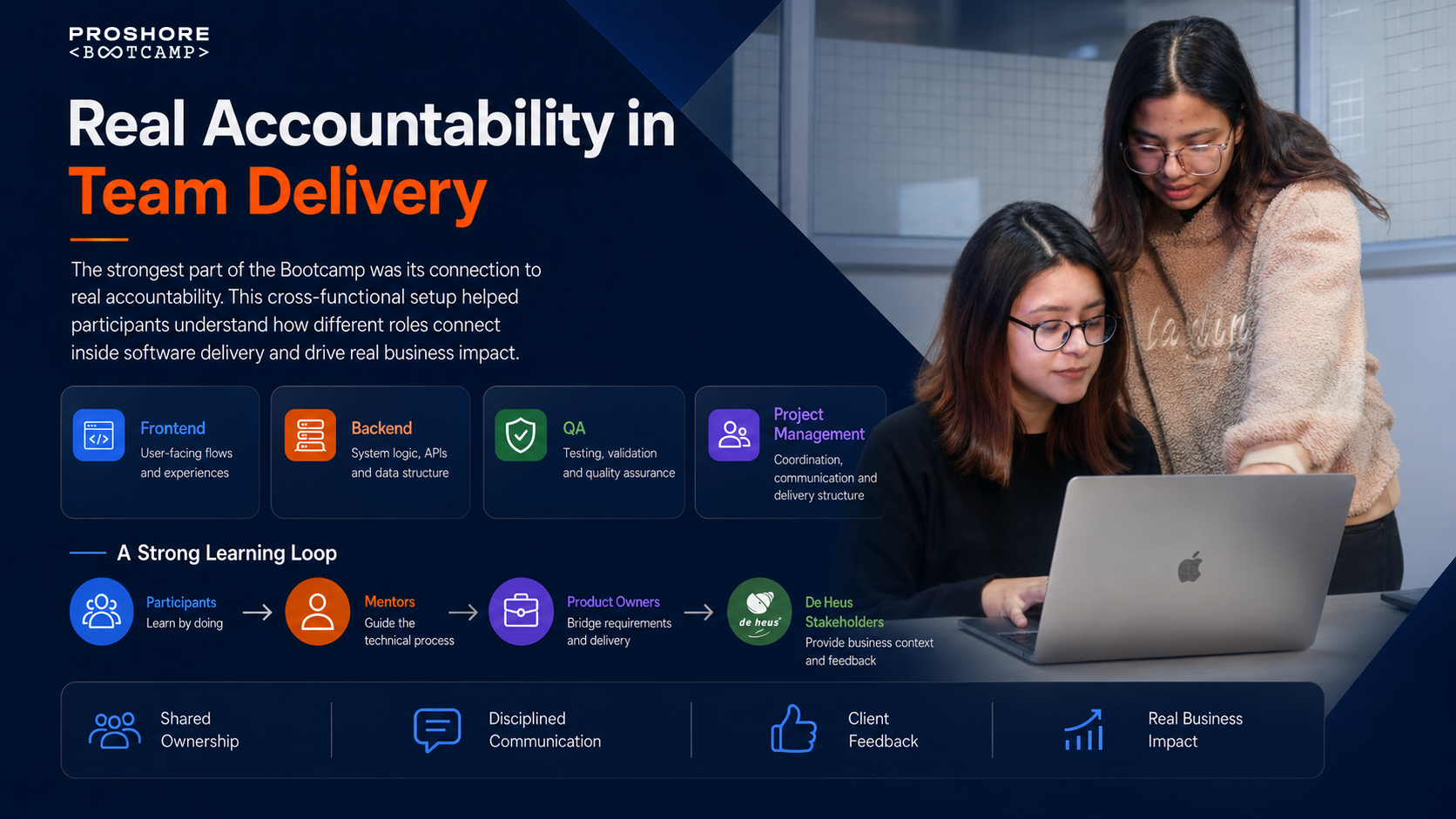
The strongest part of the Bootcamp was its connection to real accountability.
Participants were expected to contribute as part of a working team. Frontend participants focused on user-facing flows. Backend participants worked on the system's logic and structure. QA participants helped test and validate the workflow.
Project management participants supported coordination, communication, and delivery structure.
This cross-functional setup helped participants understand how different roles connect inside software delivery.
Building a working product required shared context and disciplined communication. Team-based delivery helped participants understand the responsibility behind professional software work.
The Bootcamp also created a strong learning loop between participants, mentors, product owners, and De Heus stakeholders.
Mentors guided the technical process. Product owners helped participants connect requirements with delivery.
De Heus provided business context and stakeholder feedback, giving the teams a clearer understanding of why the work mattered.
For Kundan Karna, Product Owner at Proshore, the real client case changed the dynamic of the program:
That alignment made the Bootcamp valuable.
Participants learned how to deliver in a business environment, ask better questions, manage expectations, and communicate progress in a client-facing setting.
Building Professional Confidence Alongside Technical Skill
Technical ability is one part of becoming a strong engineer.
New professionals need the confidence to communicate clearly and work well across teams.
That professional development was a core part of the Bootcamp.
Krishma Shrestha, HR Manager and Soft Skills Training Lead at Proshore, emphasized the importance of developing workplace capability alongside technical growth:
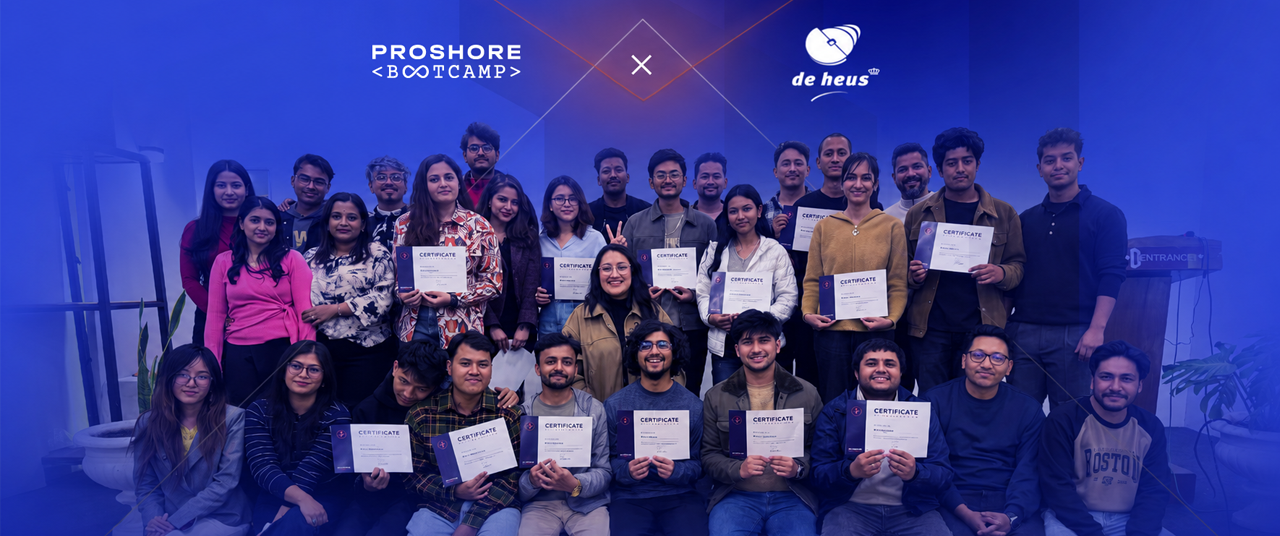
For many participants, this was their first experience in an environment closely connected to real software delivery.
That exposure changed how they understood professional work.
Bishwodeep Shrestha, a Bootcamp participant, reflected on how the experience helped him understand the way real teams operate:
“I especially valued working on real projects using Agile methods, which showed me how professional teams stay organized and get things done. Also, interacting directly with clients helped me learn how to understand their needs and explain my ideas clearly.”
The Bootcamp also helped participants build resilience.
Real delivery work rarely moves in a straight line. Participants learned how to work through blockers, respond to feedback and keep progress moving as a team.
Nebula, a QA Bootcamp participant, described the transformation as broader than technical learning alone:
“The transformation goes far beyond technical skills. I developed my professionalism, effective communication abilities, cultural competence, teamwork, resilience, and flexibility through the dedicated soft skills sessions and constructive feedback.”
That practical exposure helped participants build confidence in a guided environment before stepping into full-time professional delivery roles.
A Prototype With a Bigger Purpose
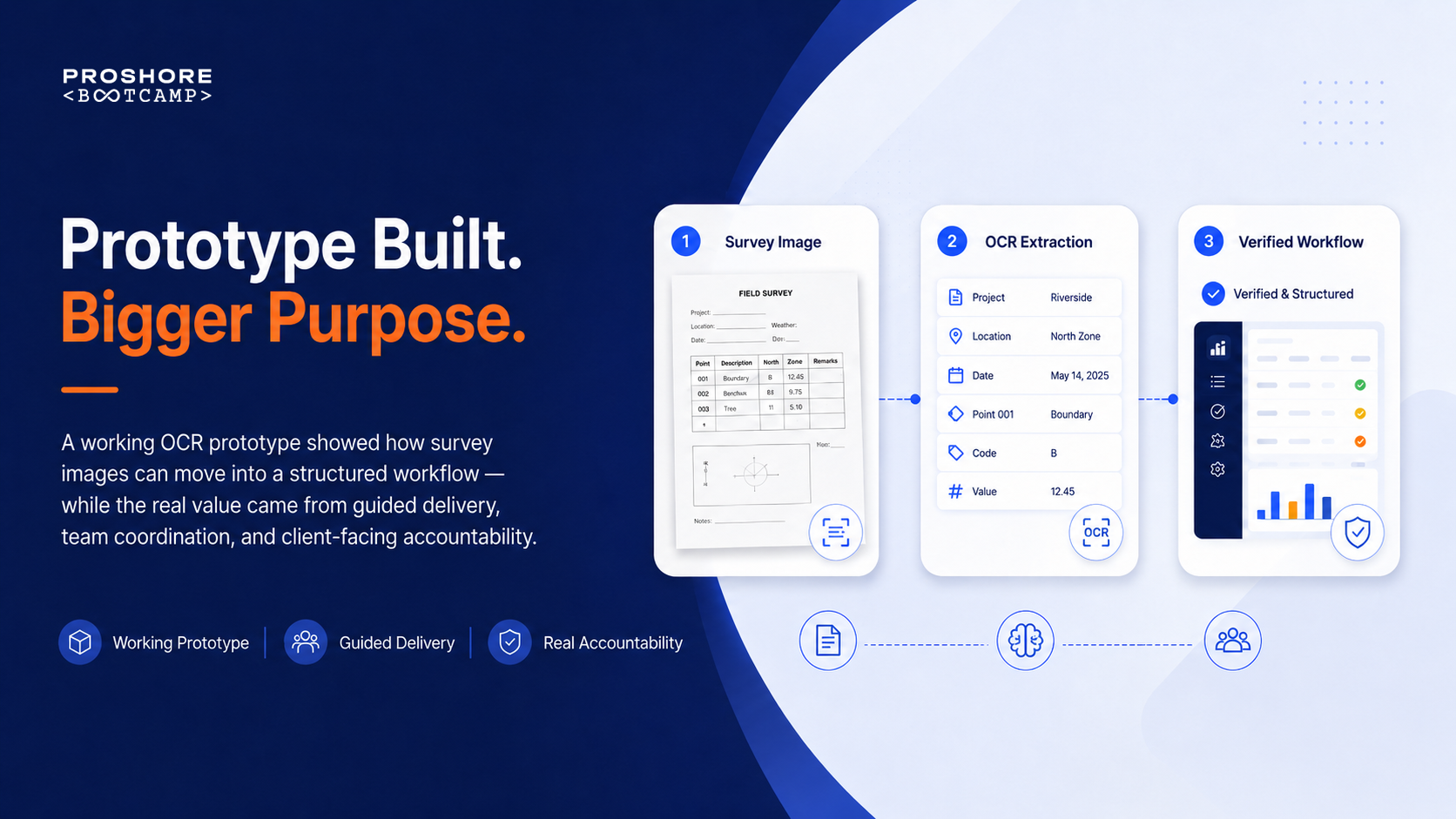
By the end of the Bootcamp, the team delivered a working prototype that demonstrated how survey images could be processed using OCR and verified through a structured workflow.
The prototype was an important outcome.
The larger value came from the delivery model built around it.
De Heus gained a practical approach to exploring digital workflow improvements for manual survey processing.
Participants experienced how real software delivery progresses from requirements to working features, building confidence in team coordination and client communication.
Proshore reinforced its Academy model to develop engineers through guided delivery and real accountability.
A Shared Opportunity, Not a One-Way Program
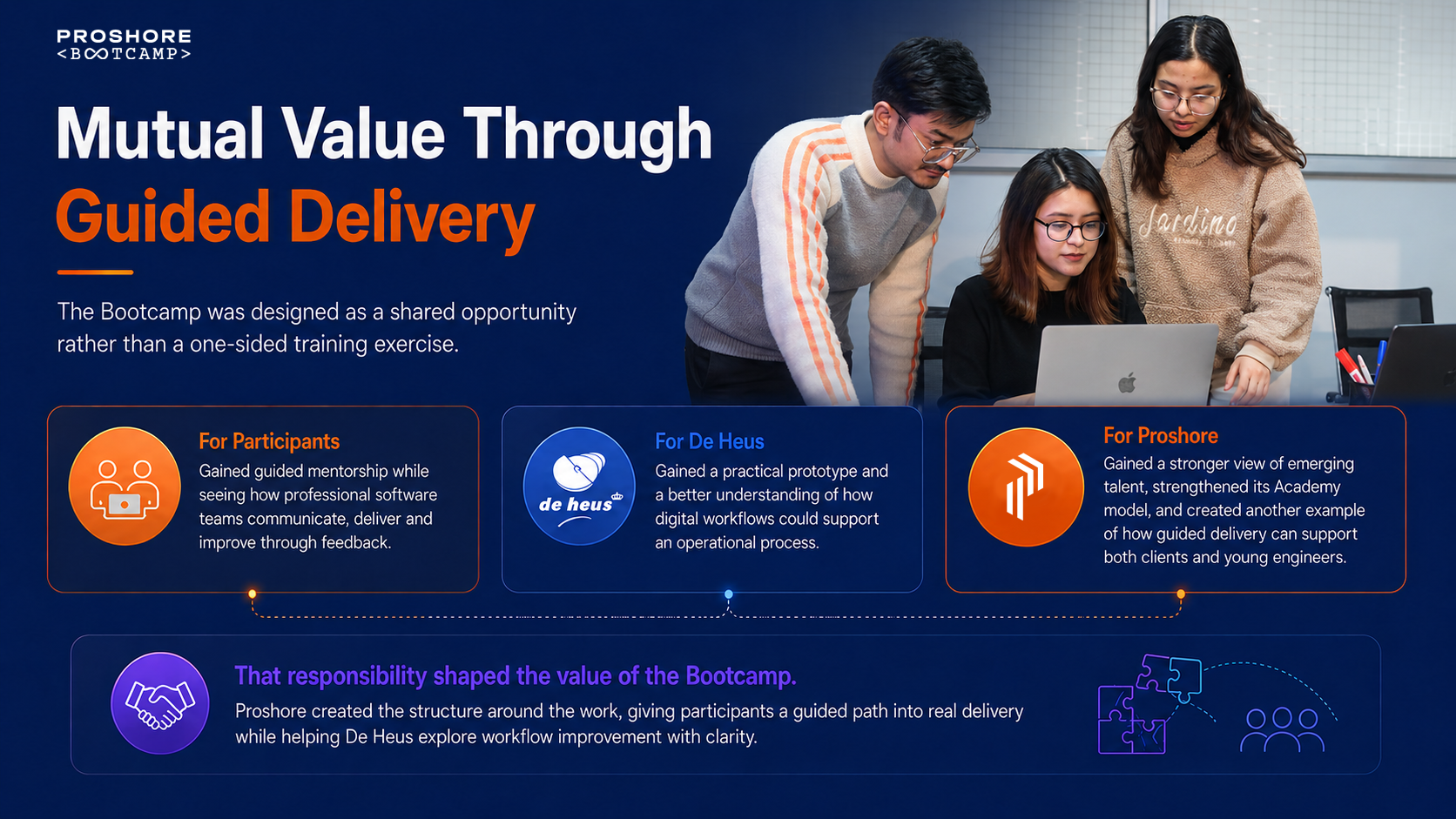
The Bootcamp was designed as a shared opportunity rather than a one-sided training exercise.
Participants gained guided mentorship while seeing how professional software teams communicate, deliver and improve through feedback.
De Heus gained a practical prototype and a better understanding of how digital workflows could support an operational process.
Proshore gained a stronger view of emerging talent, strengthened its Academy model, and created another example of how guided delivery can support both clients and young engineers.
That responsibility shaped the value of the Bootcamp.
Proshore created the structure around the work, giving participants a guided path into real delivery while helping De Heus explore workflow improvement with clarity.
Connecting Nepal’s Talent With International Delivery
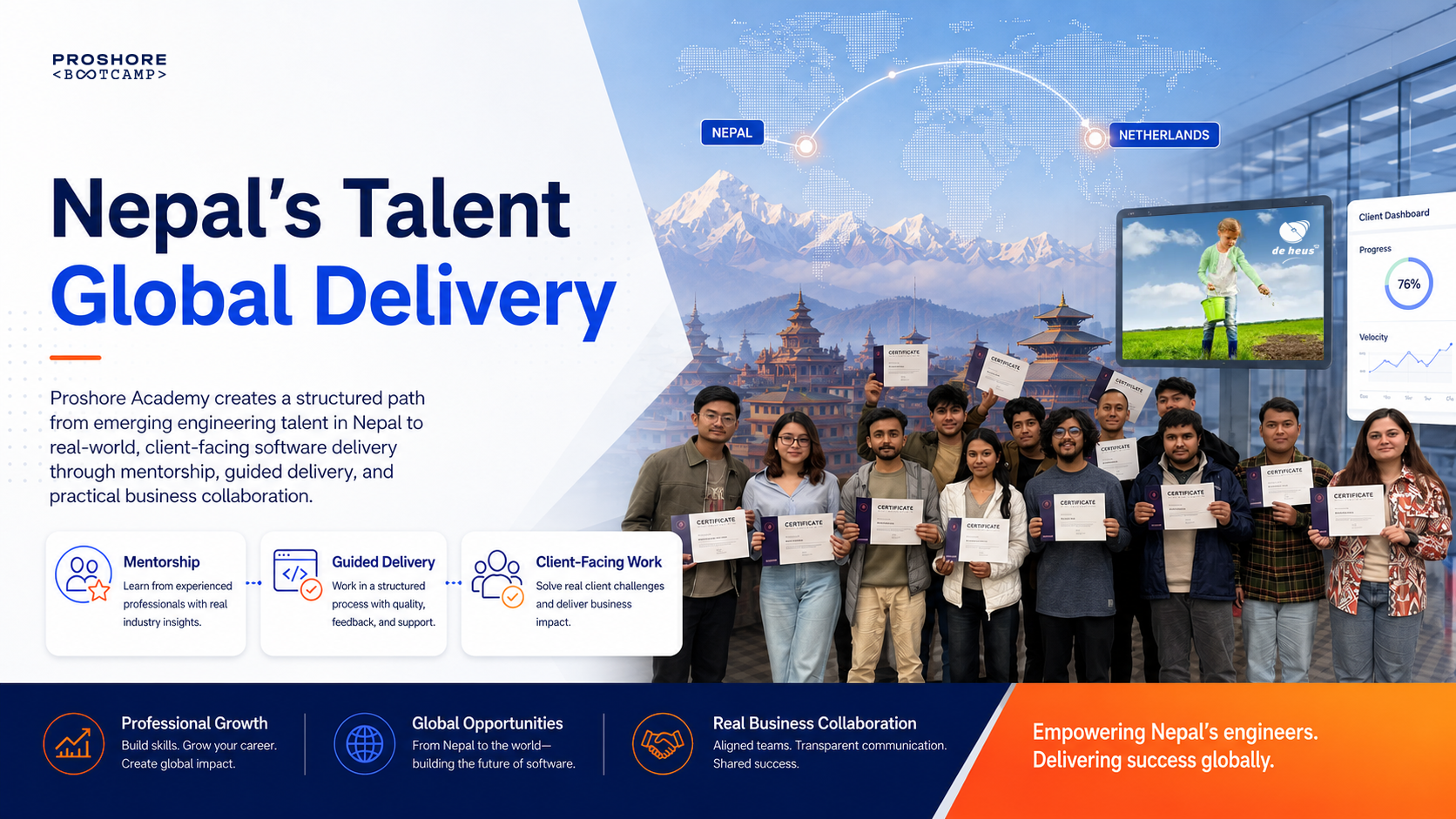
Proshore Academy exists to create long-term professional opportunities for engineering talent in Nepal.
The Bootcamp is one part of that mission.
Proshore provides emerging engineers with a structured path into real-world software delivery, supported by mentorship and client-facing work.
As European companies seek greater delivery capacity, Nepal’s growing engineering talent offers real potential when supported by the right development environment.
The Proshore model connects these realities.
The model connects international business needs with Nepal’s engineering potential through guided delivery.
Clients get practical support on real challenges, while participants gain the kind of experience that prepares them for professional software work.
It became a practical example of how talent development and business delivery can support each other within a single structured model.
Building Resumes Through Real Work
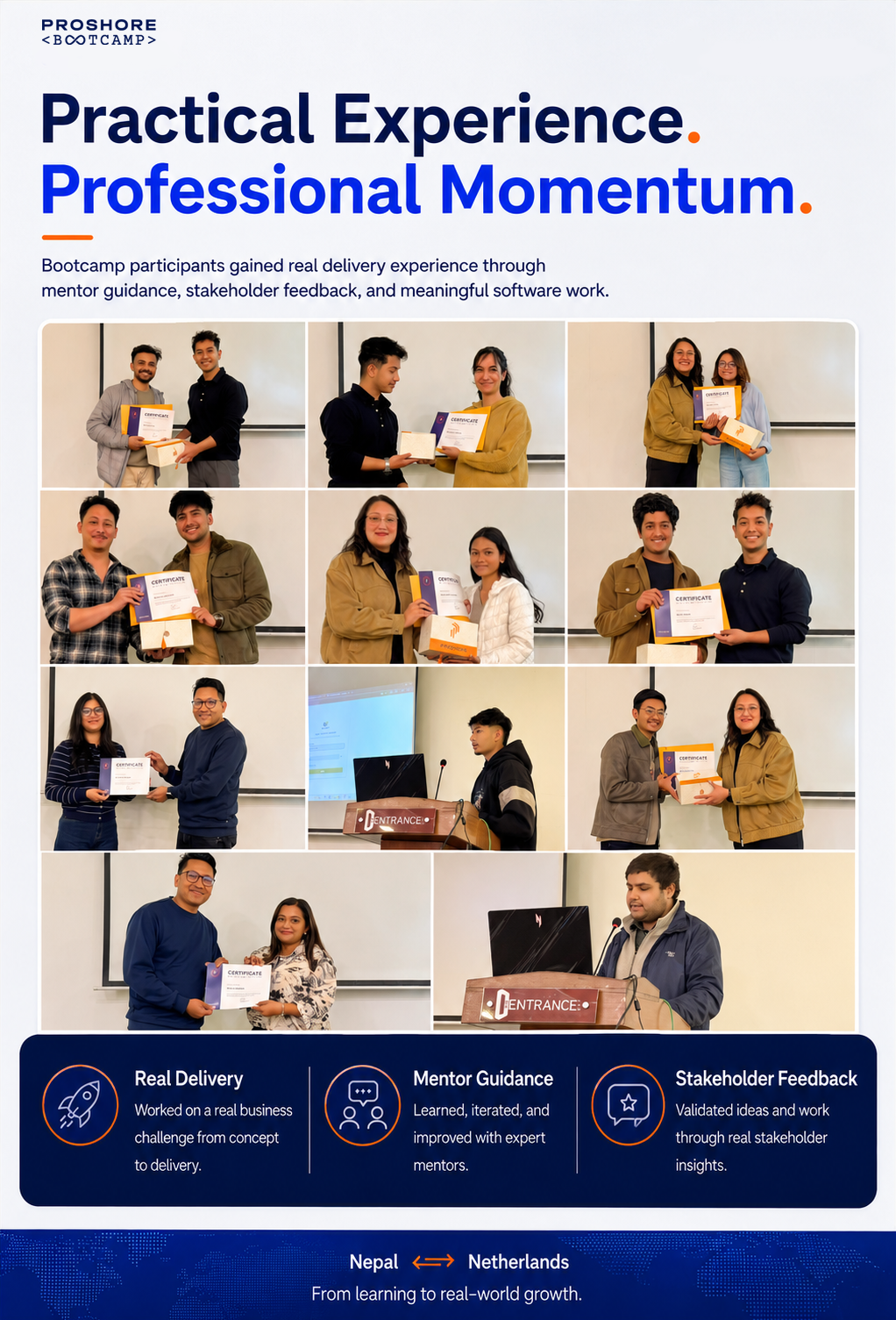
Proshore Bootcamp 7 showed the value of learning inside a real delivery environment.
Participants worked through a De Heus business case with mentor guidance and stakeholder feedback. Their work contributed to a prototype that explored how farm survey data could move into a more reliable digital workflow.
Along the way, they learned how software teams understand requirements, communicate progress, and turn feedback into better delivery.
For Proshore, this is the purpose of the Bootcamp: helping emerging engineers move from theoretical learning into practical professional growth.
The De Heus collaboration showed how a real operational challenge can become a platform for guided learning and meaningful software work.
What started as a Bootcamp became a shared delivery experience connecting business needs with engineering talent across Nepal and the Netherlands.