

For more than 15 years, Proshore has worked with enterprises whose software has evolved alongside the business.
As those systems mature, change often becomes harder, and routine work starts to take longer.
Engineers spend more time rebuilding context, releases carry more risk, and seemingly small requests can uncover far more complexity than the roadmap suggests.
That growing cost of change is one of the clearest signals that modernization deserves attention.
Modernization should start where that friction is highest, not simply where the technology is oldest.
AI can lower the cost of change by reducing the effort required to understand the system before touching it.
Where Does Legacy Software Become Expensive to Change?
Modernization plans often begin with the technology that needs replacing.
The harder work often comes first. Engineers need an accurate picture of how the system actually works. Existing documentation may no longer provide that picture.
Teams also need confidence that changes won't break existing behavior. Weak tests and limited production visibility make even straightforward modernization risky.
That friction shows up in everyday engineering work. Developers spend days rebuilding context before making a change. Releases repeatedly stall around the same part of the system.
Two questions help expose where the real cost sits:
- How much effort does this part of the system consume when it changes?
- What product progress is that effort delaying?
A ten-year-old service that runs reliably and rarely changes may not be the modernization priority. A newer component that repeatedly slows delivery may carry a much higher cost of change.
Why Does Legacy Software Take So Long to Understand?
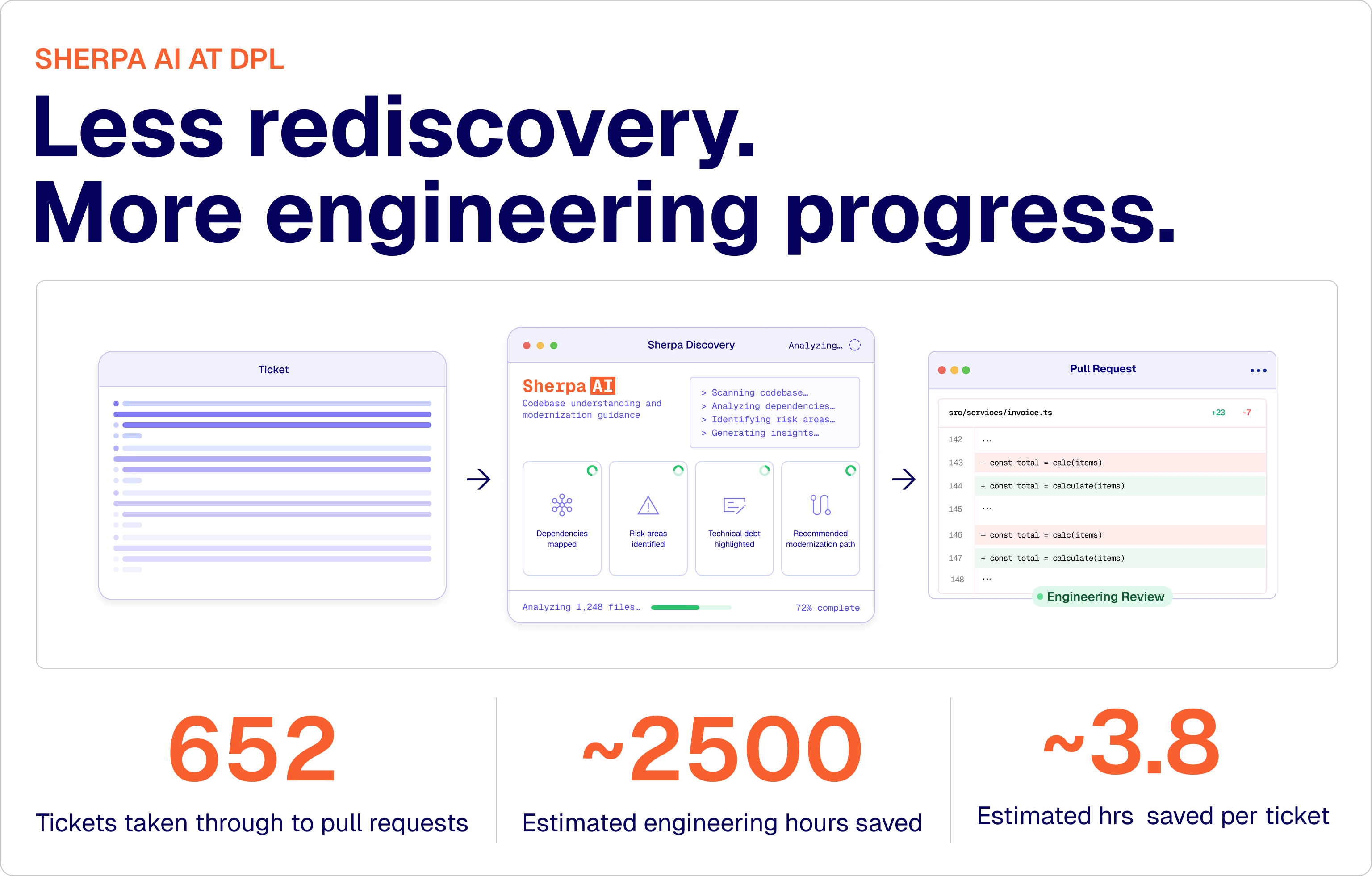
One of the most expensive parts of working with legacy software is rediscovery.
A ticket may describe the change, but engineers still have to rebuild the surrounding context before they can act safely. The real work is understanding what sits around the change and what it could affect.
Across hundreds of tickets, that investigation becomes a major engineering cost.
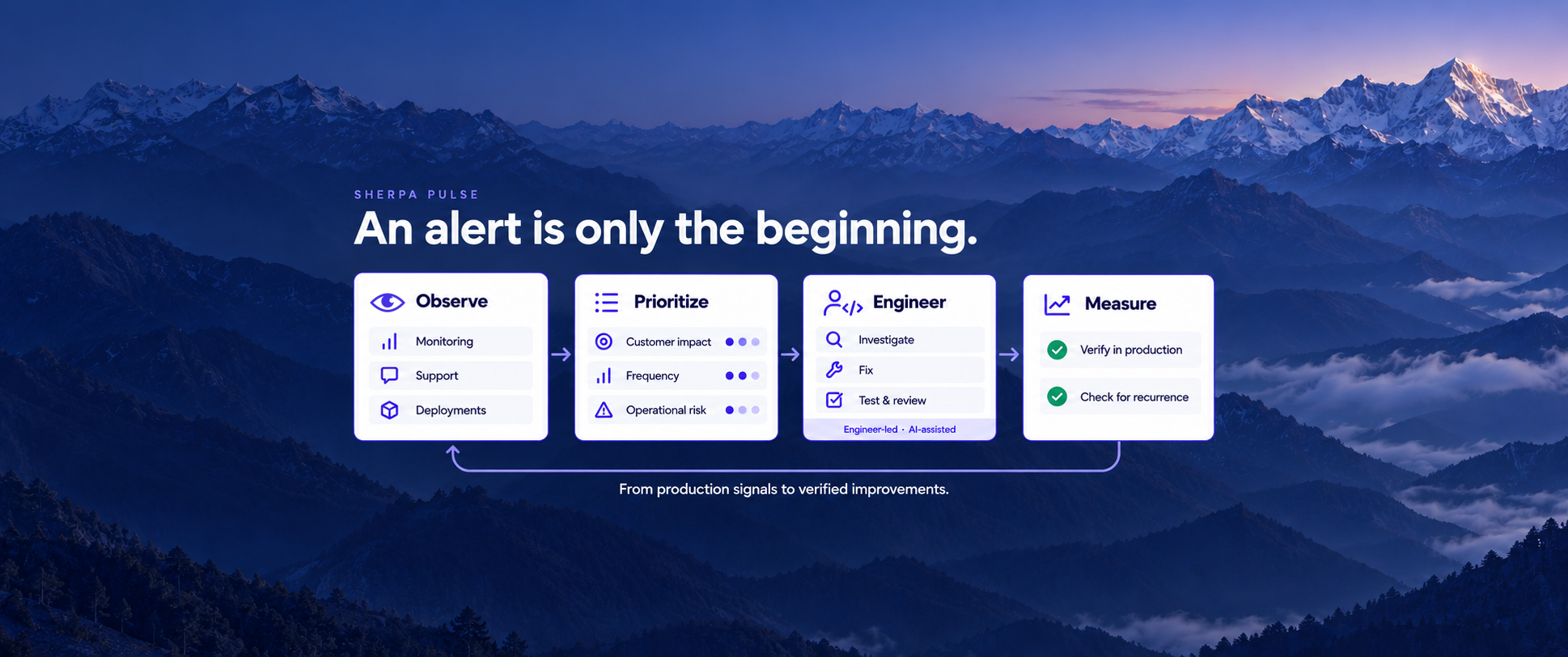
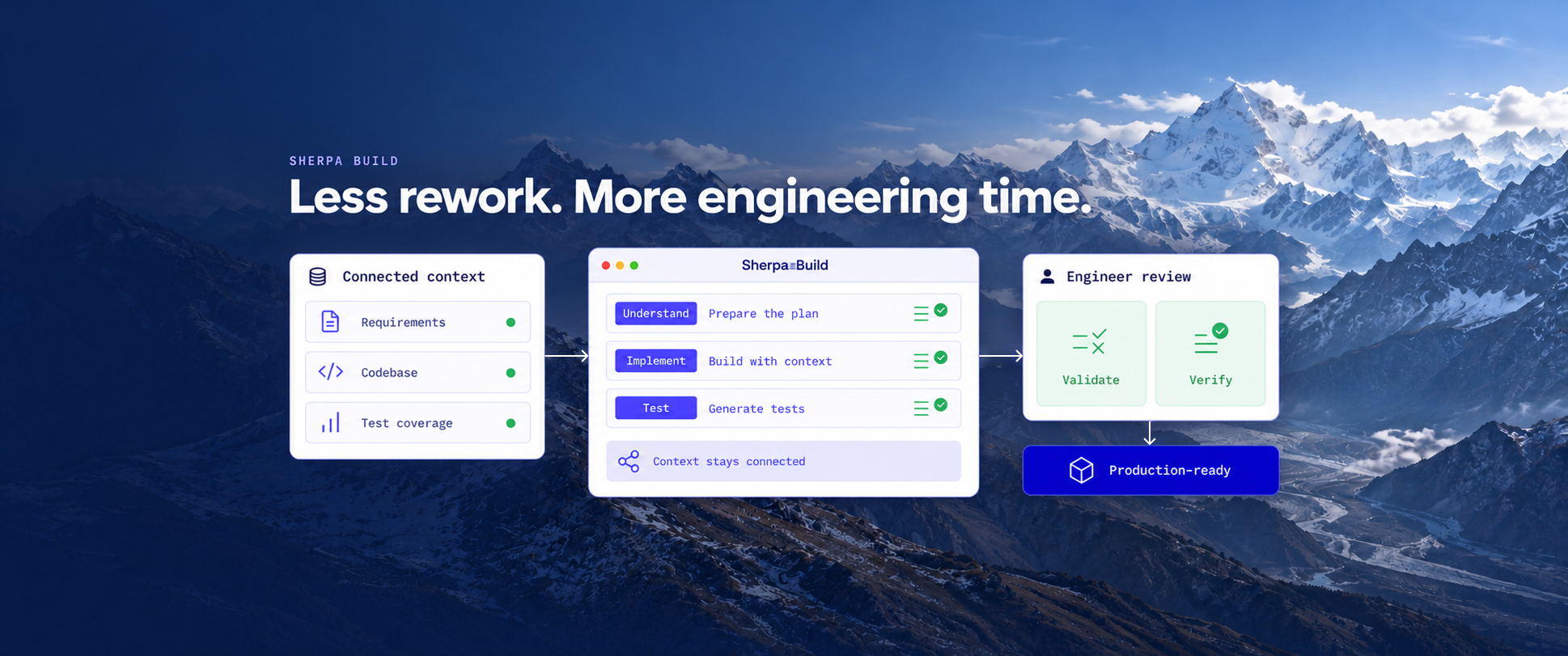
At DPL, Sherpa AI keeps the engineering context connected as a ticket moves toward a pull request.
Since 14 April 2026, Sherpa AI has taken 652 DPL tickets through to pull requests without engineers manually writing the code.
Based on the manual effort those tickets would otherwise have required, Proshore estimates that Sherpa saved approximately 2,500 engineering hours, or about 3.8 hours per ticket.
The biggest savings aren't just in writing code. It is in reducing the work needed to understand the change.
How Can AI Speed Up Legacy Modernization Without Increasing Risk?
Faster implementation matters only when teams can trust the changes they are shipping.
Google’s 2025 DORA research found widespread productivity gains from AI while warning that weak engineering practices can become more visible as AI adoption grows.
That risk is higher in mature systems, where a seemingly isolated change can affect parts of the product far beyond its original scope.
Sherpa Dsicovery treats validation as part of the modernization work, not something added at the end. Teams need enough test coverage to know when a modernization change breaks existing behavior.
At Psyflix, Proshore moved the platform from Next.js 12 to Next.js 16 in 1.5 months with two developers. The modernized application reached 71% automated test coverage.
Developer ramp-up also fell from roughly one to two months to one to two weeks.
How Much of a Legacy System Should You Modernize at Once?
Modernization is often treated as a problem that requires changing the whole system.
Proshore calls the alternative a change boundary: the smallest meaningful part of the system you can improve without destabilizing the rest of the product.
That might mean upgrading the frontend while leaving the underlying platform untouched.
Smaller boundaries matter because modernization happens while the product is still running. An effort that consumes too much engineering capacity can slow the rest of product development.
AI makes smaller modernization cycles more practical by reducing the work required before each change. Teams can modernize one boundary and use the result to decide what comes next.
The measure that matters is whether the system becomes easier to change afterward.
The next meaningful change should take less effort than the last one.
Not Sure Where to Start With Legacy Modernization?
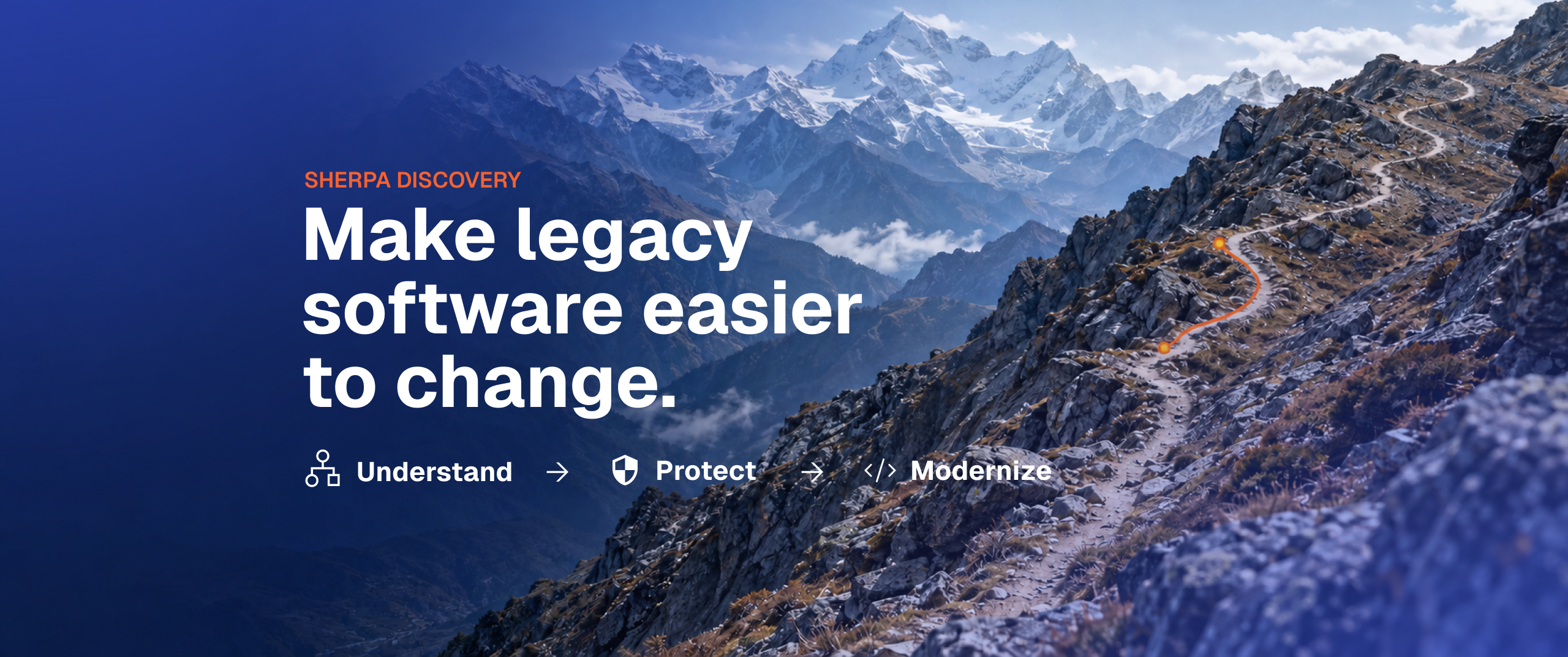
A Sherpa Discovery Scan gives Proshore and the client team an early view of where the existing system is creating the most friction, what dependencies surround those areas, and which modernization opportunities deserve attention first.
Want to see where your legacy software is making change harder than it needs to be?