

Why Innovation Pilots Are Easy, but Scaled Innovation Is Difficult
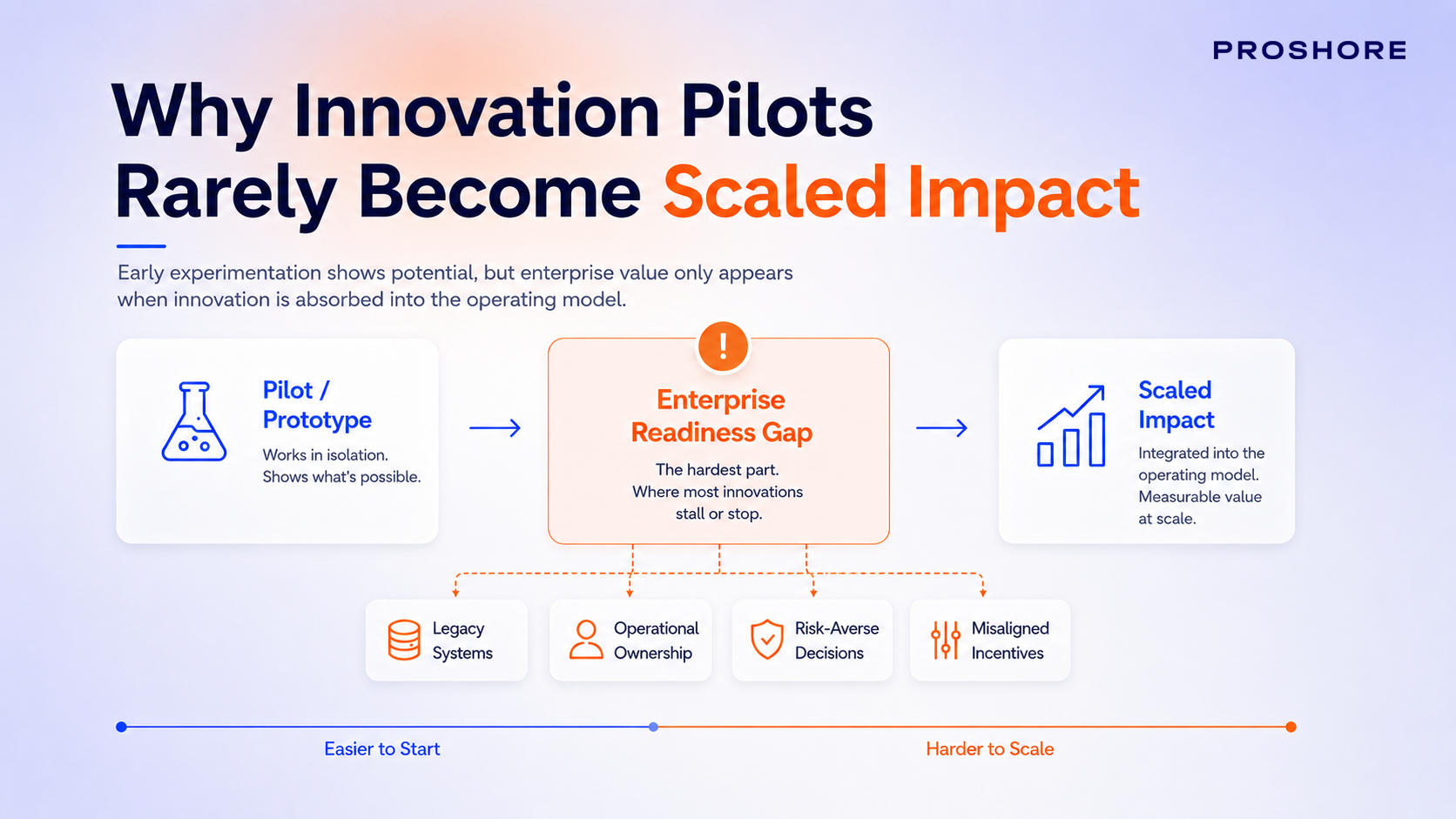
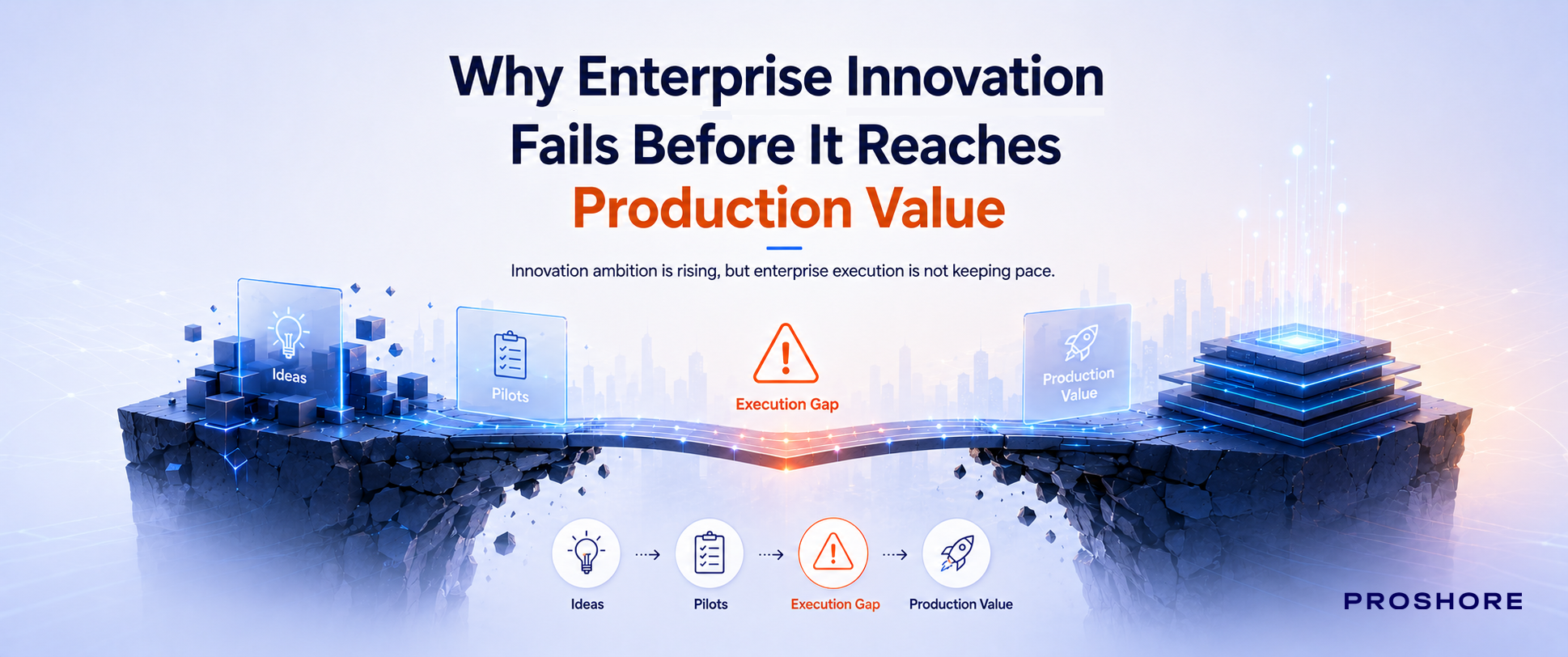
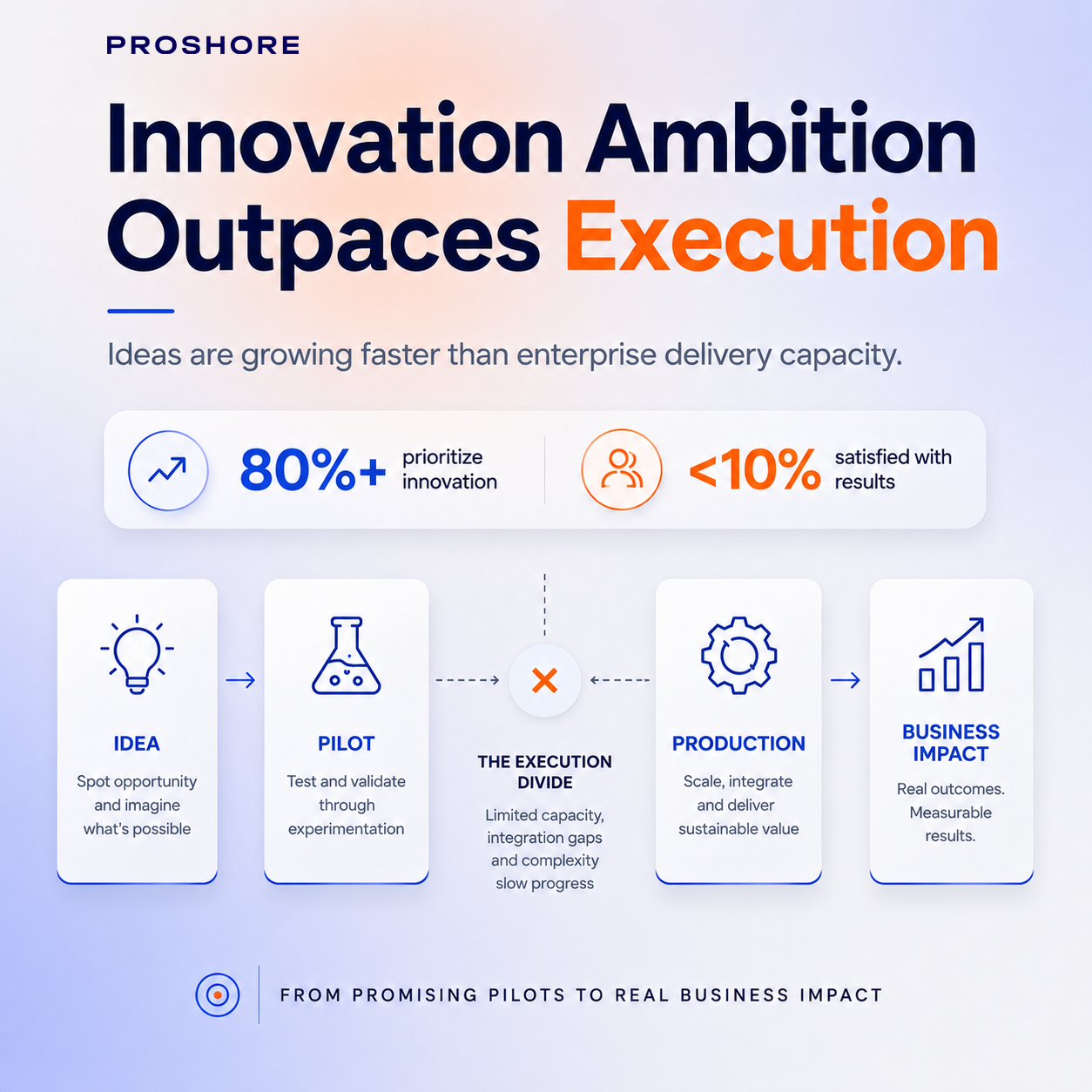
Innovation pilots and prototypes are routinely celebrated as indicators of progress, with working demos and small-scale successes often misinterpreted as evidence of enterprise readiness.
In practice, experimentation rarely translates into operational impact. A compelling prototype may show what is possible, but it does not prove the enterprise is ready to absorb it. Production depends on enterprise fit and operational ownership.
Most pilots show what could work. Real enterprise value comes when innovation becomes part of the enterprise execution layer and starts influencing business outcomes. Value is absorbed into the operating model and starts influencing business outcomes.
An idea can create interest, but scale requires enterprise readiness. Execution architecture decides whether innovation becomes a repeatable business capability.
Rapid ideation tools and innovation labs accelerate early stages, but integration with legacy systems, risk-averse decision-making, and misaligned incentives expose deeper organizational gaps.
The core limitation lies in the absence of a production-ready innovation system and operating model, rather than a shortage of creative ideas.
The Structural Barriers That Stop Innovation From Scaling
Innovation failures in large organizations reflect recurring patterns of systemic misalignment more than individual idea quality.
Innovation teams often operate in isolation from core business units, IT, and operations.
Ownership is fragmented, with limited alignment to broader enterprise transformation efforts. Legacy architectures constrain agility, while governance and risk processes introduce late-stage bottlenecks.
Ideas remain peripheral instead of being woven into core capabilities.
Scaling is hindered by the lack of an integrated operating model that treats innovation as an embedded enterprise layer rather than a separate initiative.
These structural issues commonly appear in four recurring patterns:
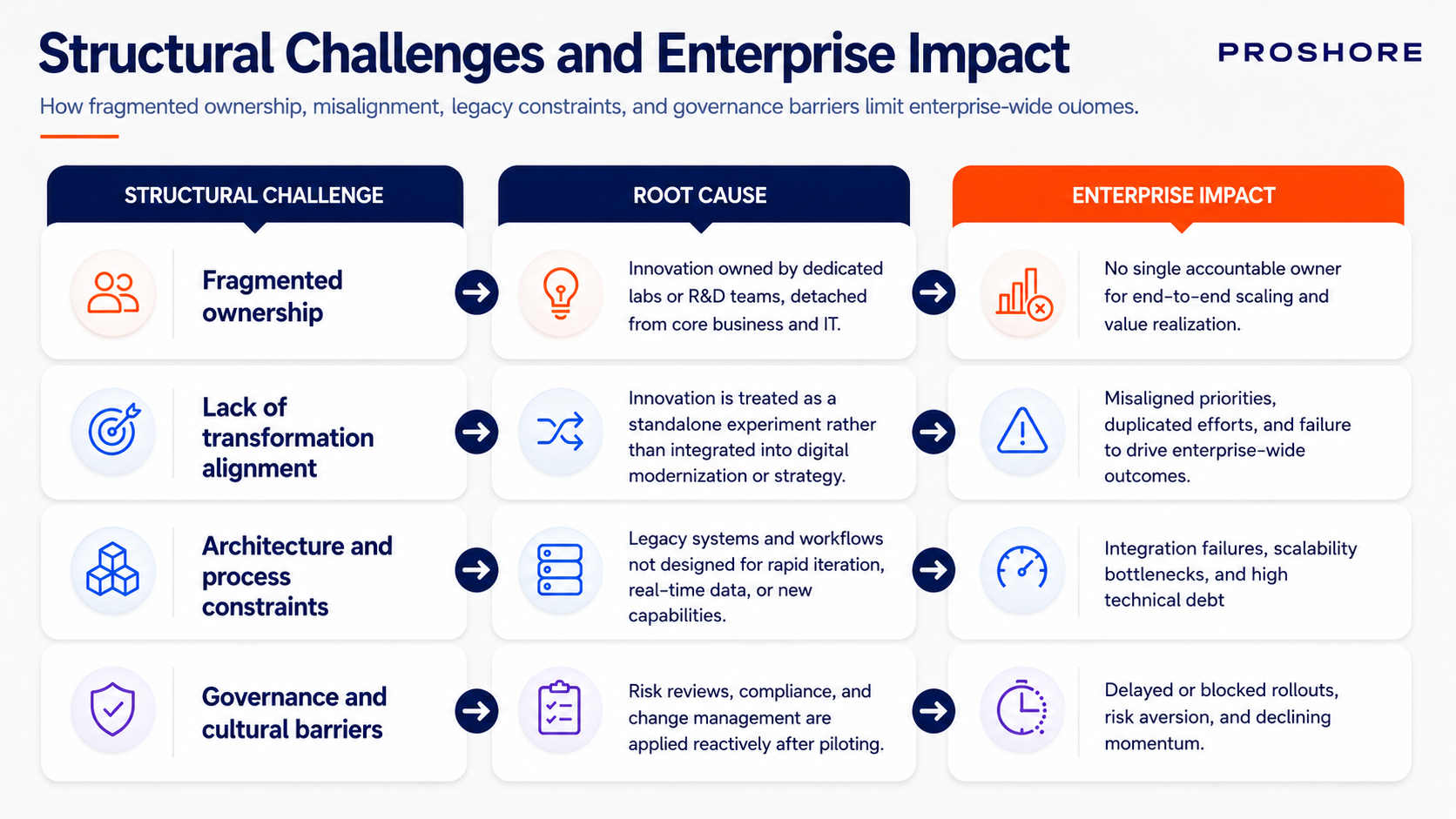
(Based on patterns from McKinsey innovation and digital transformation research, Deloitte insights, Gartner analyses, and related studies.)
The Enterprise Cost of Innovation That Never Scales
When pilot success looks stronger than production readiness, hidden costs begin to accumulate, and competitive advantage starts to erode.
Business units repeat similar experiments without knowledge sharing.
When innovation does not move into real execution, the enterprise pays twice. Repeated investment becomes organizational drag rather than competitive progress.
This fragmentation manifests in the following hidden costs:
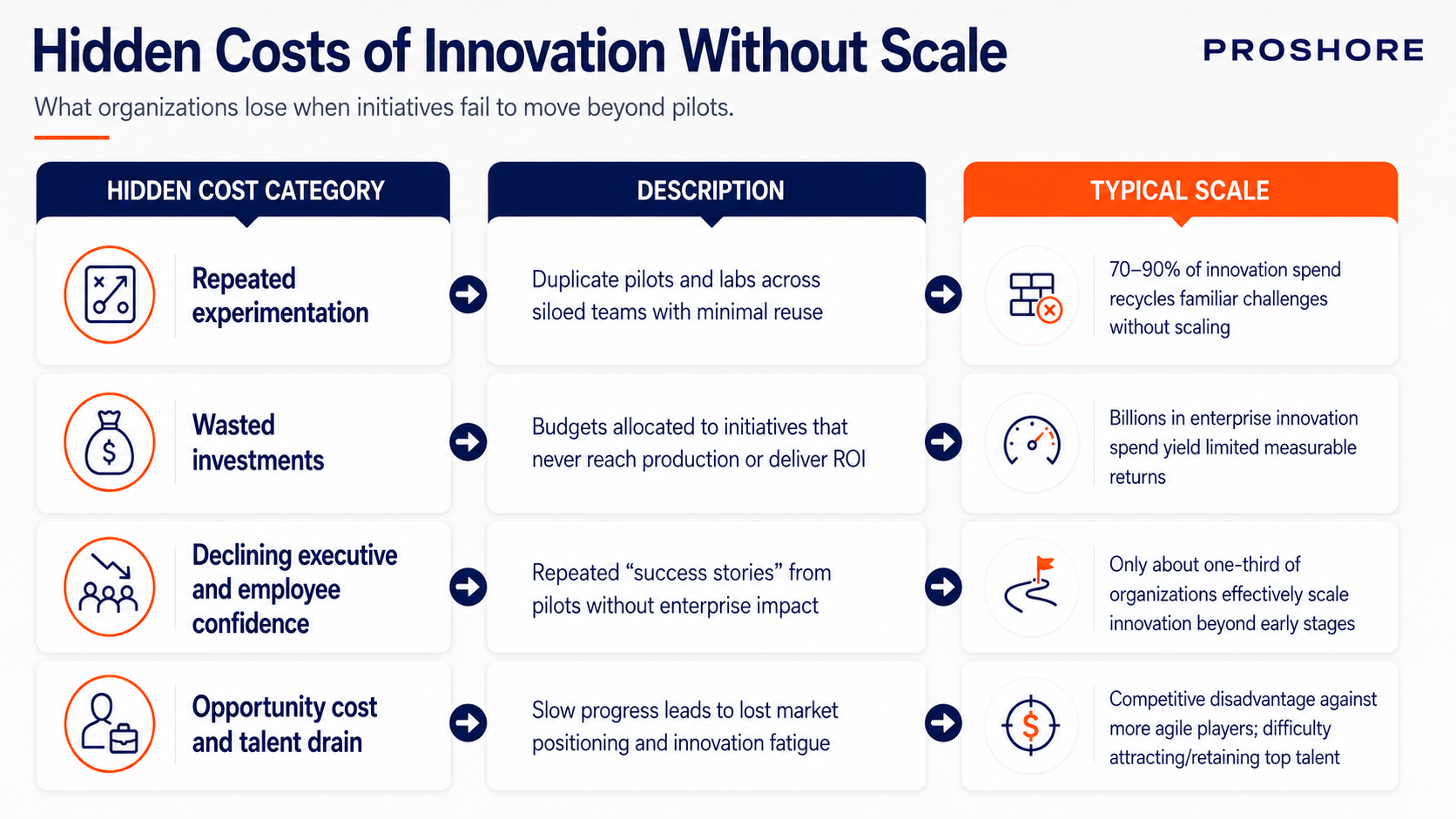
(Sources: McKinsey State of Innovation reports | Deloitte Digital Transformation studies )
How to Turn Innovation Into Enterprise Capability
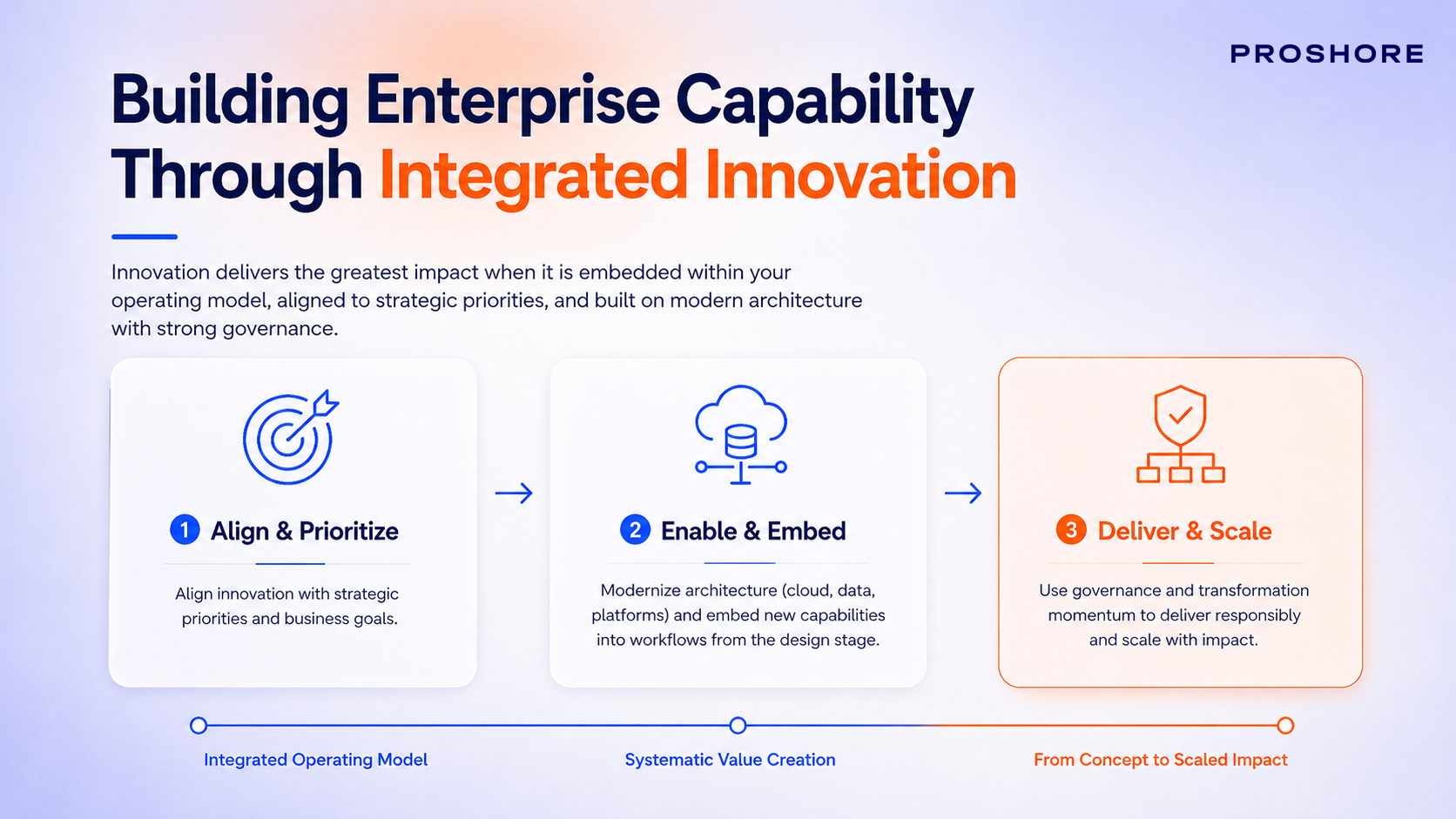
Innovation delivers outsized value when positioned as a capability layer deeply integrated within existing transformation programs and core operations.
The operating model aligns innovation with strategic priorities, modernizes supporting architectures (cloud, data, platforms), and embeds new capabilities into workflows from the design stage.
Architecture enables scalability, transformation programs provide delivery momentum, and governance supports responsible execution.
This approach shifts focus from isolated ideation to systematic value creation, enabling reliable transitions from concept to scaled impact.
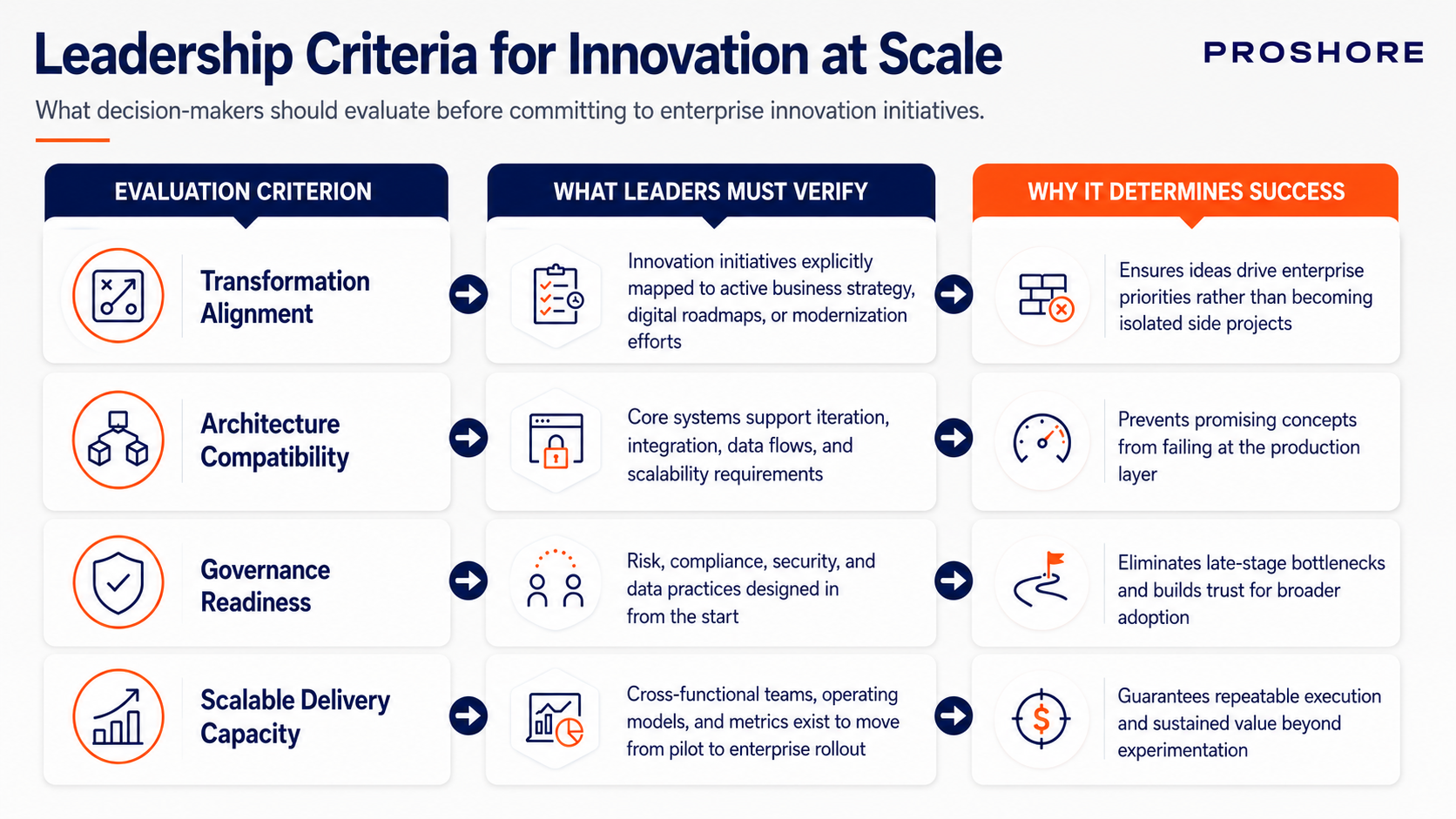
What CIOs Should Demand Before Innovation Moves to Scale
Leaders must assess innovation initiatives through a systems and governance lens, not just a creativity or technology lens.
The key question shifts from “Do we have good ideas?” to “Can our enterprise systems, culture, and operating model support innovation at scale?”
How Proshore Turns Innovation Into Enterprise-Ready Capability
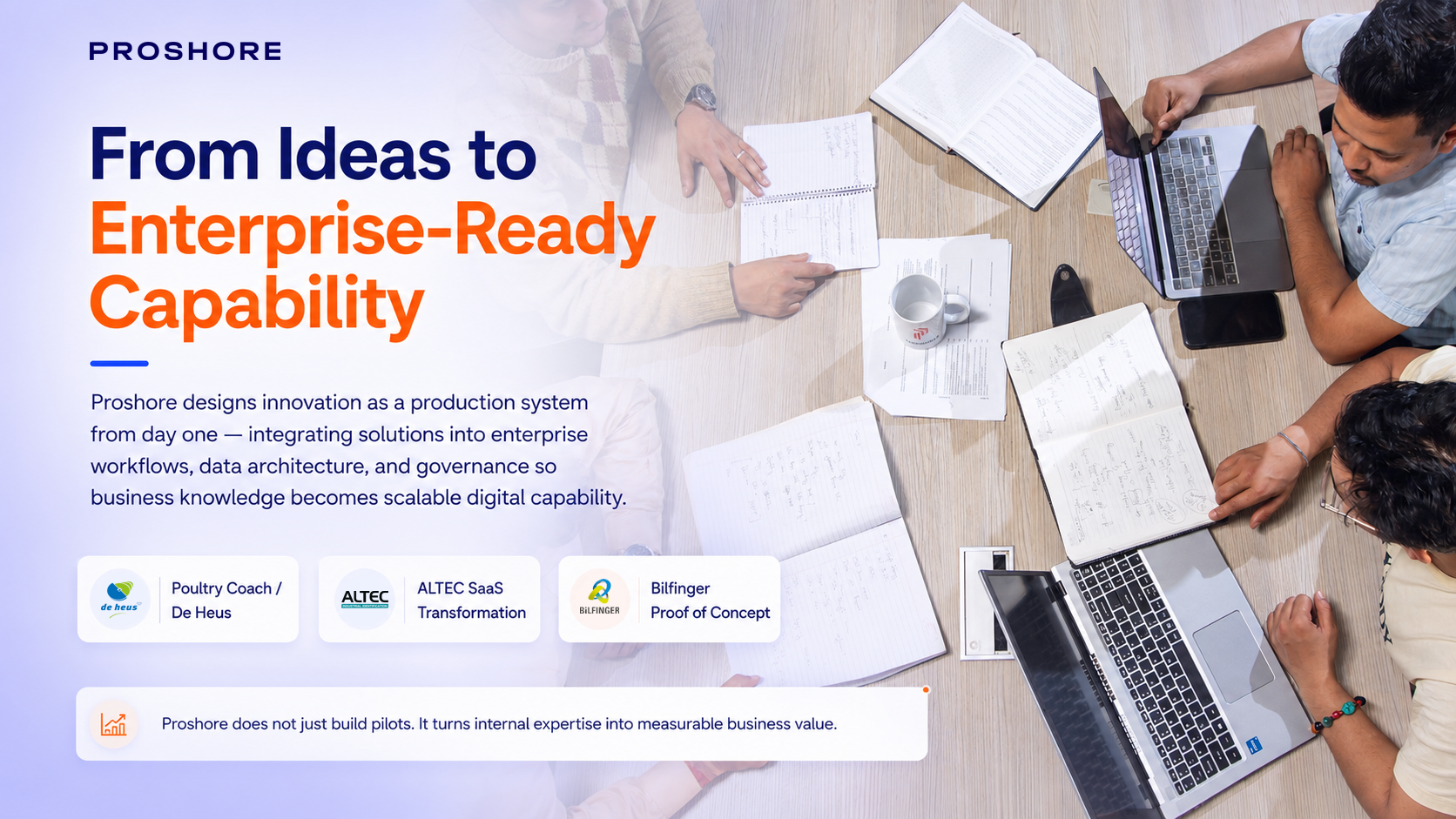
Proshore tackles the structural barriers that cause great ideas to stall by designing every innovation effort as a production system from day one.
Rather than isolated prototypes, solutions are integrated into enterprise workflows, data architectures, and governance frameworks, with full alignment to transformation programs.
Proshore’s innovation work is visible in how it turns practical business knowledge into production-ready digital products.
With Poultry Coach / De Heus, Proshore helped convert field-level poultry expertise into a mobile platform that supports real-time, predictive decision-making for farmers and advisors.
The ALTEC engagement transformed a proprietary internal process into a scalable SaaS product, turning operational expertise into a commercial growth channel.
In the Bilfinger project, Proshore built a structured proof of concept for a digital service portal, helping validate enterprise fit before a larger investment. Across these cases, the benefit is clear.
Proshore does not just build pilots. It turns internal expertise into enterprise-ready capability that creates measurable business value.
The Real Test of Enterprise Innovation
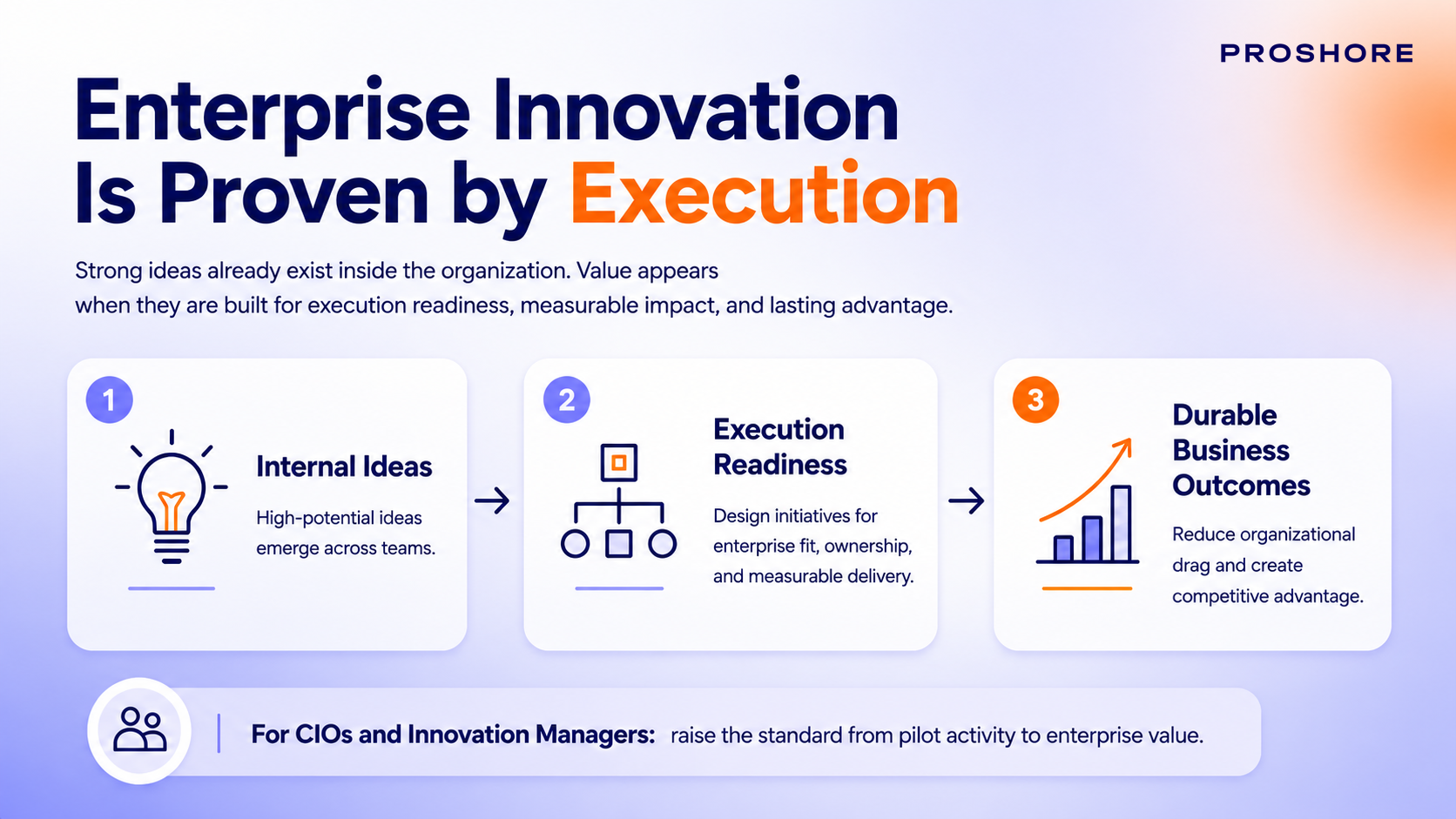
For CIOs and Innovation Managers, the biggest value often already exists inside the organization.
Teams generate strong ideas every day. What matters is whether the enterprise has the execution architecture to turn those ideas into durable business outcomes.
CIOs and Innovation Managers can elevate innovation from pilot activity to enterprise value by setting a higher standard from the start.
Every initiative should be designed for execution readiness and measurable business impact.
Done well, this reduces organizational drag and turns innovation into a durable source of competitive advantage.